

Search
found 114 results
Images for slip; more images...


IMG_2444
Images, eqnz.chch.2010
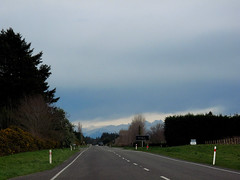
The faultline cuts across Telegraph Road, leaving a kink in its originally straight alignment; aftermath of the magnitude 7.1 earthquake in mid-Canterbury on Saturday 4 September 2010.
IMG_2423
Images, eqnz.chch.2010
This originally straight farm fence has been laterally displaced at least 2 metres where it crosses the previously unknown faultline from which the Saturday 4 September 2010 earthquake originated.
IMG_2428
Images, eqnz.chch.2010
This originally straight farm fence has been laterally displaced at least 2 metres where it crosses the previously unknown faultline from which the Saturday 4 September 2010 earthquake originated.
IMG_2247
Images, eqnz.chch.2010
This originally straight farm fence has been laterally displaced at least 3 metres where it crosses the previously unknown faultline from which the Saturday 4 September 2010 earthquake originated.
IMG_2433
Images, eqnz.chch.2010
This originally straight farm fence has been laterally displaced at least 2 metres where it crosses the previously unknown faultline from which the Saturday 4 September 2010 earthquake originated.
IMG_2316
Images, eqnz.chch.2010
Collapsed silos at David Bell Daffodil Farm in Leeston; aftermath of the magnitude 7.1 earthquake that struck mid-Canterbury on Saturday 4 September 2010.
IMG_2442
Images, eqnz.chch.2010
The faultline cuts across Telegraph Road, leaving a kink in its originally straight alignment; aftermath of the magnitude 7.1 earthquake in mid-Canterbury on Saturday 4 September 2010.
IMG_2439
Images, eqnz.chch.2010
The faultline cuts across Telegraph Road, leaving a kink in its originally straight alignment; aftermath of the magnitude 7.1 earthquake in mid-Canterbury on Saturday 4 September 2010.
IMG_2426
Images, eqnz.chch.2010
This originally straight farm fence has been laterally displaced at least 2 metres where it crosses the previously unknown faultline from which the Saturday 4 September 2010 earthquake originated.
IMG_2431
Images, eqnz.chch.2010
This originally straight farm fence has been laterally displaced at least 2 metres where it crosses the previously unknown faultline from which the Saturday 4 September 2010 earthquake originated.
IMG_2422
Images, eqnz.chch.2010
Looking along this previously unknown faultline that runs through this paddock, note how the ground had heaved and subsided; magnitude 7.1 earthquake in mid-Canterbury on Saturday 4 September 2010.
IMG_2440
Images, eqnz.chch.2010
The faultline cuts across Telegraph Road, leaving a kink in its originally straight alignment; aftermath of the magnitude 7.1 earthquake in mid-Canterbury on Saturday 4 September 2010.
Experimental evaluation of local bond behaviour of deformed reinforcing ba…
Research papers, University of Canterbury Library
This thesis addresses the topic of local bond behaviour in RC structures. The mechanism of bond refers to the composite action between deformed steel reinforcing bars and the surrounding concrete. Bond behaviour is an open research topic with a wide scope, particularly because bond it is such a fundamental concept to structural engineers. However, despite many bond-related research findings having wide applications, the primary contribution of this research is an experimental evaluation of the prominent features of local bond behaviour and the associated implications for the seismic performance of RC structures. The findings presented in this thesis attempt to address some structural engineering recommendations made by the Canterbury Earthquakes Royal Commission following the 2010-2011 Canterbury (New Zealand) earthquake sequence. A chapter of this thesis discusses the structural behaviour of flexure-dominated RC wall structures with an insufficient quantity of longitudinal reinforcement, among other in situ conditions, that causes material damage to predominantly occur at a single crack plane. In this particular case, the extent of concrete damage and bond deterioration adjacent to the crack plane will influence the ductility capacity that is effectively provided by the reinforcing steel. As a consequence of these in situ conditions, some lightly reinforced wall buildings in Christchurch lost their structural integrity due to brittle fracture of the longitudinal reinforcement. With these concerning post-earthquake observations in mind, there is the underlying intention that this thesis presents experimental evidence of bond behaviour that allows structural engineers to re-assess their confidence levels for the ability of lightly reinforced concrete structures to achieve the life-safety seismic performance objective the ultimate limit state. Three chapters of this thesis are devoted to the experimental work that was conducted as the main contribution of this research. Critical details of the experimental design, bond testing method and test programme are reported. The bond stress-slip relationship was studied through 75 bond pull-out tests. In order to measure the maximum local bond strength, all bond tests were carried out on deformed reinforcing bars that did not yield as the embedded bond length was relatively short. Bond test results have been presented in two separate chapters in which 48 monotonic bond tests and 27 cyclic bond tests are presented. Permutations of the experiments include the loading rate, cyclic loading history, concrete strength (25 to 70 MPa), concrete age, cover thickness, bar diameter (16 and 20 mm), embedded length, and position of the embedded bond region within the specimen (close or far away to the free surface). The parametric study showed that the concrete strength significantly influences the maximum bond strength and that it is reasonable to normalise the bond stress by the square-root of the concrete compressive strength, √(f'c). The generalised monotonic bond behaviour is described within. An important outcome of the research is that the measured bond strength and stiffness was higher than stated by the bond stress-slip relationship in the fib Model Code 2010. To account for these observed differences, an alternative model is proposed for the local monotonic bond stress-slip relationship. Cyclic bond tests showed a significant proportion of the total bond degradation occurs after the loading cycle in the peak bond strength range, which is when bond slip has exceeded 0.5 mm. Subsequent loading to constant slip values showed a linear relationship between the amount of bond strength degradation and the log of the number of cycles that were applied. To a greater extent, the cyclic bond deterioration depends on the bond slip range, regardless of whether the applied load cycling is half- or fully-reversed. The observed bond deterioration and hysteretic energy dissipated during cyclic loading was found to agree reasonably well between these cyclic tests with different loading protocols. The cyclic bond deterioration was also found to be reasonably consistent exponential damage models found in the literature. This research concluded that the deformed reinforcing bars used in NZ construction, embedded in moderate to high strength concrete, are able to develop high local bond stresses that are mobilised by a small amount of local bond slip. Although the relative rib geometry was not varied within this experimental programme, a general conclusion of this thesis is that deformed bars currently available in NZ have a relative rib bearing area that is comparatively higher than the test bars used in previous international research. From the parametric study it was found that the maximum monotonic bond strength is significant enhanced by dynamic loading rates. Experimental evidence of high bond strength and initial bond stiffness generally suggests that only a small amount of local bond slip that can occur when the deformed test bar was subjected to large tension forces. Minimal bond slip and bond damage limits the effective yielding length that is available for the reinforcing steel to distribute inelastic material strains. Consequently, the potential for brittle fracture of the reinforcement may be a more problematic and widespread issue than is apparent to structural engineers. This research has provided information that improve the reliability of engineering predictions (with respect to ductility capacity) of maximum crack widths and the extent of bond deterioration that might occur in RC structures during seismic actions.
Top Stories for Thursday 16 September 2010
Audio, Radio New Zealand
Hide backs Garrett despite passport fraud, Christchurch firms hopeful RBNZ will keep rates on hold, Radio New Zealand's political editor discusses Act turmoil, Earthquake muddies picture on future OCR rises, State of emergency expected to be lifted in Canterbury, Kaikoura slip due to be cleared today and Statue of Battle of Britain hero Sir Keith Park unveiled in London.
IMG_2319
Images, eqnz.chch.2010
Damage to the St John The Evangelist Catholic Church in Leeston suffered during the magnitude 7.1 earthquake that struck mid-Canterbury on Saturday 4 September 2010.
IMG_2271
Images, eqnz.chch.2010
Hehehe ..... did the surveyors get the road setout wrong? This previously straight road is now kinked across this previously unknown faultline along which the Saturday 4 September 2010 magnitude 7.1 earthquake originated.
IMG_2272
Images, eqnz.chch.2010
Hehehe ..... did the surveyors get the road setout wrong? This previously straight road is now kinked across this previously unknown faultline along which the Saturday 4 September 2010 magnitude 7.1 earthquake originated.
IMG_2274
Images, eqnz.chch.2010
The farmers in this area swore that this road was straight when they were returning from the pub on Friday 3 September 2010, the night before the magnitude 7.1 earthquake struck.
IMG_2273
Images, eqnz.chch.2010
The farmers in this area swore that this road was straight when they were returning from the pub on Friday 3 September 2010, the night before the magnitude 7.1 earthquake struck.
IMG_2320
Images, eqnz.chch.2010
The St John The Evangelist Catholic Church in Leeston was cordoned off due to damage suffered during the magnitude 7.1 earthquake that struck mid-Canterbury on Saturday 4 September 2010.
IMG_2317
Images, eqnz.chch.2010
The St John The Evangelist Catholic Church in Leeston was cordoned off due to damage suffered during the magnitude 7.1 earthquake that struck mid-Canterbury on Saturday 4 September 2010.
IMG_2269
Images, eqnz.chch.2010
The farmer swore that his fence was erected in a straingt line, but mother nature had other ideas! Aftermath of the Saturday 4 September 2010 magnitude 7.1 earthquake at the previously unknown faultline along which the quake originated.
IMG_2268
Images, eqnz.chch.2010
The farmer swore that his hedge was planted in a straingt line, but mother nature had other ideas! Aftermath of the Saturday 4 September 2010 magnitude 7.1 earthquake at the previously unknown faultline along which the quake originated.
IMG_2318
Images, eqnz.chch.2010
The magnitude 7.1 earthquake that struck mid-Canterbury on Saturday 4 September 2010 broke the tip of the spire of the St John The Evangelist Catholic Church in Leeston
IMG_2270
Images, eqnz.chch.2010
The farmer swore that his fence was erected in a straingt line, but mother nature had other ideas! Aftermath of the Saturday 4 September 2010 magnitude 7.1 earthquake at the previously unknown faultline along which the quake originated.
IMG_2267
Images, eqnz.chch.2010
The farmer swore that his fence and hedge were in a straingt line, but mother nature had other ideas! Aftermath of the Saturday 4 September 2010 magnitude 7.1 earthquake at the previously unknown faultline along which the quake originated.
Geometry, kinematics and paleoseismology of the humps and leader faults wh…
Research papers, University of Canterbury Library
The Eastern Humps and Leader faults, situated in the Mount Stewart Range in North Canterbury, are two of the ≥17 faults which ruptured during the 2016 MW7.8 Kaikōura Earthquake. The earthquake produced complex, intersecting ground ruptures of these faults and the co-seismic uplift of the Mount Stewart Range. This thesis aims to determine how these two faults accommodated deformation during the 2016 earthquake and how they interact with each other and with pre-existing geological structures. In addition, it aims to establish the most likely subsurface geometry of the fault complex across the Mount Stewart Range, and to investigate the paleoseismic history of the Leader Fault. The Eastern Humps Fault strikes ~240° and dips 80° to 60° to the northwest and accommodated right- lateral – reverse-slip, with up to 4 m horizontal and 2 m vertical displacement in the 2016 earthquake. The strike of the Leader Fault varies from ~155 to ~300°, and dips ~30 to ~80° to the west/northwest, and mainly accommodated left-lateral – reverse-slip of up to 3.5 m horizontal and 3.5 m vertical slip in the 2016 earthquake. On both the Eastern Humps and Leader faults the slip is variable along strike, with areas of low total displacement and areas where horizontal and vertical displacement are negatively correlated. Fault traces with low total displacement reflect the presence of off-fault (distributed) displacement which is not being captured with field measurements. The negative correlation of horizontal and vertical displacement likely indicates a degree of slip partitioning during the 2016 earthquake on both the Eastern Humps and Leader faults. The Eastern Humps and Leader faults have a complex, interdependent relationship with the local bedrock geology. The Humps Fault appears to be a primary driver of ongoing folding and deformation of the local Mendip Syncline and folding of the Mount Stewart Range, which probably began prior to, or synchronous with, initial rupture of The Humps Fault. The Leader Fault appears to use existing lithological weaknesses in the Cretaceous-Cenozoic bedrock stratigraphy to rupture to the surface. This largely accounts for the strong variability on the strike and dip of the Leader Fault, as the geometry of the surface ruptures tend to reflect the strike and dip of the geological strata which it is rupturing through. The Leader Fault may also accommodate some degree of flexural slip in the Cenozoic cover sequence of the Mendip Syncline, contributing to the ongoing growth of the fold. The similarity between topography and uplift profiles from the 2016 earthquake suggest that growth of the Mount Stewart Range has been primarily driven by multiple (>500) discrete earthquakes that rupture The Humps and Leader faults. The spatial distribution of surface displacements across the Mount Stewart Range is more symmetrical than would be expected if uplift is driven primarily by The Humps and Leader faults alone. Elastic dislocation forward models were used to model potential sub-surface geometries and the resulting patterns of deformation compared to photogrammetry-derived surface displacements. Results show a slight preference for models with a steeply southeast-dipping blind fault, coincident with a zone of seismicity at depth, as a ‘backthrust’ to The Humps and Leader faults. This inferred Mount Stewart Fault accommodated contractional strain during the 2016 earthquake and contributes to the ongoing uplift of the Mount Stewart Range with a component of folding. Right-lateral and reverse shear stress change on the Hope Fault was also modelled using Coulomb 3.3 software to examine whether slip on The Humps and Leader faults could transfer enough stress onto the Hope Fault to trigger through-going rupture. Results indicate that during the 2016 earthquake right-lateral shear and reverse stress only increased on the Hope Fault in small areas to the west of the Leader Fault, and similar ruptures would be unlikely to trigger eastward propagating rupture unless the Hope Fault was close to failure prior to the earthquake. Paleoseismic trenches were excavated on the Leader Fault at four locations from 2018 to 2020, revealing near surface (< 4m depth) contractional deformation of Holocene stratigraphy. Three of the trench locations uncovered clear evidence for rupture of the Leader Fault prior to 2016, with fault displacement of near surface stratigraphy being greater than displacement recorded during the 2016 earthquake. Radiocarbon dating of in-situ organic material from two trenches indicate a date of the penultimate earthquake on the Leader Fault within the past 1000 years. This date is consistent with The Humps and Leader faults having ruptured simultaneously in the past, and with multi-fault ruptures involving The Humps, Leader, Hundalee and Stone Jug faults having occurred prior to the 2016 Kaikōura earthquake. Overall, the results contribute to an improved understanding of the Kaikōura earthquake and highlight the importance of detailed structural and paleoseismic investigations in determining controls on earthquake ‘complexity’.
A comparison of historical and paleoseismicity in a newly formed fault zon…
Research papers, Lincoln University
The timing of large Holocene prehistoric earthquakes is determined by dated surface ruptures and landslides at the edge of the Australia-Pacific plate boundary zone in North Canterbury, New Zealand. Collectively, these data indicate two large (M > 7) earthquakes during the last circa 2500 years, within a newly formed zone of hybrid strike-slip and thrust faulting herein described as the Porter's Pass-to-Amberley Fault Zone (PPAFZ). Two earlier events during the Holocene are also recognized, but the data prior to 2500 years are presumed to be incomplete. A return period of 1300–2000 years between large earthquakes in the PPAFZ is consistent with a late Holocene slip rate of 3–4 mm/yr if each displacement is in the range 4–8 m. Historical seismicity in the PPAFZ is characterized by frequent small and moderate magnitude earthquakes and a seismicity rate that is identical to a region surrounding the structurally mature Hope fault of the Marlborough Fault System farther north. This is despite an order-of-magnitude difference in slip rate between the respective fault zones and considerable differences in the recurrence rate of large earthquakes. The magnitude-frequency distribution in the Hope fault region is in accord with the characteristic earthquake model, whereas the rate of large earthquakes in the PPAFZ is approximated (but over predicted) by the Gutenberg-Richter model. The comparison of these two fault zones demonstrates the importance of the structural maturity of the fault zone in relation to seismicity rates inferred from recent, historical, and paleoseismic data.
The Panel with Stephen Franks and Neil Miller (Part 2))
Audio, Radio New Zealand
Topics - A couple of New Zealand women, determined to carry on clubbing with kids, have launched the first New Zealand-based"Baby Loves Disco"franchise in Auckland's Viaduct. The"sheer strength and power"of the September the 4th earthquake has more than doubled the number of reported supernatural events in Canterbury, according to a paranormal investigator. The 2010 Census of Women's Participation reveals that female participation in governance, professional and public life is slipping away - erasing gains made in the past decades.
Surface rupture morphology and paleoseismology of the western Hope Fault a…
Research papers, University of Canterbury Library
Documenting earthquake-induced ground deformation is significant to assess the characteristics of past and contemporary earthquakes and provide insight into seismic hazard. This study uses airborne light detection and ranging (LiDAR) and conducts multi-disciplinary field techniques to document the surface rupture morphology and evaluate the paleoseismicity and seismic hazard parameters of the Hurunui segment of the Hope Fault in the northern South Island of New Zealand. It also documents and evaluates seismically induced features and ground motion characteristics of the 2010 Darfield and 2011 Christchurch earthquakes in the Port Hills, south of Christchurch. These two studies are linked in that they investigate the near-field coseismic features of large (Mw ~7.1) earthquakes in New Zealand and produce data for evaluating seismic hazards of future earthquakes. In the northern South Island of New Zealand, the Australian-Pacific plate boundary is characterised by strike-slip deformation across the Marlborough Fault System (MFS). The ENE-striking Hope Fault (length: ~230 km) is the youngest and southernmost fault in the MFS, and the second fastest slipping fault in New Zealand. The Hope Fault is a major source of seismic hazard in New Zealand and has ruptured (in-part) historically in the Mw 7.1 1888 Amuri earthquake. In the west, the Hurunui segment of the Hope Fault is covered by beech forest. Hence, its seismic hazard parameters and paleoearthquake chronology were poorly constrained and it was unknown whether the 1888 earthquake ruptured this segment or not and if so, to what extent. Utilising LiDAR and field data, a 29 km-long section of the Hurunui segment of the Hope Fault is mapped. LiDAR-mapping clearly reveals the principal slip zone (PSZ) of the fault and a suite of previously unrecognised structures that form the fault deformation zone (FDZ). FDZ width measurements from 415 locations reveal a spatially-variable, active FDZ up to ~500 m wide with an average width of 200 m. Kinematic analysis of the fault structures shows that the Hurunui segment strikes between 070° and 075° and is optimally oriented for dextral strike-slip within the regional stress field. This implies that the wide FDZ observed is unlikely to result from large-scale fault mis-orientation with respect to regional stresses. The analysis of FDZ width indicates that it increases with increased hanging wall topography and increased topographic relief suggesting that along-strike topographic perturbations to fault geometry and stress states increase fault zone complexity and width. FDZ width also increases where the tips of adjacent PSZ strands locally vary in strike, and where the thickness of alluvial deposits overlying bedrock increases. LiDAR- and photogrammetrically-derived topographic mapping indicates that the boundary between the Hurunui and Hope River segments is characterised by a ~850-m-wide right stepover and a 9º-14° fault bend. Paleoseismic trenching at Hope Shelter site reveals that 6 earthquakes occurred at A.D. 1888, 1740-1840, 1479-1623, 819-1092, 439-551, and 373- 419. These rupture events have a mean recurrence interval of ~298 ± 88 yr and inter-event times ranging from 98 to 595 yrs. The variation in the inter-event times is explained by (1) coalescing rupture overlap from the adjacent Hope River segment on to the Hurunui segment at the study site, (2) temporal clustering of large earthquakes on the Hurunui segment, and/or (3) ‘missing’ rupture events. It appears that the first two options are more plausible to explain the earthquake chronologies and rupture behaviour on the Hurunui segment, given the detailed nature of the geologic and chronologic investigations. This study provides first evidence for coseismic multi-segment ruptures on the Hope Fault by identifying a rupture length of 44-70 km for the 1888 earthquake, which was not confined to the Hope River segment (primary source for the 1888 earthquake). LiDAR data is also used to identify and measure dextral displacements and scarp heights from the PSZ and structures within the FDZ along the Hurunui segment. Reconstruction of large dextrally-offset geomorphic features shows that the vertical component of slip accounts for only ~1% of the horizontal displacements and confirms that the fault is predominantly strike-slip. A strong correlation exists between the dextral displacements and elevations of geomorphic features suggesting the possibility of age correlation between the geomorphic features. A mean single event displacement (SED) of 3.6 ± 0.7 m is determined from interpretation of sets of dextral displacements of ≤ 25 m. Using the available surface age data and the cumulative dextral displacements from Matagouri Flat, McKenzie Fan, Macs Knob and Hope River sites, and the mean SED, a mean slip rate of 12.2 ± 2.4 mm/yr, and a mean recurrence interval of ~320 ± 120 yr, and a potential earthquake magnitude of Mw 7.2 are determined for the Hurunui segment. This study suggests that the fault slip rate has been constant over the last ~15000 yr. Strong ground motions from the 2010 Darfield (Canterbury) earthquake displaced boulders and caused ground damage on some ridge crests in the Port Hills. However, the 2011 Christchurch earthquake neither displaced boulders nor caused ground damage at the same ridge crests. Documentation of locations (~400 m a.s.l.), lateral displacements (8-970 cm), displacement direction (250° ± 20°) of displaced boulders, in addition to their hosting socket geometries (< 1 cm to 50 cm depth), the orientation of the ridges (000°-015°) indicate that boulders have been displaced in the direction of instrumentally recorded transient peak ground horizontal displacements nearby and that the seismic waves have been amplified at the study sites. The co-existence of displaced and non-displaced boulders at proximal sites suggests small-scale ground motion variability and/or varying boulder-ground dynamic interactions relating to shallow phenomena such as variability in soil depth, bedrock fracture density and/or microtopography on the bedrock-soil interface. Shorter shaking duration of the 2011 Christchurch event, differing frequency contents and different source characteristics were all factors that may have contributed to generating circumstances less favourable to boulder displacement in this earthquake. Investigating seismically induced features, fault behaviour, site effects on the rupture behaviour, and site response to the seismic waves provides insights into fault rupture hazards.