
Search
found 4820 results
Images for earthquake damage; more images...


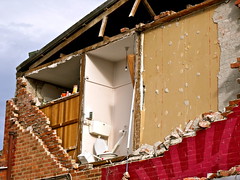
Earthquake Damage.
Images, eqnz.chch.2010
Damage from the Christchurch earthquake that hit on 4/9/10 @ 4:35am. Measured 7.1 on the richter scale.
Earthquake Damage.
Images, eqnz.chch.2010
Damage from the Christchurch earthquake that hit on 4/9/10 @ 4:35am. Measured 7.1 on the richter scale.
earthquake damage
Images, eqnz.chch.2010
Damage from the Christchurch 7.1 earthquake on 4th Sept 2010
Earthquake Damage.
Images, eqnz.chch.2010
Damage from the Christchurch earthquake that hit on 4/9/10 @ 4:35am. Measured 7.1 on the richter scale.
earthquake damage
Images, eqnz.chch.2010
Damage from the Christchurch 7.1 earthquake on 4th Sept 2010
earthquake damage
Images, eqnz.chch.2010
Damage from the Christchurch 7.1 earthquake on 4th Sept 2010
earthquake damage
Images, eqnz.chch.2010
Damage from the Christchurch 7.1 earthquake on 4th Sept 2010 Church of St. John the Baptist, Latimer Square, Christchurch, New Zealand
earthquake damage
Images, eqnz.chch.2010
Damage from the Christchurch 7.1 earthquake on 4th Sept 2010
Earthquake Damage
Images, eqnz.chch.2010
2010-4232 Christchurch earthquake 7.1M 4 Sep 10
earthquake damage
Images, eqnz.chch.2010
Damage from the Christchurch 7.1 earthquake on 4th Sept 2010
Damaged
Images, eqnz.chch.2010
Awaiting restoration, the Cathedral was damaged in a series of major earthquakes. 52 in 2018: 30. Ruin or Archaelogical site
Lyttelton earthquake damage
Images, eqnz.chch.2010
None
Kaiapoi, earthquake damage
Images, eqnz.chch.2010
Damage from the Christchurch 7.1 earthquake on 4th Sept 2010
probable earthquake damage 1b
Images, eqnz.chch.2010
deduced from the fact the breaks appeared new and others damaged around it.
probable earthquake damage 1a
Images, eqnz.chch.2010
deduced from the fact the breaks appeared new and others damaged around it.
Lyttelton Cemetery earthquake damage
Images, eqnz.chch.2010
None
Christchurch Earthquake
Images, eqnz.chch.2010
Harbourlight Lyttelton - condoned off due to damage
An Earthquake Damaged Cliff Top Home
Images, UC QuakeStudies
Damage to a wooden house at the top of a cliff.
Canterbury's Earthquakes
Audio, Radio New Zealand
GNS seismologists explain why the Darfield and Christchurch earthquakes were so damaging and 'punchy'
Ruth Gardner's Blog 26/02/2011: Shaken City
Articles, UC QuakeStudies
An entry from Ruth Gardner's blog for 26 February 2011 entitled, "Shaken City".
Ruth Gardner's Blog 04/05/2011: Earthquake Alphabet
Articles, UC QuakeStudies
An entry from Ruth Gardner's blog for 4 May 2011 entitled, "Earthquake Alphabet".
Roz Johnson's Blog 24/12/2011: Retaining Walls and Earthquakes
Articles, UC QuakeStudies
An entry from Roz Johnson's blog for 24 December 2011 entitled, "Retaining Walls and Earthquakes".
Lyttelton Review 19 March 2012
Articles, UC QuakeStudies
The "Lyttelton Review" newsletter for 19 March 2012, produced by the Lyttelton Harbour Information Centre.
Building pounding damage observed in the 2011 Christchurch earthquake
Research papers, University of Canterbury Library
This paper describes the pounding damage sustained by buildings in the February 2011 Christchurch earthquake. Approximately 6% of buildings in Christchurch CBD were observed to have suffered some form of serious pounding damage. Typical and exceptional examples of building pounding damage are presented and discussed. Almost all building pounding damage occurred in unreinforced masonry buildings, highlighting their vulnerability to this phenomenon. Modern buildings were found to be vulnerable to pounding damage where overly stiff and strong ‘flashing’ components were installed in existing building separations. Soil variability is identified as a key aspect that amplifies the relative movement of buildings, and hence increases the likelihood of pounding damage. Building pounding damage is compared to the predicted critical pounding weaknesses that have been identified in previous analytical research.
Building pounding damage observed in the 2011 Christchurch earthquake
Research papers, University of Canterbury Library
This paper describes the pounding damage sustained by buildings in the February 2011 Christchurch earthquake. Approximately 6% of buildings in Christchurch CBD were observed to have suffered some form of serious pounding damage. Typical and exceptional examples of building pounding damage are presented and discussed. Almost all building pounding damage occurred in unreinforced masonry buildings, highlighting their vulnerability to this phenomenon. Modern buildings were found to be vulnerable to pounding damage where overly stiff and strong ‘flashing’ components were installed in existing building separations. Soil variability is identified as a key aspect that amplifies the relative movement of buildings, and hence increases the likelihood of pounding damage. Building pounding damage is compared to the predicted critical pounding weaknesses that have been identified in previous analytical research.
Transcript of Bernadette Cooney's earthquake story
Articles, UC QuakeStudies
A pdf transcript of Bernadette Cooney's earthquake story, captured by the UC QuakeBox project.
Lyttelton Harbour Review 15 July 2013
Articles, UC QuakeStudies
The "Lyttelton Harbour Review" newsletter for 15 July 2013, produced by the Lyttelton Harbour Information Centre.
Fairfax Video, October 2010 (12)
Videos, UC QuakeStudies
Part seven of a video series about the first stage of the Tonkin & Taylor Geotechnical Land Damage Assessment and Reinstatement Report. The report was prepared for the Earthquake Commission after the 4 September 2010 earthquake.
Fairfax Video, October 2010 (7)
Videos, UC QuakeStudies
Part two of a video series about the first stage of the Tonkin & Taylor Geotechnical Land Damage Assessment and Reinstatement Report. The report was prepared for the Earthquake Commission after the 4 September 2010 earthquake.
Fairfax Video, October 2010 (11)
Videos, UC QuakeStudies
Part six of a video series about the first stage of the Tonkin & Taylor Geotechnical Land Damage Assessment and Reinstatement Report. The report was prepared for the Earthquake Commission after the 4 September 2010 earthquake.