

Search
found 39 results
Images for building; more images...
Government Building Worcester Street – Building for the Future
Articles, Lost Christchurch
The construction of government buildings have long attracted opinion and criticism and the Italian Renaissance style Government Buildings on the corner of Worcester street and Cathedral Square were…
Empirical vulnerability assessment of reinforced concrete frame with mason…
Research papers, The University of Auckland Library
During the 2010/2011 Canterbury earthquakes, Reinforced Concrete Frame with Masonry Infill (RCFMI) buildings were subjected to significant lateral loads. A survey conducted by Christchurch City Council (CCC) and the Canterbury Earthquake Recovery Authority (CERA) documented 10,777 damaged buildings, which included building characteristics (building address, the number of storeys, the year of construction, and building use) and post-earthquake damage observations (building safety information, observed damage, level of damage, and current state of the buildings). This data was merged into the Canterbury Earthquake Building Assessment (CEBA) database and was utilised to generate empirical fragility curves using the lognormal distribution method. The proposed fragility curves were expected to provide a reliable estimation of the mean vulnerability for commercial RCFMI buildings in the region http://www.13thcms.com/wp-content/uploads/2017/05/Symposium-Info-and-Presentation-Schedule.pdf VoR - Version of Record
The continued response of the New Zealand Government to the Canterbury ear…
Research papers, University of Canterbury Library
The Canterbury earthquakes of 2010 and 2011 caused significant damage and disruption to the city of Christchurch, New Zealand. A Royal Commission was established to report on the causes of building failure as a result of the earthquakes as well as look at the legal and best-practice requirements for buildings in New Zealand Central Business Districts. The Royal Commission made 189 recommendations on a variety of matters including managing damaged buildings after an earthquake, the adequacy of building codes and standards, and the processes of seismic assessments of existing buildings to determine their earthquake vulnerability. In response the Ministry of Business, Innovation and Employment, the agency responsible for administering building regulation in New Zealand, established a work programme to assist with the Canterbury rebuild and to implement the lessons learned throughout New Zealand. The five primary work streams in the programme are: • Facilitating the Canterbury Rebuild • Structural Performance and Design Standards • Geotechnical and structural guidance • Existing Building Resilience • Post Disaster Building Management This paper provides more detail on each of the work streams. There has been significant collaboration between the New Zealand Government and the research community, technical societies, and engineering consultants, both within New Zealand and internationally, to deliver the programme and improve the resilience of the New Zealand built environment. This has presented major challenges for an extremely busy industry in the aftermath of the Canterbury earthquakes. The paper identifies the items of work that have been completed and the work that is still in progress at the time of writing.
Building regulator faces overhaul after worst performance result
Audio, Radio New Zealand
The country's building regulator admits it needs a major overhaul after years scrambling just to react to leaky homes and the Canterbury and Kaikōura earthquakes.
Digital Photograph: Flowers at the Site of the Former Canterbury Televisio…
Images, Canterbury Museum
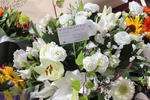
One landscape colour digital photograph taken 22 February 2017 showing bouquets of flowers and gifts left at the site of the former Canterbury Television building in memory of earthquake victims.
New quake safety doubts over police stations, hospitals
Audio, Radio New Zealand
It's been revealed that not a single one of New Zealand's 315 police buildings constructed before 2011 have had a full earthquake safety check. Canterbury's district health buildings and a central Wellington cinema are among other major structures needing checks. Phil Pennington joins us with the details.
Digital Photograph: Flowers at the Site of the Former Canterbury Televisio…
Images, Canterbury Museum
One landscape colour digital photograph taken 22 February 2017 showing a bouquet of flowers left at the site of the former Canterbury Television building by the Toyama Language School in memory of earthquake victims.
Digital Photograph: Flowers at the Site of the Former Canterbury Televisio…
Images, Canterbury Museum
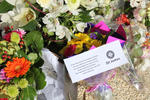
One landscape colour digital photograph taken 22 February 2017 showing a bouquet of flowers left at the site of the former Canterbury Television building by St John New Zealand in memory of earthquake victims and in appreciation of first responders.
CTV families hold protest in Christchurch
Audio, Radio New Zealand
Some of the families of the 115 people who dies in the CTV building during the 2011 Canterbury earthquake protested in Latimer Square yesterday over the police decision not to prosecute the designers of the CTV building. They say they do want to see a prosecution go ahead, and they are seeking legal advice about what their options are.
Justice for CTV families
Audio, Radio New Zealand
The families of those who died in the CTV building collapse in Christchurch's 2011 earthquake say they will continue to fight for justice.
Identification of cost-effective retrofit and/or rehabilitation strategies…
Research papers, University of Canterbury Library
Recently developed performance-based earthquake engineering framework, such as one provided by PEER (Deierlein et al. 2003), assist in the quantification in terms of performance such as casualty, monetary losses and downtime. This opens up the opportunity to identify cost-effective retrofit/rehabilitation strategies by comparing upfront costs associated with retrofit with the repair costs that can be expected over time. This loss assessment can be strengthened by learning from recent earthquakes, such as the 2010 Canterbury and 2016 Kaikoura earthquakes. In order to investigate which types of retrofit/rehabilitation strategies may be most cost-effective, a case study building was chosen for this research. The Pacific Tower, a 22-storey EBF apartment located within the Christchurch central business district (CBD), was damaged and repaired during the 2010 Canterbury earthquake series. As such, by taking hazard levels accordingly (i.e. to correspond to the Christchurch CBD), modelling and analysing the structure, and considering the vulnerability and repair costs of its different components, it is possible to predict the expected losses of the aforementioned building. Using this information, cost-effective retrofit/rehabilitation strategy can be determined. This research found that more often than not, it would be beneficial to improve the performance of valuable non-structural components, such as partitions. Although it is true that improving such elements will increase the initial costs, over time, the benefits gained from reduced losses should be expected to overcome the initial costs. Aftershocks do increase the predicted losses of a building even in lower intensities due to the fact that non-structural components can get damaged at such low intensities. By comparing losses computed with and without consideration of aftershocks for a range of historical earthquakes, it was found that the ratio between losses due to main shock with aftershocks to the losses due to the main shock only tended to increase with increasing main shock magnitude. This may be due to the fact that larger magnitude earthquakes tend to generate larger magnitude aftershocks and as those aftershocks happen within a region around the main shock, they are more likely to cause intense shaking and additional damage. In addition to this observation, it was observed that the most significant component of loss of the case study building was the non-structural partition walls.
Digital Photograph: Earthquake Memorial Trellis
Images, Canterbury Museum
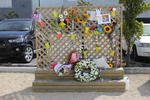
One landscape colour digital photograph taken 22 February 2017 showing an earthquake memorial trellis at the site of the former Canterbury Television building.
Digital Photograph: Earthquake Memorial Trellis
Images, Canterbury Museum
One landscape colour digital photograph taken 22 February 2017 showing an earthquake memorial trellis at the site of the former Canterbury Television building.
The Panel with Chris Clarke and Finlay MacDonald (Part 1)
Audio, Radio New Zealand
A report into why Statistics House failed in the November earthquake has revealed a design flaw in the building, and the Government says all buildings nationwide like Statistics House will now need checking. Christchurch man Jeremy Teaguea wants to overturn the law making wearing a bike helment compulsory. Former cyclone Debbie will make her presence felt here over the next week. Weatherman Richard Green tells us what to expect. Going up for Labour and a downward turn in the polls for National. Is it really because of Jacinda Ardern and Bill English?
Building resilience in transient rural communities – a post-earthquake reg…
Research papers, Lincoln University
The Kaikoura earthquake in November 2016 highlighted the vulnerability of New Zealand’s rural communities to locally-specific hazard events, which generate regional and national scale impacts. Kaikoura was isolated with significant damage to both the east coast road (SH1) and rail corridor, and the Inland Road (Route 70). Sea bed uplift along the coast was significant – affecting marine resources and ocean access for marine operators engaged in tourism and harvesting, and recreational users. While communities closest to the earthquake epicentre (e.g., Kaikoura, Waiau, Rotherham and Cheviot) suffered the most immediate earthquake damage, the damage to the transport network, and the establishment of an alternative transport route between Christchurch and Picton, has significantly impacted on more distant communities (e.g., Murchison, St Arnaud and Blenheim). There was also considerable damage to vineyard infrastructure across the Marlborough region and damage to buildings and infrastructure in rural settlements in Southern Marlborough (e.g., Ward and Seddon).
Earthquake survivor says Wgtn must cordon around unsafe sites
Audio, Radio New Zealand
A woman crushed to within milimetres of her life in the Christchurch earthquake says it is murderously cavalier for Wellington's council not to cordon off weak or prone buildings.
Sign of the Kiwi re-opens in Christchurch - locals delight
Audio, Radio New Zealand
Built in June 1917, the popular 'Sign of the Kiwi' heritage building in Christchurch's Port Hills has re-opened today after being closed for six years due to earthquake damage.
Post Seismic Capacity of Damaged and Repaired Reinforced Concrete Plastic …
Research papers, University of Canterbury Library
This paper presents preliminary results of an experimental campaign on three beam-column joint subassemblies extracted from a 22-storey reinforced concrete frame building constructed in late 1980s at the Christchurch’s Central Business District (CBD) area, damaged and demolished after the 2010-2011 Canterbury earthquakes sequence (CES). The building was designed following capacity design principles. Column sway (i.e., soft storey) mechanisms were avoided, and the beams were provided with plastic hinge relocation details at both beam-ends, aiming at developing plastic hinges away from the column faces. The specimens were tested under quasi-static cyclic displacement controlled lateral loading. One of the specimens, showing no visible residual cracks was cyclically tested in its as-is condition. The other two specimens which showed residual cracks varying between hairline and 1.0mm in width, were subjected to cyclic loading to simulate cracking patterns consistent with what can be considered moderate damage. The cracked specimens were then repaired with an epoxy injection technique and subsequently retested until reaching failure. The epoxy injection techniques demonstrated to be quite efficient in partly, although not fully, restoring the energy dissipation capacities of the damaged specimens at all beam rotation levels. The stiffness was partly restored within the elastic range and almost fully restored after the onset of nonlinear behaviour.
Digital Photograph: Flowers on an Earthquake Memorial Trellis
Images, Canterbury Museum
One landscape colour digital photograph taken 22 February 2017 showing a bouquet of flowers and a note attached to an earthquake memorial trellis at the site of the former Canterbury Television building.
The sad story of the secret staircase
Articles, Christchurch uncovered
The thing about being a buildings archaeologist is that even though some houses might look the same, the story of their occupants and occupation is always different. These stories of occupation are not always revealed in the archaeology of the … Continue reading →
Finding out more, under the floor
Articles, Christchurch uncovered
Recently, Peter Mitchell, one of our building archaeology specialists, recorded a 19th century residential dwelling just on the edge of Christchurch’s Central City. This dwelling was similar in form and function to others we have seen in Canterbury – it … Continue reading →
Digital Photograph: Commemorative Note to Andrew Bishop
Images, Canterbury Museum
One landscape colour digital photograph taken 22 February 2017 showing a commemorative note to, and photograph of, Andrew Bishop attached to an earthquake memorial trellis at the site of the former Canterbury Television building.
A least invasive method to estimate the residual strain capacity of steel …
Research papers, University of Canterbury Library
Capacity design and hierarchy of strength philosophies at the base of modern seismic codes allow inelastic response in case of severe earthquakes and thus, in most traditional systems, damage develops at well-defined locations of reinforced concrete (RC) structures, known as plastic hinges. The 2010 and 2011 Christchurch earthquakes have demonstrated that this philosophy worked as expected. Plastic hinges formed in beams, in coupling beams and at the base of columns and walls. Structures were damaged permanently, but did not collapse. The 2010 and 2011 Christchurch earthquakes also highlighted a critical issue: the reparability of damaged buildings. No methodologies or techniques were available to estimate the level of subsequent earthquakes that RC buildings could still sustain before collapse. No repair techniques capable of restoring the initial condition of buildings were known. Finally, the cost-effectiveness of an eventual repair intervention, when compared with a new building, was unknown. These aspects, added to nuances of New Zealand building owners’ insurance coverage, encouraged the demolition of many buildings. Moreover, there was a perceived strong demand from government and industry to develop techniques for assessing damage to steel reinforcement bars embedded in cracked structural concrete elements. The most common questions were: “Have the steel bars been damaged in correspondence to the concrete cracks?”, “How much plastic deformation have the steel bars undergone?”, and “What is the residual strain capacity of the damaged bars?” Minimally invasive techniques capable of quantifying the level and extent of plastic deformation and residual strain capacity are not yet available. Although some studies had been recently conducted, a validated method is yet to be widely accepted. In this thesis, a least-invasive method for the damage-assessment of steel reinforcement is developed. Based on the information obtained from hardness testing and a single tensile test, it is possible to estimate the mechanical properties of earthquake-damaged rebars. The reduction in the low-cycle fatigue life due to strain ageing is also quantified. The proposed damage assessment methodology is based on empirical relationships between hardness and strain and residual strain capacity. If damage is suspected from in situ measurements, visual inspection or computer analysis, a bar may be removed and more accurate hardness measurements can be obtained using the lab-based Vickers hardness methodology. The Vickers hardness profile of damaged bars is then compared with calibration curves (Vickers hardness versus strain and residual strain capacity) previously developed for similar steel reinforcement bars extracted from undamaged locations. Experimental tests demonstrated that the time- and temperature-dependent strain-ageing phenomenon causes changes in the mechanical properties of plastically deformed steels. In particular, yield strength and hardness increases, whereas ductility decreases. The changes in mechanical properties are quantified and their implications on the hardness method are highlighted. Low-cycle fatigue (LCF) failures of steel reinforcing bars have been observed in laboratory testing and post-earthquake damage inspections. Often, failure might not occur during a first seismic event. However, damage is accumulated and the remaining fatigue life is reduced. Failure might therefore occur in a subsequent seismic event. Although numerous studies exist on the LCF behaviour of steel rebars, no studies had been conducted on the strain-ageing effects on the remaining fatigue life. In this thesis, the reduction in fatigue life due to this phenomenon is determined through a number of experimental tests.
The once and future cathedral
Research papers, University of Canterbury Library
This is an ethnographic case study, tracking the course of arguments about the future of a city’s central iconic building, damaged following a major earthquake sequence. The thesis plots this as a social drama and examines the central discourses of the controversy. The focus of the drama is the Anglican neo-Gothic Christ Church Cathedral, which stands in the central square of Christchurch, New Zealand. A series of major earthquakes in 2010/2011 devastated much of the inner city, destroying many heritage-listed buildings. The Cathedral was severely damaged and was declared by Government officials in 2011 to be a dangerous building, which needed to be demolished. The owners are the Church Property Trustees, chaired by Bishop Victoria Matthews, a Canadian appointed in 2008. In March 2012 Matthews announced that the Cathedral, because of safety and economic factors, would be deconstructed. Important artefacts were to be salvaged and a new Cathedral built, incorporating the old and new. This decision provoked a major controversy, led by those who claimed that the building could and should be restored. Discourses of history and heritage, memory, place and identity, ownership, economics and power are all identified, along with the various actors, because of their significance. However, the thesis is primarily concerned with the differing meanings given to the Cathedral. The major argument centres on the symbolic interaction between material objects and human subjects and the various ways these are interpreted. At the end of the research period, December 2015, the Christ Church Cathedral stands as a deteriorating wreck, inhabited by pigeons and rats and shielded by protective, colourfully decorated wooden fences. The decision about its future remains unresolved at the time of writing.
Digital Photograph: Karen Bishop at an Earthquake Memorial Trellis
Images, Canterbury Museum
One landscape colour digital photograph taken 22 February 2017 showing Karen Bishop attaching a windmill to an earthquake memorial trellis in memory of her son Andrew Bishop at the site of the former Canterbury Television building.
Digital Photograph: Windmill Attached to an Earthquake Memorial Trellis
Images, Canterbury Museum
One landscape colour digital photograph taken 22 February 2017 showing a windmill attached to an earthquake memorial trellis by Karen Bishop in memory of her son Andrew Bishop at the site of the former Canterbury Television building.
The Simple Lateral Mechanism Analysis (SLaMA) for the seismic performance …
Research papers, University of Canterbury Library
Research report N. 2016-2 This report presents the simplified seismic assessment of a case study reinforced concrete (RC) building following the newly developed and refined NZSEE/MBIE guidelines on seismic assessment (NZSEE/MBIE, semi-final draft 26 October 2016). After an overview of the step-by-step ‘diagnostic’ process, including an holistic and qualitative description of the expected vulnerabilities and of the assessment strategy/methodology, focus is given, whilst not limited, to the implementation of a Detailed Seismic Assessment (DSA) (NZSEE/MBIE, 2016c). The DSA is intended to provide a more reliable and consistent outcome than what can be provided by an initial seismic assessment (ISA). In fact, while the Initial Seismic Assessment (ISA), of which the Initial Evaluation Procedure is only a part of, is the more natural and still recommended first step in the overall assessment process, it is mostly intended to be a coarse evaluation involving as few resources as reasonably possible. It is thus expected that an ISA will be followed by a Detailed Seismic Assessment (DSA) not only where the threshold of 33%NBS is not achieved but also where important decisions are intended that are reliant on the seismic status of the building. The use of %NBS (% New Building Standard) as a capacity/demand ratio to describe the result of the seismic assessment at all levels of assessment procedure (ISA through to DSA) is deliberate by the NZSEE/MBIE guidelines (Part A) (NZSEE/MBIE 2016a). The rating for the building needs only be based on the lowest level of assessment that is warranted for the particular circumstances. Discussion on how the %NBS rating is to be determined can be found in Section A3.3 (NZSEE/MBIE 2016a), and, more specifically, in Part B for the ISA (NZSEE/MBIE 2016b) and Part C for the DSA (NZSEE/MBIE 2016c). As per other international approaches, the DSA can be based on several analysis procedures to assess the structural behaviour (linear, nonlinear, static or dynamic, force or displacement-based). The significantly revamped NZSEE 2016 Seismic Assessment Guidelines strongly recommend the use of an analytical (basically ‘by hand’) method, referred to the Simple Lateral Mechanism Analysis (SLaMA) as a first phase of any other numerically-based analysis method. Significant effort has thus been dedicated to provide within the NZSEE 2016 guidelines (NZSEE/MBIE 2016c) a step-by-step description of the procedure, either in general terms (Chapter 2) or with specific reference to Reinforced Concrete Buildings (Chapter 5). More specifically, extract from the guidelines, NZSEE “recommend using the Simple Lateral Mechanism Analysis (SLaMA) procedure as a first step in any assessment. While SLaMA is essentially an analysis technique, it enables assessors to investigate (and present in a simple form) the potential contribution and interaction of a number of structural elements and their likely effect on the building’s global capacity. In some cases, the results of a SLaMA will only be indicative. However, it is expected that its use should help assessors achieve a more reliable outcome than if they only carried out a detailed analysis, especially if that analysis is limited to the elastic range For complex structural systems, a 3D dynamic analysis may be necessary to supplement the simplified nonlinear Simple Lateral Mechanism Analysis (SLaMA).” This report presents the development of a full design example for the the implementation of the SLaMA method on a case study buildings and a validation/comparison with a non-linear static (pushover) analysis. The step-by-step-procedure, summarized in Figure 1, will be herein demonstrated from a component level (beams, columns, wall elements) to a subassembly level (hierarchy of strength in a beam-column joint) and to a system level (frame, C-Wall) assuming initially a 2D behaviour of the key structural system, and then incorporating a by-hand 3D behaviour (torsional effects).
Dismay over police decision on CTV prosecution
Audio, Radio New Zealand
There's been widespread dismay at the decision not to prosecute anyone for the deaths of 115 people in the CTV building collapse during the 2011 Canterbury earthquake. Police say it was a tough decision - they wanted to hold someone to account but there simply wasn't the evidence to warrant a prosecution.
Tenants struggle to determine quake resilience
Audio, Radio New Zealand
The capital has a tight rental accommodation market, and the peak demand season is just a few weeks from beginning. One prospective Wellington flat hunter, who'd experienced the Christchurch earthquake - including knowledge of the collapse, or partial collapse, of 3 buildings he'd previously lived in - has contacted us, frustrated at the lack of information available from landlords or letting agencies. What rights to information do tenants have?
Top Stories for Friday 1 September 2017
Audio, Radio New Zealand
Tax, water and housing concerns were all debated at length by Bill English and Jacinda Ardern in last night's TVNZ leaders debate. The debate came just an hour after shock 1 News Colmar Brunton poll put Labour out in front. There have been fires and explosions at a flood damaged chemical plant near Houston forcing the evacuation of people in nearby homes. A block of flats in Aro Street has been evacuated after a large slip has come down behind it. After heavy rains and flooding a Mumbai building has collapsed, killing at least 23 people. Biosecurity officials say they expect to decide by the end of the year whether they will need to order the destruction of dairy herds to wipe out a cow disease that's broken out in the South Island. It's been revealed that not a single one of New Zealand's 315 police buildings constructed before 2011 have had a full earthquake safety check. People who've bought houses in Canterbury since the September 2010 earthquake and are still battling with insurance companies over repairs, have been told that if they want to take the matter to court, today is their last chance. The Government has begun urgent talks with Australia over the Queensland's state government's "discriminatory" trade policy which takes effect today. Trade Minister Todd McClay joins us.
- 1
- »