

Search
found 48 results
Images for aid; more images...
Christchurch Earthquakes: I'll kiss it better
Images, eqnz.chch.2010
First Aid?
Social issues need to be kept in mind during chch rebuild
Audio, Radio New Zealand
Aid agencies in Canterbury say the earthquake recovery is putting buildings before people.
Govt reconsiders legal aid for quake families
Audio, Radio New Zealand
The Attorney General, Chris Finlayson, says he'll reconsider funding legal representation for the families of the victims of the Christchurch earthquake.
Govt reconsiders legal aid for quake families
Audio, Radio New Zealand
The Attorney General, Chris Finlayson, says he'll reconsider funding legal representation for the families of the victims of the Christchurch earthquake.
Addington Action.
Other, National Library of New Zealand
Group established to help residents after the February 2011 earthquake in Christchurch. Includes information about housing, fruit & vegetable cooperatives and clothing aid.
Photograph number UC 11-0091-21
Images, UC QuakeStudies
Hard hats, hi-vis, and a first aid kit, waiting outside as Emergency and Security staff retrieve work for the Registry Building.
Fairfax Video, September 2010 (15)
Videos, UC QuakeStudies
A video about the government's financial aid plan for workers affected by the 4 September 2010 earthquake. Prime Minister John Key has travelled to Christchurch to announce the plan. This video includes footage of a press conference with John Key at the Christchurch Art Gallery. It also includes footage of John Key meeting residents at the Civil Defence Centre at Addington Raceway.
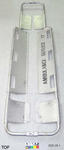
Stretcher: St John 'scoop' stretcher
Images, Canterbury Museum
One silver metal 'scoop' stretcher used by St John staff on 22 February 2011 in emergency first aid response to the Christchurch earthquakes.
Drone Aided Machine-Learning Tool for Post-Earthquake Bridge Damage Reconn…
Research papers, University of Canterbury Library
After a high-intensity seismic event, inspections of structural damages need to be carried out as soon as possible in order to optimize the emergency management, as well as improving the recovery time. In the current practice, damage inspections are performed by an experienced engineer, who physically inspect the structures. This way of doing not only requires a significant amount of time and high skilled human resources, but also raises the concern about the inspector’s safety. A promising alternative is represented using new technologies, such as drones and artificial intelligence, which can perform part of the damage classification task. In fact, drones can safely access high hazard components of the structures: for instance, bridge piers or abutments, and perform the reconnaissance by using highresolution cameras. Furthermore, images can be automatically processed by machine learning algorithms, and damages detected. In this paper, the possibility of applying such technologies for inspecting New Zealand bridges is explored. Firstly, a machine-learning model for damage detection by performing image analysis is presented. Specifically, the algorithm was trained to recognize cracks in concrete members. A sensitivity analysis was carried out to evaluate the algorithm accuracy by using database images. Depending on the confidence level desired,i.e. by allowing a manual classification where the alghortim confidence is below a specific tolerance, the accuracy was found reaching up to 84.7%. In the second part, the model is applied to detect the damage observed on the Anzac Bridge (GPS coordinates -43.500865, 172.701138) in Christchurch by performing a drone reconnaissance. Reults show that the accuracy of the damage detection was equal to 88% and 63% for cracking and spalling, respectively.
An archaeological fairytale
Articles, Christchurch uncovered
Presenting, with the aid of illustrations, the tale of an intrepid archaeologist, her trusty team and her quest to untangle the history of a house. It’s the story of a long lost age, a story for the ages, an age old story, a coming … Continue reading →
They Tried to Put Humpty Together Again
Images, UC QuakeStudies
A damaged brick building has wooden bracing holding the walls together. The photographer comments, "This building came through the September Christchurch quake with a few band aid plasters, but the February quake means that she is now DNR (Do Not Resuscitate)".
Top Stories for Wednesday 13 April 2011
Audio, Radio New Zealand
Legal aid changes incense legal fraternity, No eftpos available at Rugby World Cup, Japan says radiation declining but crisis matches Chernobyl, Government budgets $8.5 billion to rebuild Christchurch, Unanimous support over earthquake powers breaks down, and Maori Party MP says using police in oil protest extreme.
Four Person Emergency Kit: After Shake
Images, Canterbury Museum
One comprehensive emergency kit contained within a 68 litre heavy duty plastic storage case; includes four personal essentials packs, a survival first aid kit, an After Shake base pack and two 20 litre water storage canisters. Designed by the company After Shake to support a four person household following an emergency. This comprehensive emerg...
The Nelson Mail Image: Martin de Ruyter 2010:09:09 11:08:04
Images, UC QuakeStudies
Photograph captioned by Fairfax, "Nelson College for Girls year 12 leaders (from left) Sophie Day, Petra Matz, Sascha Miller, Jessica Rose, Kate Mickleson, Ming Pons, Yvette Jones-White, Nicola Britten, Eilish Wilson (obscured), Zoey Coombs-King, Abigail Goodison and Mackenzie Orange have started a collection at the college of cans and cash to aid people of Canterbury affected by the recent earthquake".
More than a Band Aid : how the use of popular music helped a city recover …
Research papers, University of Canterbury Library
The combination of music and disaster has been the subject of much study, especially starstudded telethons and songs that commemorate tragedy. However, there are many other ways that music can be used after disaster that provide benefits far greater than money or memorials but are not necessarily as prominent in the worldwide media landscape. Beginning in September 2010, the city of Christchurch, New Zealand, has been struck by several major earthquakes and over 11,000 aftershocks, the most destructive of which caused 185 deaths. As with many other disasters, music has been used as a method of fundraising and commemoration, but personal experience suggests many other ways that music can be used as a coping mechanism and aid to personal and community recovery. Therefore, in order to uncover the connections, context, and strategies behind its use, this thesis addresses the question: Since the earthquakes began, how has popular music been beneficial for the city and people of Christchurch? As well as documenting a wide variety of musical ‘earthquake relief’ events and charitable releases, this research also explores some of the more intangible aspects of the music-aid relationship. Two central themes are presented – fundraising and psychosocial uses – utilising individual voices and case studies to illustrate the benefits of music use after disaster at a community or city-wide level. Together the disparate threads and story fragments weave a detailed picture of the ways in which music as shared experience, as text, as commodity, and as a tool for memory and movement has been incorporated into the fabric of the city during the recovery phase.
The role of insurance in organisational recovery following the 2010 and 20…
Research papers, University of Canterbury Library
Insurance is widely acknowledged as a key component in an organisation's disaster preparedness and resilience. But how effective is insurance in aiding business recovery following a major disaster? The aim of this research was to summarise the experiences of both the insurance industry and businesses dealing with commercial insurance claims following the 2010 and 2011 Canterbury earthquakes.
The Nelson Mail Image: Martin de Ruyter 2010:09:09 11:10:50
Images, UC QuakeStudies
Photograph captioned by Fairfax, "Nelson College for Girls year 12 leaders (from left) Sophie Day, Petra Matz, Sascha Miller, Jessica Rose, Kate Mickleson, Ming Pons, Emma Dallison, Yvette Jones-White, Nicola Britten, Eilish Wilson, Zoey Coombs-King, Abigail Goodison and Mackenzie Orange have started a collection at the college of cans and cash to aid people of Canterbury affected by the recent earthquake".
The Nelson Mail Image: Martin de Ruyter 2010:09:09 11:10:50
Images, UC QuakeStudies
Photograph captioned by Fairfax, "Nelson College for Girls year 12 leaders (from left) Sophie Day, Petra Matz, Sascha Miller, Jessica Rose, Kate Mickleson, Ming Pons, Emma Dallison, Yvette Jones-White, Nicola Britten, Eilish Wilson, Zoey Coombs-King, Abigail Goodison and Mackenzie Orange have started a collection at the college of cans and cash to aid people of Canterbury affected by the recent earthquake".
Aftermath of the Indonesian tsunami
Audio, Radio New Zealand
Red Cross aid worker Rosemarie North is in the Banten province of Java where authorities have lifted the alert level for the Anak Krakatau volcano to its second-highest level. She has worked on and off for the Red Cross since 2003 in all kinds of situations, including post-conflict in Sierra Leone, landslides in the Philippines and Papua New Guinea, refugee camps in Chad, earthquakes in Nepal and Christchurch, and tsunamis in Southeast Asia and Samoa. [image_crop:72149:full]
The Week in Review- week ending 11 March 2011
Audio, Radio New Zealand
A review of the week's news including: national earthquake memorial service announced, former defence chief to be new Governor General, Reserve Bank slashes official cash rate, Christchurch businesses say OCR cut alone won't save them, mounting concern over Christchurch World Cup prospects, government says 10,000 Christchurch homes will be demolished, alarm over possibility of mass demolition in CBD, international crews head home, petrol prices at three year high, Pike River mine receivers take control from police and boulder sold for thousands in aid of Christchurch
The Week in Review - week ending 4 March 2011
Audio, Radio New Zealand
A review of the week's news including: Christchurch's emergency operation moves from rescue to recovery, two minutes' silence observed nationwide, government announces aid package, Finance Minister outlines cost of quake, a fifth of Christchurch population has fled, inquiry launched into collapse of damaged buildings, many Christchurch schools remain closed and some of their pupils enrol elsewhere, students and farmers roll up their sleeves to help quake victims, rescuers tell stories of survival, hundreds of Wellington buildings expected not to meet earthquake safety standards and time capsule discovered under statue of Christchurch founding father
The Week in Review - week ending 15 April 2011
Audio, Radio New Zealand
A review of the week's news, including: environmental protests against oil exploration off the East cape, changes to Legal Aid, plans to sell the Pike River coal mine, a Labour MP says his party's list is drawn up by"a gaggle of gays", confidence in the economy grows, extraordinary powers given to the Canterbury Earthquake Recovery Authority, the number of heritage buildings to be demolished after the quake grows, results from faultline mapping in Christchurch to be known within weeks, Mt Ruapehu to be monitored around the clock and Victoria Cross winners are awarded with stamps.
I'll Kiss It Better
Images, UC QuakeStudies
Digitally manipulated image of graffiti on a brick building on St Asaph Street. The graffiti depicts a sticking plaster over a broken section of the wall, with the words "I'll kiss it better". The photographer comments, "After the 22 February 2011 earthquake in Christchurch band aid plasters starting to appear in different parts of the city on damaged buildings. A year later most can still be seen. This one was once a whole plaster, but it has slowly broken up where it crossed the gap. The red bricks seen to symbolise the terrible wounds caused to the City and it's people".
Best of the Week - 6 March 2012
Audio, Radio New Zealand
Highlights from Radio New Zealand National's programmes for the week ending Friday 6th April. This week... we look at the commercial deals some media personalities are making these days, a documentary on the history of New Zealand's psychiatric hospitals, a new social phenomenon - the increasing number of people who choose to live alone, a new book and interesting findings about our national icon the kiwi, With the aid of advanced functional MRI scanners, scientists are getting closer to being able to read your mind, the opening of a public art project by the Christchurch Art Gallery to try and ensure art continues to have a presence in the earthquake hit city.
Dateline Pacific evening edition for 1 March 2018
Audio, Radio New Zealand
Disaster teams in Papua New Guinea are still struggling to reach parts of the country hit hard by Monday's 7-point-5 earthquake: the Tongan branch of aid agency Live and Learn is still busy helping people patch up their homes two weeks on from the battering dished out by Cyclone Gita: Oceania leaders of the Anglican church gathering in Fiji will be looking at better preparing their people for natural disasters at a fono this week in Suva attended by the Archbishop of Canterbury; Pacific people call for more influence on global issues that affect the region's rapidly changing climate; a mould problem in Australia's refugee detention centre on Nauru posed a serious health threat.
Slane, Christopher, 1957-:[Christchurch earthquake] 26 February 2011
Images, Alexander Turnbull Library
The letters 'CHCH' are built from broken masonry and stand amongst the chaos of broken buildings. It is the usual acronym for the city of Christchurch; here however it stands for 'catastrophe', 'havoc', 'care', 'help'. Context - on 22 February 2011 a 6.3 magnitude earthquake struck in Christchurch, which has probably killed more than 200 people (at this point the number is still not known) and caused very severe damage. The courage, generosity and 'can do' attitude of the people of Christchurch has been wonderful but the whole country and is contributing to the effort to get Christchurch back on its feet as well as aid from overseas. Quantity: 1 digital cartoon(s).
Evans, Malcolm Paul, 1945- :"WHAT!" 20 July 2011
Images, Alexander Turnbull Library
A man dozes in front of the television news which reports in four cameos 'Israel defies UN!, Israel assassinates Palestinian leaders!, land seized and homes bulldozed, Israel smashes Palestinian infrastructure!, Gaza shelled!', Israel blocks aid convoys! Nine die!, Palestinians children traumatised'. In the last cameo the newsreader says 'Israeli spies in NZ - maybe!' and the man wakes up and fully alert yells 'WHAT!' Context: We only care when the news is close to home! The Southland Times reported on 20th July that an Israeli national killed in the February Christchurch Earthquake was a Mossad spy. PM John Key has confirmed that an investigation into the four Israelis involved was carried out by police and the SIS but he said no evidence was found of a link between the group and Israeli intelligence. It would seem that the group were backpackers, not Mossad agents. Colour and black and white versions available Quantity: 2 digital cartoon(s).
User manual for SLAT: Seismic Loss Assessment Tool version 1.14
Research papers, University of Canterbury Library
SLAT is a computer program for performing seismic loss assessment of structures subjected to earthquake risk. SLAT is written in FORTRAN and compatible with Microsoft operating systems. The tool uses the uncoupled modelling approach advocated by the Pacific Earthquake Engineering Research (PEER) Centre, where the loss is computed through the use of interim variables. This user manual is intended as a reference for users of SLAT to aid in: (i) the preparation of the primary input file; (ii) the preparation of external data files; (iii) the theory behind the numerical algorithm of the SLAT program; (iv) example problems for beginning users; and (v) the database of component fragility and loss functions built into the SLAT library. While every effort has been made to ensure that the subroutines comprising SLAT are bugfree, users should always use simple checks and engineering judgment to ensure that the results are appropriate. Should any suspected errors be found please contact the author.
Development of realistic Vs profiles in Christchurch, New Zealand, via act…
Research papers, University of Canterbury Library
Deep shear wave velocity (Vs) profiles (>400 m) were developed at 14 sites throughout Christchurch, New Zealand using surface wave methods. This paper focuses on the inversion of surface wave data collected at one of these sites, Hagley Park. This site is located on the deep soils of the Canterbury Plains, which consist of alluvial gravels inter-bedded with estuarine and marine sands, silts, clays and peats. Consequently, significant velocity contrasts exist at the interface between geologic formations. In order to develop realistic velocity models in this complex geologic environment, a-priori geotechnical and geologic data were used to identify the boundaries between geologic formations. This information aided in developing the layering for the inversion parameters. Moreover, empirical reference Vs profiles based on material type and confining pressure were used to develop realistic Vs ranges for each layer. Both the a-priori layering information and the reference Vs curves proved to be instrumental in generating realistic velocity models that account for the complex inter-bedded geology in the Canterbury Plains.
Wastewater wetlands : urban landscape implications and opportunities
Research papers, Lincoln University
An emerging water crisis is on the horizon and is poised to converge with several other impending problems in the 21st century. Future uncertainties such as climate change, peak oil and peak water are shifting the international focus from a business as usual approach to an emphasis on sustainable and resilient strategies that better meet these challenges. Cities are being reimagined in new ways that take a multidisciplinary approach, decompartmentalising functions and exploring ways in which urban systems can share resources and operate more like natural organisms. This study tested the landscape design implications of wastewater wetlands in the urban environment and evaluated their contribution to environmental sustainability, urban resilience and social development. Black and grey water streams were the central focus of this study and two types of wastewater wetlands, tidal flow (staged planning) and horizontal subsurface flow wetlands were tested through design investigations in the earthquake-affected city of Christchurch, New Zealand. These investigations found that the large area requirements of wastewater wetlands can be mitigated through landscape designs that enhance a matrix of open spaces and corridors in the city. Wastewater wetlands when combined with other urban and rural services such as food production, energy generation and irrigation can aid in making communities more resilient. Landscape theory suggests that the design of wastewater wetlands must meet cultural thresholds of beauty and that the inclusion of waste and ecologies in creatively designed landscapes can deepen our emotional connection to nature and ourselves.
- 1
- »