

Search
found 172 results
Images for Road; more images...
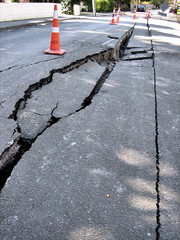


Earthquake damage - road
Images, eqnz.chch.2010
Aftermath of September 4th Earthquake in Canterbury NZ. Storm drains - Lower Styx Road, Brooklands.
Earthquake damage - roads
Images, eqnz.chch.2010
Aftermath of September 4th Earthquake in Canterbury, NZ. Damage to road alongside Avon River, Christchurch.
Earthquake damage - road
Images, eqnz.chch.2010
Aftermath of September 4th Earthquake in Canterbury, NZ. Damage to roads alongside Avon river, Christchurch.
Road Closed
Images, eqnz.chch.2010
Earthquake damaged building on a Walk around the city, May 1, 2014 Christchurch New Zealand. Demolition work on Christchurch's "distinctive" former civic building is under way. The category-2 heritage building was designed by G A J Hart and opened in 1939 as the Miller's department store. It featured the South Island's first escalator, which...
Earthquake damage - road
Images, eqnz.chch.2010
Aftermath of September 4th Earthquake in Canterbury, NZ. Damage to roads alongside Avon river, Christchurch City.
Central City Tour, 4 April 2011 - Photograph 06
Images, UC QuakeStudies
Road cones mark off a large crack in River Road, where the road has slumped towards the river.
Earthquake damage - road
Images, eqnz.chch.2010
Aftermath of September 4th Earthquake in Canterbury (area covers Christchurch City) NZ. Storm drains - Anfield Street, Brooklands.
Banks Avenue, Richmond - Photograph 20
Images, UC QuakeStudies
Roading machinery parked on the side of River Road. The road is under repair, but has not yet been resealed. The photographer comments, "Looking east to Banks Ave-Dallington Tce. River Rd nearly ready for re-sealing. Over the next year, the road subsided and was repaired 3 or 4 times".
DG012 Roading Terminology
Articles, UC QuakeStudies
A guideline which provided clarity to designers, asset owners and others on the meaning of terminology to describe the type of roading works proposed/undertaken.
Banks Avenue, Richmond - Photograph 07
Images, UC QuakeStudies
A digger scraping damaged tarseal from River Road in Richmond. A portaloo sits on the side of the road. The photographer comments, "Road repairs. River Rd, Richmond, looking west".
Quantifying Road Criticality through the Impact of Disruptions due to Natu…
Research papers, The University of Auckland Library
Road networks are highly exposed to natural hazard events, which can lead to significant economic and social consequences. In New Zealand, events such as the 2011 Christchurch earthquake, the 2016 Kaikōura earthquake, and the Cyclone Gabrielle in 2023 have demonstrated the severe consequences of road network disruptions. Traditional post event economic assessments often focus solely on clean-up and repair costs, neglecting the broader and more enduring impacts these events can have. Furthermore, business cases for resilience investments usually fail when quantifying the economic benefits of mitigation strategies, due to the underestimation of road disruption consequences. Importantly, not all road link disruptions contribute equally to these consequences, making the identification of critical road links a key step in resilience focused investment prioritization. Furthermore, traditional transportation asset management typically evaluates the life cycle of roads under normal conditions, such as traffic loads and standard environmental factors, while neglecting the influence of natural hazards. However, these events can significantly alter road deterioration and increase maintenance costs, emphasizing the need for integrating risk and resilience into transportation asset management approaches. This thesis presents a methodology to evaluate road criticality by assessing the economic consequences of road disruptions in combination with a hazard model in a prioritization index. Initially, the consequences are quantified through increased travel time, higher vehicle operating costs, and increased gas emissions. Thereafter, a new consequence model is introduced to estimate the increase in maintenance costs on alternative routes that absorb diverted traffic following a disruption. These consequence models are initially applied in a 'full-scan' analysis approach, where each road link is removed in turn to quantify its potential impact and, therefore, its criticality. Subsequently, a hazard model is integrated to develop a road prioritization index that combines the expected impacts of road disruptions, the individual road link criticality, and the probability of occurrence of natural hazard events. This index is designed to help road agencies in prioritizing mitigation strategies. Furthermore, the proposed methodology can also be applied to quantify the indirect economic impacts of natural hazard events. The methodology is demonstrated using New Zealand’s South Island inter-urban network as a case study, incorporating an earthquake-induced landslide model, with Python based simulations, providing road agencies a valuable tool to quantify the economic benefits of resilience investments
Central City Tour, 4 April 2011 - Photograph 07
Images, UC QuakeStudies
Road cones mark off a large crack in River Road, where the road has slumped towards the river. The photographer comments, "A bike ride around the CBD. River Rd subsidence".
Canterbury Earthquake September 2010 - Photograph 50
Images, UC QuakeStudies
Road cones cordon off a large crack in River Road where the road has slumped towards the river. The photographer comments, "Lateral spreading towards the river is very obvious here".
22 February Earthquake - Photograph 09
Images, UC QuakeStudies
Damage to River Road in Richmond. The road surface is badly cracked and slumped, and liquefaction silt covers part of the road. The photographer comments, "Lateral spreading cracks in River Rd".
22 February Earthquake - Photograph 07
Images, UC QuakeStudies
Damage to River Road in Richmond. The road surface is badly cracked and slumped, and liquefaction silt covers part of the road. Two people in gumboots walk towards a barrier erected across the road using road cones and warning tape, and in the background the badly twisted Medway Street bridge can be seen. The photographer comments, "Longitudinal cracks indicate lateral movement as the land sagged towards the river. Near 373 River Rd, looking south-east towards Medway St. The Medway St bridge is visible in the background".
22 February Earthquake - Photograph 13
Images, UC QuakeStudies
Damage to River Road in Richmond. The road is badly cracked and buckled, and is partly blocked off with road cones and warning tape. In the background is a truck carrying more road cones and signs. The photographer comments, "Major slumps and cracks along River Rd. Near 381 River Rd, looking towards the Banks Ave - Dallington Terrace corner".
22 February Earthquake - Photograph 32
Images, UC QuakeStudies
Damage to River Road in Richmond. The road is badly cracked and has slumped towards the river. Road cones and warning tape block off the road to vehicles. The photographer comments, "The end of River Rd, at the corner of Banks Ave-McBratneys Rd-Dallington Tce. Morons in 4WDs kept wanting to drive through here".
22 February Earthquake - Photograph 06
Images, UC QuakeStudies
Damage to River Road in Richmond. The road surface is badly cracked and slumped, and liquefaction silt covers part of the road. The photographer comments, "Liquefaction in River Rd. This is minor compared to many streets in town".
22 February Earthquake - Photograph 33
Images, UC QuakeStudies
A group of residents stand on River Road in Richmond. The road is badly cracked and buckled, and bas been partly blocked off with road cones and warning tape. The photographer comments, "Neighbours discussing the situation".
22 February Earthquake - Photograph 03
Images, UC QuakeStudies
Damage to Medway Street in Richmond. The road surface is cracked and buckled, and covered in liquefaction silt. A temporary road sign restricting speed to 30 is visible, with road cones behind. The photographer comments, "Medway St, Woodchester Ave on right just beyond the 30 sign".
22 February Earthquake - Photograph 01
Images, UC QuakeStudies
Damage to River Road in Richmond. The road is badly cracked and slumped, and is closed off with a row of road cones tied with warning tape. The word "closed" has been spray painted on the road surface. The photographer comments, "These photos show our old house in River Rd and recovery work around Richmond and St Albans. River Rd was again subject to severe lateral spreading. The river is still grey with silt, the road is ripped and sunken, and power poles lean at random angles. The red car belonged to a postie, who had to come back with a tow truck to extricate the car from the hole that had opened underneath it. Looking along River Road to the north-east. Taken outside 79 Medway St".
Banks Avenue, Richmond - Photograph 08
Images, UC QuakeStudies
A digger scraping damaged tarseal from River Road in Richmond. The photographer comments, "Road repairs".
22 February Earthquake - Photograph 04
Images, UC QuakeStudies
Damage to Medway Street in Richmond. The road surface is cracked and buckled, and covered in liquefaction silt. A temporary road sign restricting speed to 30 is visible, with road cones behind. The photographer comments, "Medway St, between Woodchester Ave and River Rd. Woodchester Ave on right just beyond the 30 sign".
22 February Earthquake - Photograph 57
Images, UC QuakeStudies
A long line of cars on Shirley Road. While the centre of the road is clear, there is flooding and liquefaction along the edges.
22 February Earthquake - Photograph 02
Images, UC QuakeStudies
A large crack in the road surface at the intersection of Medway Street and River Road, where River Road has slumped towards the river. The photographer comments, "Medway Street is a buckled mess of broken seal and liquefaction. 79 Medway St is on the right - taken at the corner of Medway St and River Rd".
Beachville Road, Redcliffs - Seawall Repair
Articles, UC QuakeStudies
A pdf copy of a work notice issued by SCIRT giving an overview of the Beachville Road seawall rebuild project.
June 2011 Earthquake - Photograph 08
Images, UC QuakeStudies
The flooded and silt-laden Avon River seen from River Road in Richmond. Across the river, Avonside Drive is lined with portaloos and road cones.
Best in show: Retain and gain for Sumner Road
Articles, UC QuakeStudies
A document which describes the process that SCIRT took to repair the Sumner Road retaining wall - stage 4.
Banks Avenue, Richmond - Photograph 09
Images, UC QuakeStudies
A pile of tarseal scraped from the damaged River Road sits in front of a house. The photographer comments, "Road repairs and abandoned houses".
Chambers Silencio Ensemble Photograph 11
Images, UC QuakeStudies
A photograph of 'Silencio Ensemble', an outdoor acoustic performance using tubular bells and road cones. The event was part of FESTA 2012.