
Search
found 11 results
Images for Museum; more images...
Digital Photograph: Cathedral of the Blessed Sacrament exterior angels sal…
Images, Canterbury Museum
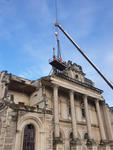
One digital photograph showing a crane arm and workers in a cage during the salvage of the exterior angels from atop the Cathedral of the Blessed Sacrament. The large intact columns at the entrance of the Cathedral can be seen in the photograph. Taken by the Catholic Diocese of Christchurch in September 2020.
Digital Photograph: Cathedral of the Blessed Sacrament being demolished
Images, Canterbury Museum
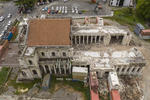
One digital photograph taken by drone showing the Cathedral of the Blessed Sacrament partially demolished. Taken by the Catholic Diocese of Christchurch in 2020.
Digital Photograph: Cathedral of the Blessed Sacrament partially demolished
Images, Canterbury Museum
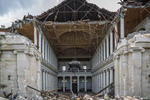
One digital photograph showing the Cathedral of the Blessed Sacrament partially demolished. The interior is visible and lined with intact columns. Taken by photographer Helen McLeod in October 2020.
Digital Photograph: Cathedral of the Blessed Sacrament being demolished by…
Images, Canterbury Museum
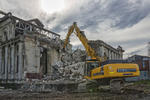
One digital photograph showing the Cathedral of the Blessed Sacrament being demolished with a yellow digger. Taken by photographer Helen McLeod in September 2020.
Digital Photograph: Cathedral of the Blessed Sacrament interior during dem…
Images, Canterbury Museum
One digital photograph showing the Cathedral of the Blessed Sacrament interior during demolition. The nave columns are still intact but debris lines the floor. Taken by photographer Helen McLeod in November 2020.
Digital Photograph: Cathedral of the Blessed Sacrament during demolition b…
Images, Canterbury Museum
One digital photograph showing the Cathedral of the Blessed Sacrament during demolition. A yellow digger arm and nibbler claw can be seen along with stone falling from an exterior wall. Taken by photographer Helen McLeod in December 2020.
Digital Photograph: Cathedral of the Blessed Sacrament exterior angels
Images, Canterbury Museum
One digital photograph showing the two angels atop the Cathedral of the Blessed Sacrament. The plinth that supports the cross stands empty between the angels. Taken by the Catholic Diocese of Christchurch in August 2020 before the angels were salvaged from the building.
Digital Photograph: Cathedral of the Blessed Sacrament exterior angels sal…
Images, Canterbury Museum
One digital photograph showing a crane and workers in a cage during the salvage of the exterior angels from atop the Cathedral of the Blessed Sacrament. Taken by the Catholic Diocese of Christchurch in August 2020.
Digital Photograph: Cathedral of the Blessed Sacrament exterior angels sal…
Images, Canterbury Museum
One digital photograph showing the salvage of the exterior angels from the Cathedral of the Blessed Sacrament. Two crane arms and strapping around one of the angels can be seen in the photograph. Taken by the Catholic Diocese of Christchurch in September 2020.
Digital Photograph: Cathedral of the Blessed Sacrament demolition
Images, Canterbury Museum
One digital photograph showing the demolition of the Cathedral of the Blessed Sacrament. A digger arm and nibbler claw can be seen in the photograph removing stone from the exterior, intact columns and ionic column capitals can be seen inside. Taken by the Catholic Diocese of Christchurch in September 2020.
Are memorials just for remembering? A study of natural disaster memorials …
Research papers, Lincoln University
When a tragedy occurs of local or national scale throughout the world a memorial is often built to remember the victims, and to keep the tragedy fresh in the minds of generations with the conviction that this must not be repeated. Memorials to commemorate natural disasters very to the objective of a human induced tragedy in that future catastrophic events that affect the lives and livelihood of many citizens are sure to reoccur in countries that are geographically pre-disposed to the ravages of nature. This thesis examines memorial sites as case studies in New Zealand and Japan to explore the differences in how these two countries memorialise earthquakes, and tsunamis in the case of Japan, and whether there are lessons that each could learn from each other. In so doing, it draws largely on scholarly literature written about memorials commemorating war as little is written on memorials that respond to natural disasters. Visited case sites in both countries are analysed through multiple qualitative research methods with a broad view of what constitutes a memorial when the landscape is changed by the devastation of a natural disaster. How communities prepare for future events through changes in planning legislation, large scale infrastructure, tourism and preparedness for personal safety are issues addressed from the perspective of landscape architecture through spatial commemorative places. The intentions and meanings of memorials may differ but in the case of a memorial of natural disaster there is a clear message that is common to all. To reduce the severity of the number of deaths and level of destruction, education and preparedness for future events is a key aim of memorials and museums.
- 1