
Search
found 155 results
Images for Canterbury; more images...
Canterbury Corner
Articles, Christchurch uncovered
Down on the corner of a Lyttelton street, there was a butcher, a courier and a large family to meet… Or at least, one could have met them about 150 odd years ago when three early settler families in Lyttelton … Continue reading →
The Canterbury Earthquake Memorial
Audio, Radio New Zealand
When the new Canterbury Earthquake Memorial was revealed last month, something unusual happened for a work of public art. It was universally appreciated! Christchurch filmmaker Rick Harvie has documented the two year long project from seeking submissions though to the official ceremony. Rick tells Lynn Freeman he's about to put his now finished documentary, including footage of the ceremony and feedback from a range of people, online.
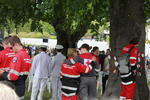
Digital Photograph: First Responders at the Canterbury Earthquake Memorial…
Images, Canterbury Museum
One landscape colour digital photograph taken 22 February 2017 showing first responders at the Canterbury Earthquake Memorial Service.
Digital Photograph: Guests Arriving at the Canterbury Earthquake Memorial …
Images, Canterbury Museum
One landscape colour digital photograph taken 22 February 2017 showing guests being seated prior to the Canterbury Earthquake Memorial Service.
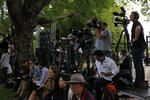
Digital Photograph: Members of the Media at the Canterbury Earthquake Memo…
Images, Canterbury Museum
One landscape colour digital photograph taken 22 February 2017 showing cameramen and journalists at the Canterbury Earthquake Memorial Service.
Digital Photograph: Media Viewing Area at the Canterbury Earthquake Memori…
Images, Canterbury Museum
One landscape colour digital photograph taken 22 February 2017 showing the appointed media viewing area at the Canterbury Earthquake Memorial Service.
Digital Photograph: First Responders Laying Wreaths at the Canterbury Eart…
Images, Canterbury Museum
One landscape colour digital photograph taken 22 February 2017 showing first responders laying wreaths at the Canterbury Earthquake Memorial Service.
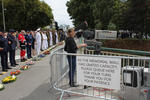
Digital Photograph: Commemoration Board at the Canterbury Earthquake Memor…
Images, Canterbury Museum
One landscape colour digital photograph taken 22 February 2017 showing a gentleman reading messages on a commemoration board at the Canterbury Earthquake Memorial Service.
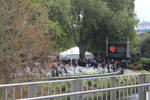
Digital Photograph: First Responders and Public Viewing Areas at the Cante…
Images, Canterbury Museum
One landscape colour digital photograph taken 22 February 2017 showing the appointed first responders and public viewing areas at the Canterbury Earthquake Memorial Service.
Digital Photograph: Brass Band at the Canterbury Earthquake Memorial Servi…
Images, Canterbury Museum
One landscape colour digital photograph taken 22 February 2017 showing brass band members at the Canterbury Earthquake Memorial Service. Behind the band is a digital screen showing words of thanks from survivors.
Digital Photograph: Flowers at the Site of the Former Canterbury Televisio…
Images, Canterbury Museum
One landscape colour digital photograph taken 22 February 2017 showing bouquets of flowers and gifts left at the site of the former Canterbury Television building in memory of earthquake victims.
Digital Photograph: Brass Band at the Canterbury Earthquake Memorial Servi…
Images, Canterbury Museum
One landscape colour digital photograph taken 22 February 2017 showing brass band members at the Canterbury Earthquake Memorial Service. Behind the band is a digital screen showing an image of flowers floating in the Avon River.
Digital Photograph: Flowers at the Site of the Former Canterbury Televisio…
Images, Canterbury Museum
One landscape colour digital photograph taken 22 February 2017 showing a bouquet of flowers left at the site of the former Canterbury Television building by the Toyama Language School in memory of earthquake victims.
Digital Photograph: Flowers at the Site of the Former Canterbury Televisio…
Images, Canterbury Museum
One landscape colour digital photograph taken 22 February 2017 showing a bouquet of flowers left at the site of the former Canterbury Television building by St John New Zealand in memory of earthquake victims and in appreciation of first responders.
Digital Photograph: Earthquake Memorial Trellis
Images, Canterbury Museum
One landscape colour digital photograph taken 22 February 2017 showing an earthquake memorial trellis at the site of the former Canterbury Television building.
Digital Photograph: Earthquake Memorial Trellis
Images, Canterbury Museum
One landscape colour digital photograph taken 22 February 2017 showing an earthquake memorial trellis at the site of the former Canterbury Television building.
Digital Photograph: Flowers Floating in the Avon River
Images, Canterbury Museum
One landscape colour digital photograph taken 22 February 2017 showing flowers floating in the Avon River as part of the Canterbury Earthquake Memorial Service.
North Canterbury locals struggling after Kaikoura quake
Audio, Radio New Zealand
Thirty properties are unlivable while another 170 have restricted access following the Kaikoura earthquake last year. RNZ reporter Conan Young reports from a town meeting.
Digital Photograph: Sunflower Atop a Road Works Cone
Images, Canterbury Museum
One landscape colour digital photograph taken 22 February 2017 showing a sunflower sitting atop a road works cone as part of the Canterbury Earthquake Memorial Service.
Digital Photograph: Commemorative Note to Andrew Bishop
Images, Canterbury Museum
One landscape colour digital photograph taken 22 February 2017 showing a commemorative note to, and photograph of, Andrew Bishop attached to an earthquake memorial trellis at the site of the former Canterbury Television building.
Digital Photograph: Flowers on an Earthquake Memorial Trellis
Images, Canterbury Museum
One landscape colour digital photograph taken 22 February 2017 showing a bouquet of flowers and a note attached to an earthquake memorial trellis at the site of the former Canterbury Television building.
Digital Photograph: Karen Bishop at an Earthquake Memorial Trellis
Images, Canterbury Museum
One landscape colour digital photograph taken 22 February 2017 showing Karen Bishop attaching a windmill to an earthquake memorial trellis in memory of her son Andrew Bishop at the site of the former Canterbury Television building.
Digital Photograph: Windmill Attached to an Earthquake Memorial Trellis
Images, Canterbury Museum
One landscape colour digital photograph taken 22 February 2017 showing a windmill attached to an earthquake memorial trellis by Karen Bishop in memory of her son Andrew Bishop at the site of the former Canterbury Television building.
The Simple Lateral Mechanism Analysis (SLaMA) for the seismic performance …
Research papers, University of Canterbury Library
Research report N. 2016-2 This report presents the simplified seismic assessment of a case study reinforced concrete (RC) building following the newly developed and refined NZSEE/MBIE guidelines on seismic assessment (NZSEE/MBIE, semi-final draft 26 October 2016). After an overview of the step-by-step ‘diagnostic’ process, including an holistic and qualitative description of the expected vulnerabilities and of the assessment strategy/methodology, focus is given, whilst not limited, to the implementation of a Detailed Seismic Assessment (DSA) (NZSEE/MBIE, 2016c). The DSA is intended to provide a more reliable and consistent outcome than what can be provided by an initial seismic assessment (ISA). In fact, while the Initial Seismic Assessment (ISA), of which the Initial Evaluation Procedure is only a part of, is the more natural and still recommended first step in the overall assessment process, it is mostly intended to be a coarse evaluation involving as few resources as reasonably possible. It is thus expected that an ISA will be followed by a Detailed Seismic Assessment (DSA) not only where the threshold of 33%NBS is not achieved but also where important decisions are intended that are reliant on the seismic status of the building. The use of %NBS (% New Building Standard) as a capacity/demand ratio to describe the result of the seismic assessment at all levels of assessment procedure (ISA through to DSA) is deliberate by the NZSEE/MBIE guidelines (Part A) (NZSEE/MBIE 2016a). The rating for the building needs only be based on the lowest level of assessment that is warranted for the particular circumstances. Discussion on how the %NBS rating is to be determined can be found in Section A3.3 (NZSEE/MBIE 2016a), and, more specifically, in Part B for the ISA (NZSEE/MBIE 2016b) and Part C for the DSA (NZSEE/MBIE 2016c). As per other international approaches, the DSA can be based on several analysis procedures to assess the structural behaviour (linear, nonlinear, static or dynamic, force or displacement-based). The significantly revamped NZSEE 2016 Seismic Assessment Guidelines strongly recommend the use of an analytical (basically ‘by hand’) method, referred to the Simple Lateral Mechanism Analysis (SLaMA) as a first phase of any other numerically-based analysis method. Significant effort has thus been dedicated to provide within the NZSEE 2016 guidelines (NZSEE/MBIE 2016c) a step-by-step description of the procedure, either in general terms (Chapter 2) or with specific reference to Reinforced Concrete Buildings (Chapter 5). More specifically, extract from the guidelines, NZSEE “recommend using the Simple Lateral Mechanism Analysis (SLaMA) procedure as a first step in any assessment. While SLaMA is essentially an analysis technique, it enables assessors to investigate (and present in a simple form) the potential contribution and interaction of a number of structural elements and their likely effect on the building’s global capacity. In some cases, the results of a SLaMA will only be indicative. However, it is expected that its use should help assessors achieve a more reliable outcome than if they only carried out a detailed analysis, especially if that analysis is limited to the elastic range For complex structural systems, a 3D dynamic analysis may be necessary to supplement the simplified nonlinear Simple Lateral Mechanism Analysis (SLaMA).” This report presents the development of a full design example for the the implementation of the SLaMA method on a case study buildings and a validation/comparison with a non-linear static (pushover) analysis. The step-by-step-procedure, summarized in Figure 1, will be herein demonstrated from a component level (beams, columns, wall elements) to a subassembly level (hierarchy of strength in a beam-column joint) and to a system level (frame, C-Wall) assuming initially a 2D behaviour of the key structural system, and then incorporating a by-hand 3D behaviour (torsional effects).
When the shaking stops, the thinking starts : a grounded theory of turnov…
Research papers, University of Canterbury Library
Voluntary turnover has been the subject of scholarly inquiry for more than 100 years and much is understood about the drivers of turnover, and the decision-making processes involved. To date most models of voluntary turnover have assumed a rational and sequential decision process, initiated primarily by dissatisfaction with the job and the perceived availability of alternatives. Operating within a strong predictive research agenda, countless studies have sought to validate, extend and refine these traditional models through the addition of distal antecedents, mediators, moderators, and proximal antecedents of turnover. The net result of this research is a large body of empirical support for a somewhat modest relationship between job dissatisfaction, perceived alternatives, turnover intentions, job search behaviour and actual turnover. Far less scholarly attention has been directed at understanding shock-induced turnover that is not necessarily derived from dissatisfaction. Moreover, almost no consideration has been given to understanding how a significant and commonly experienced extra-organisational shock, such as natural disaster, might impact turnover decision making. Additionally, the dynamic and cumulative impacts of multiple shocks on turnover decision making have to date not been examined by turnover researchers. In addressing these gaps this thesis presents a leaver-centric theory of employee turnover decision making that is grounded in the post-disaster context. Data for the study were collected from in-depth interviews with 31 leavers in four large organisations in Christchurch, New Zealand; an area that experienced a major natural disaster in the form of the Canterbury earthquake sequence. This context provided a unique setting in which to study turnover as the primary shock was followed by a series of smaller shocks, resulting in a period of sustained disruption to the pre-shock status quo. Grounded theory methods are used to develop a typology of leaving which describes four distinct patterns of turnover decision making that follow a significant extra-organisational shock. The proposed typology not only addresses the heterogeneous and complex nature of turnover decision making, but also provides a more nuanced explanation of the turnover process explicating how the choice of decision path followed is influenced by four contextual factors which emerged from the data: (1) pre-shock motivational state; (2) decision difficulty; (3) experienced shock magnitude; and (4) the availability of resources. The research findings address several shortcomings in the extant literature on employee turnover, and offer practical recommendations for managers seeking to retain employees in a post-disaster setting.
Liquefaction evaluation in stratified soils.
Research papers, University of Canterbury Library
The Canterbury Earthquake Sequence (CES) of 2010-2011 caused widespread liquefaction in many parts of Christchurch. Observations from the CES highlight some sites were liquefaction was predicted by the simplified method but did not manifest. There are a number of reasons why the simplified method may over-predict liquefaction, one of these is the dynamic interaction between soil layers within a stratified deposit. Soil layer interaction occurs through two key mechanisms; modification of the ground motion due to seismic waves passing through deep liquefied layers, and the effect of pore water seepage from an area of high excess pore water pressure to the surrounding soil. In this way, soil layer interaction can significantly alter the liquefaction behaviour and surface manifestation of soils subject to seismic loading. This research aimed to develop an understanding of how soil layer interaction, in particular ground motion modification, affects the development of excess pore water pressures and liquefaction manifestation in a soil deposit subject to seismic loading. A 1-D soil column time history Effective Stress Analysis (ESA) was conducted to give an in depth assessment of the development of pore pressures in a number of soil deposits. For this analysis, ground motions, soil profiles and model parameters were required for the ESA. Deconvolution of ground motions recorded at the surface during the CES was used to develop some acceleration time histories to input at the base of the soil-column model. An analysis of 55 sites around Christchurch, where detailed site investigations have been carried out, was then conducted to identify some simplified soil profiles and soil characteristics. From this analysis, four soil profiles representative of different levels of liquefaction manifestation were developed. These were; two thick uniform and vertically continuous sandy deposits that were representative of sites were liquefaction manifested in both the Mw 7.1 September 2010 and the Mw 6.3 February 2011 earthquakes, and two vertically discontinuous profiles with interlayered liquefiable and non-liquefiable layers representative of sites that did not manifest liquefaction in either the September 2010 or the February 2011 events. Model parameters were then developed for these four representative soil profiles through calibration of the constitutive model in element test simulations. Simulations were run for each of the four profiles subject to three levels of loading intensity. The results were analysed for the effect of soil layer interaction. These were then compared to a simplified triggering analysis for the same four profiles to determine where the simplified method was accurate in predicting soil liquefaction (for the continuous sandy deposits) and were it was less accurate (the vertically discontinuous deposits where soil layer interaction was a factor).
Less Talk, More Action; The integration of small figures in a solution-foc…
Research papers, University of Canterbury Library
This thesis seeks to examine how the integration of play, small toys specifically, and the use of solution-focused brief therapy techniques can affect the outcomes for primary school aged children undergoing counselling. The setting is a counselling agency in Christchurch, New Zealand. A qualitative research approach is used and the data analysed using a narrative inquiry approach. The context of this study is the counselling service of an agency where young children, adolescents and their families are helped and supported through a variety of life issues. The counselling the participants are offered uses a combination of a solution-focused and play therapy where the purpose is to encourage clients to find exceptions to their presenting problems and identify their preferred future. The aim of this study is to help the children navigate their problem through a better understanding of and the gaining of personal skills and strengths. Participants were invited to be part of this study through the agency waiting list. The four included presented with a variety of reasons for coming to counselling yet these proved similar to that which the agency has been routinely presented with in the aftermath of the Canterbury earthquakes from 2011 to present day. Each participant had the consent of their parents or caregivers to engage in this project. The participants themselves separately agreed to engage in a solution- focused counselling process where the counsellor also integrated the use of small toys as part of the course. Counselling sessions were audiotaped, aspects photographed and analysed with a specific focus on client engagement. Four key themes emerged as the participants explored their personal narrative. Firstly, the “I’m OK” theme depicted in their first scaling activity, secondly a recognition that things could indeed be better and they needed help. Thirdly, a realisation of their own strengths and skills and finally that the future was an optimistic place to look forward to. These themes are described and explained through descriptions of the participant’s stories as well as self-reflection by the researcher. Transcriptions of sessions are included as are excerpts from the research journal and photographs of the use of the small toys by the children.
Geologic and anthropogenic influences on rockfall and liquefaction in the …
Research papers, University of Canterbury Library
Geologic phenomena produced by earthquake shaking, including rockfalls and liquefaction features, provide important information on the intensity and spatiotemporal distribution of earthquake ground motions. The study of rockfall and liquefaction features produced in contemporary well- instrumented earthquakes increases our knowledge of how natural and anthropogenic environments respond to earthquakes and improves our ability to deduce seismologic information from analogous pre-contemporary (paleo-) geologic features. The study of contemporary and paleo- rockfall and liquefaction features enables improved forecasting of environmental responses to future earthquakes. In this thesis I utilize a combination of field and imagery-based mapping, trenching, stratigraphy, and numerical dating techniques to understand the nature and timing of rockfalls (and hillslope sedimentation) and liquefaction in the eastern South Island of New Zealand, and to examine the influence that anthropogenic activity has had on the geologic expressions of earthquake phenomena. At Rapaki (Banks Peninsula, NZ), field and imagery-based mapping, statistical analysis and numerical modeling was conducted on rockfall boulders triggered by the fatal 2011 Christchurch earthquakes (n=285) and compared with newly identified prehistoric (Holocene and Pleistocene) boulders (n=1049) deposited on the same hillslope. A significant population of modern boulders (n=26) travelled farther downslope (>150 m) than their most-travelled prehistoric counterparts, causing extensive damage to residential dwellings at the foot of the hillslope. Replication of prehistoric boulder distributions using 3-dimensional rigid body numerical models requires the application of a drag-coefficient, attributed to moderate to dense slope vegetation, to account for their spatial distribution. Radiocarbon dating provides evidence for 17th to early 20th century deforestation at the study site during Polynesian and European colonization and after emplacement of prehistoric rockfalls. Anthropocene deforestation enabled modern rockfalls to exceed the limits of their prehistoric predecessors, highlighting a shift in the geologic expression of rockfalls due to anthropogenic activity. Optical and radiocarbon dating of loessic hillslope sediments in New Zealand’s South Island is used to constrain the timing of prehistoric rockfalls and associated seismic events, and quantify spatial and temporal patterns of hillslope sedimentation including responses to seismic and anthropogenic forcing. Luminescence ages from loessic sediments constrain timing of boulder emplacement to between ~3.0 and ~12.5 ka, well before the arrival of Polynesians (ca AD 1280) and Europeans (ca AD 1800) in New Zealand, and suggest loess accumulation was continuing at the study site until 12-13 ka. Large (>5 m3) prehistoric rockfall boulders preserve an important record of Holocene hillslope sedimentation by creating local traps for sediment aggradation and upbuilding soil formation. Sediment accumulation rates increased considerably (>~10 factor increase) following human arrival and associated anthropogenic burning of hillslope vegetation. New numerical ages are presented to place the evolution of loess-mantled hillslopes in New Zealand’s South Island into a longer temporal framework and highlight the roles of earthquakes and humans on hillslope surface process. Extensive field mapping and characterization for 1733 individual prehistoric rockfall boulders was conducted at Rapaki and another Banks Peninsula site, Purau, to understand their origin, frequency, and spatial and volumetric distributions. Boulder characteristics and distributions were compared to 421 boulders deposited at the same sites during the 2010-2011 Canterbury earthquake sequence. Prehistoric boulders at Rapaki and Purau are comprised of two dominant lithofacies types: volcanic breccia and massive (coherent) lava basalt. Volcanic breccia boulders are found in greatest abundance (64-73% of total mapped rockfall) and volume (~90-96% of total rockfall) at both locations and exclusively comprise the largest boulders with the longest runout distances that pose the greatest hazard to life and property. This study highlights the primary influence that volcanic lithofacies architecture has on rockfall hazard. The influence of anthropogenic modifications on the surface and subsurface geologic expression of contemporary liquefaction created during the 2010-2011 Canterbury earthquake sequence (CES) in eastern Christchurch is examined. Trench observations indicate that anthropogenic fill layer boundaries and the composition/texture of discretely placed fill layers play an important role in absorbing fluidized sand/silt and controlling the subsurface architecture of preserved liquefaction features. Surface liquefaction morphologies (i.e. sand blows and linear sand blow arrays) display alignment with existing utility lines and utility excavations (and perforated pipes) provided conduits for liquefaction ejecta during the CES. No evidence of pre-CES liquefaction was identified within the anthropogenic fill layers or underlying native sediment. Radiocarbon dating of charcoal within the youngest native sediment suggests liquefaction has not occurred at the study site for at least the past 750-800 years. The importance of systematically examining the impact of buried infrastructure on channelizing and influencing surface and subsurface liquefaction morphologies is demonstrated. This thesis highlights the importance of using a multi-technique approach for understanding prehistoric and contemporary earthquake phenomena and emphasizes the critical role that humans play in shaping the geologic record and Earth’s surface processes.
The impact of subcontractor use on performance in civil construction: lear…
Research papers, University of Canterbury Library
Principal contractors can achieve better financial performance in civil construction projects by increasing the proportion of works delivered by subcontractors. However, anecdotally the use of subcontractors is thought to be make principal contractors less competitive due to compounding profit margins. This study found that projects with a higher proportion of subcontracted work exhibit better financial results than projects with less work delivered by subcontractors. This study uses the Christchurch Infrastructure Alliance (known as the Stronger Christchurch Infrastructure Rebuild Team, SCIRT) as a case study to observe why principal contracting firms engage subcontractors and the effect subcontracting has on the overall performance of a construction project. Five top tier civil contracting firms (known as ‘delivery teams’) participated in the alliance. Each team was responsible for the delivery of individual projects. A sample of 334 individual SCIRT projects were analysed, and key delivery team staff were surveyed, to investigate the effect subcontractor engagement has on performance. Between the five delivery teams there were clear differences in how much work was delivered via subcontracts. The extent of this subcontractor engagement had a significant effect on the relative performance of the principal contractor. A positive correlation between subcontractor engagement and overall financial performance is observed, and a negative correlation is observed between subcontractor engagement and non-financial performance. Although the causes of these relationships appear complex, the primary reason appears to be that subcontracting fosters increased productivity by cascading financial performance incentives closer to the physical construction task. To maximise competitiveness and financial performance, principal contractors must embrace the use of subcontractors and develop efficient systems of managing subcontracted work.
The effect of drawing lessons on hyperarousal in children who experienced …
Research papers, University of Canterbury Library
Five years on from the 2010-2011 Canterbury earthquakes, research has shown an increase in hyperarousal symptoms in school children. While Cognitive Behaviour Therapy is currently the gold standard for treating Post-Traumatic Stress, there are insufficient clinicians to treat the high numbers of children in post-disaster communities. Alternative non-verbal interventions in school based settings that target the physiological basis of hyperarousal may be more effective for long term stress reduction in some young children. Neuroscience research suggests that drawing activates brain areas connected with the autonomic nervous system, resulting in relaxation and self-regulation. The aim of the current study was to determine whether a 20-minute drawing lesson during the afternoon of the school day would reduce stress in children with hyperarousal symptoms. The study had a single subject ABA design. Four children participated, two of the children exhibited hyperarousal symptoms, and the other two did not, as determined by teacher and parent responses on the Behaviour Problem Index (BPI). The children’s selfreported stress (measured by the Subjective Unit of Distress (SUD) thermometer) and physiological stress (measured by finger temperature) were recorded at the start and end of each session during baseline, drawing lessons, and return to baseline phases. The results of the study showed a general reduction in physiological stress during the drawing lessons for the children with hyperarousal symptoms. However, the results indicated some discrepancies between the children’s physiological stress and perception of stress, which may suggest that the self-report measure was inappropriate for the children in this study. Overall, the study suggests that drawing lessons show promise as a school-based intervention for reducing stress in children with hyperarousal. More research is required to address the limitations of the present study, and before the study can be applied to the whole classroom as a positive strategy for managing stress at school.