
Search
found 23989 results
Images for 2013; more images...


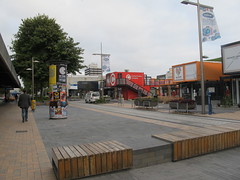
20131231_8503_EOS M-22 From Cashel Street
Images, eqnz.chch.2010
20131231_8503_EOS M-22 From Cashel Street Another city walk around, this time with my brother-in-law from Auckland. Also went to the Quake City exhibition in the city organised by the Canterbury Museum. First fine day for a while. #4504
20130524_7198_1D3-105 Cones - New Brighton Road
Images, eqnz.chch.2010
None
20130130_1882_1D3-24 Pallet Pavilion on Park Royal site
Images, eqnz.chch.2010
None
20130915_3538_1D3-47 Cardboard Cathedral
Images, eqnz.chch.2010
None
New Brighton bridge
Images, eqnz.chch.2010
20130808_2298_1D3-40 New Brighton bridge Eighty years and then the damage was done. Result of the earthquake on 22/02/11. #4076
20130627_8867_1D3-40 Earthquake Damage
Images, eqnz.chch.2010
Cathedral of the Blessed Sacrameny aka Christchurch Basilica
20130524_7206_1D3-75 Vandalism to a vacant and yet to be demolished house.…
Images, eqnz.chch.2010
None
20130130_1897_1D3-105 Bridge on crack - Bridge of Rememberance
Images, eqnz.chch.2010
None
20130130_1892_1D3-90 Coffee on the old Santarini site - Gloucester Street
Images, eqnz.chch.2010
None
20130106_1239_1D3-75 Medway Street footbridge-3
Images, eqnz.chch.2010
Earthquake damage. As a result of the September 2010 earthquake, with further damage from the February 2011 event.
20130130_1910_1D3-85 Dislodged and building closed!
Images, eqnz.chch.2010
Due to earthquake damage.
20130130_1859_1D3-105 St Lukes in the City - stone memorial
Images, eqnz.chch.2010
None
20130130_1884_1D3-60 Jaws in the Door!
Images, eqnz.chch.2010
Former Salvation Army Citadel on Durham Street.
20130130_1873_1D3-75 Thai (rock) takeaways
Images, eqnz.chch.2010
Corner of Durham and Kilmore.
A framework for rapid post-earthquake assessment of bridges and restoratio…
Research papers, The University of Auckland Library
Quick and reliable assessment of the condition of bridges in a transportation network after an earthquake can greatly assist immediate post-disaster response and long-term recovery. However, experience shows that available resources, such as qualified inspectors and engineers, will typically be stretched for such tasks. Structural health monitoring (SHM) systems can therefore make a real difference in this context. SHM, however, needs to be deployed in a strategic manner and integrated into the overall disaster response plans and actions to maximize its benefits. This study presents, in its first part, a framework of how this can be achieved. Since it will not be feasible, or indeed necessary, to use SHM on every bridge, it is necessary to prioritize bridges within individual networks for SHM deployment. A methodology for such prioritization based on structural and geotechnical seismic risks affecting bridges and their importance within a network is proposed in the second part. An example using the methodology application to selected bridges in the medium-sized transportation network of Wellington, New Zealand is provided. The third part of the paper is concerned with using monitoring data for quick assessment of bridge condition and damage after an earthquake. Depending on the bridge risk profile, it is envisaged that data will be obtained from either local or national seismic monitoring arrays or SHM systems installed on bridges. A method using artificial neural networks is proposed for using data from a seismic array to infer key ground motion parameters at an arbitrary bridges site. The methodology is applied to seismic data collected in Christchurch, New Zealand. Finally, how such ground motion parameters can be used in bridge damage and condition assessment is outlined. AM - Accepted manuscript
Systematic ground motion observations in the Canterbury earthquakes and re…
Research papers, University of Canterbury Library
Ground motion observations from the most significant 10 events in the 2010-2011 Canterbury earthquake sequence at near-source sites are utilized to scrutinize New Zealand (NZ)-specific pseudo-spectral acceleration (SA) empirical ground motion prediction equations (GMPE) (Bradley 2010, Bradley 2013, McVerry et al. 2006). Region-specific modification factors based on relaxing the conventional ergodic assumption in GMPE development were developed for the Bradley (2010) model. Because of the observed biases with magnitude and source-to-site distance for the McVerry et al. (2006) model it is not possible to develop region-specific modification factors in a reliable manner. The theory of non-ergodic empirical ground motion prediction is then outlined, and applied to this 10 event dataset to determine systematic effects in the between- and within-event residuals which lead to modifications in the predicted median and standard deviation of the GMPE. By examining these systematic effects over sub-regions containing a total of 20 strong motion stations within the Canterbury area, modification factors for use in region-specific ground motion prediction are proposed. These modification factors, in particular, are suggested for use with the Bradley et al. (2010) model in Canterbury-specific probabilistic seismic hazard analysis (PSHA) to develop revised design response, particularly for long vibration periods.
Eight Months to Mars - Andre Lovatt
Audio, Radio New Zealand
Andre Lovatt grew up in Christchurch and completed a masters degree in Civil Engineering at Canterbury before taking up a position in Singapore working on, among other things, the $6.7 billion Marina Bay Sands waterfront resort. After almost 10 years in Southeast Asia he has returned to his earthquake ravaged home to take on a project with a much smaller price tag. Andre is the new CEO of the Christchurch Arts Centre and his job is to oversee the $290 million dollar project that will, if it's successful, return the centre to its former glory by the end of 2019.
Two Coffees and a Muffin to Takeaway
Images, UC QuakeStudies
Two cardboard coffee cups in a takeaway tray sit on a wooden counter. The photographer comments, "What is the story of these coffees and that sad muffin? Were these an order when the earthquake struck Christchurch on 22 February 2011? Were these a workman's and a colleague's having a quick coffee break when a later aftershock caused them to leave everything behind when they fled the red zoned building, or were they just forgotten when the building was cleared out and abandoned?".
1940s bike-athon
Audio, Radio New Zealand
Back in 2011, a slightly rusty three speed bike abandoned after the September earthquake on a demolition site in Christchurch caught the attention of John Smithies. He's 72, only slightly older than the bike, and he decided it would be just the bicycle to take on a epic, 2000 kilometre journey from Cape Reinga to Bluff. He started in September and expects to reach Bluff on Friday. He's making the epic journey in memory of his wife, Alison who died two years ago of a form of non-Hodgkin lymphoma. The ride down State Highway One is raising money for leukemia and blood cancer.
Digital Photograph: Demolition of the Former Convent of Our Lady of Mercy,…
Images, Canterbury Museum
One landscape colour digital photograph taken on 6 September 2011 showing demolition of the former Convent of Our Lady of Mercy. St Mary's School, run by the Sisters of Mercy, was also housed in this building. At the time of the 4 September 2010 earthquake the building was a private residence. Three years after the 2010-2011 earthquakes there a...
Coastal Quakes: Observations and analyses from backyard Christchurch to 21…
Research papers, University of Canterbury Library
Anyone keeping a global tally of recent disasters is likely to be asking: What role will the hazards and disasters of coastal plains play in the lives and economies of 21st century humanity? In this article, we reflect on this question using examples of how different types of coastal land performed during the Christchurch and other earthquake events to examine the complex of coastal-tectonic hazards that are being constructed in the Tokyo megacity
20130524_7204_1D3-105 Too many orange cones in Christchurch.
Images, eqnz.chch.2010
These have been thrown in the Avon River
20130524_7209_1D3-65 Table thrown away in Culver Place.
Images, eqnz.chch.2010
All red zoned and it looked like no one is living anywhere in Culver Place. All awaiting demolition.
20130627_8868_1D3-32 Container support
Images, eqnz.chch.2010
Cathedral of the Blessed Sacrameny aka Christchurch Basilica
Corner Colombo/Hereford Street, Christchurch
Images, eqnz.chch.2010
20130827_2654_1D3-24 Corner Colombo/Hereford Street, Christchurch The same view as the previous photo. Building demolished after the earthquake of 2011! #4156
20130130_1883_1D3-50 at the Pallet Pavilion on Park Royal site
Images, eqnz.chch.2010
Is it to "ward" off evil spirits?.
20130524_7197_1D3-24 Seaview Road drainage repairs
Images, eqnz.chch.2010
None
20130524_7201_1D3-32 Demolition of houses in Bexley is ongoing
Images, eqnz.chch.2010
None
New Brighton bridge
Images, eqnz.chch.2010
20130808_2293_1D3-40 New Brighton bridge Still awaiting a repair, but with so many bridges closed or partially closed we are lucky this one had what maybe minor damage. #4074
20130130_1870_1D3-24 Peterborough Street - Convention Centre site
Images, eqnz.chch.2010
Looking across to the Town Hall. Will it stay or will it go?