

Search
found 22921 results
Images for Earthquakes; more images...

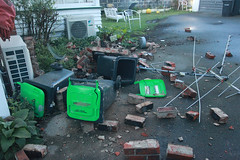

It has started!
Images, eqnz.chch.2010
20140521_1080_1D3-24 It has started! Removal of the double-glazed windows is underway at my "red zone" house, now owned by the Government of New Zealand. Sold to CERA (the government agency) in October 2012 and has remained empty since, despite having little damage, apart from the tilt to the front from the land damage that occurred during the...
The Harcourts Building : A 'seismic' shift?
Research papers, Lincoln University
Purpose - The purpose of this paper is to identify through the application of Actor Network Theory (ANT) the issues and impediments to the implementation of mandatory seismic retrofitting policies proposed by the New Zealand Government. In particular the tension between the heritage protection objectives contained in the Resource Management Act 1991 and the earthquake mitigation measures contained in the Building Act 2004 are examined. Design/methodology/approach - The paper uses a case study approach based on the Harcourts Building in Wellington New Zealand and the case law relating to attempts to demolish this particular building. Use is made of ANT as a 'lens' to identify and study the controversies around mandatory seismic retrofitting of heritage buildings. The concept of translation is used to draw network diagrams.
An engineering geological evaluation of non-engineered loess fill and airf…
Research papers, University of Canterbury Library
Following the 22nd February 2011, Mw 6.2 earthquake located along a previously unknown fault beneath the Port Hills of Christchurch, surface cracking was identified in contour parallel locations within fill material at Quarry Road on the lower slopes of Mount Pleasant. GNS Science, in the role of advisor to the Christchurch City Council, concluded that these cracks were a part of a potential rotational mass movement (named zone 11A) within the fill and airfall loess material present. However, a lack of field evidence for slope instability and an absence of laboratory geotechnical data on which slope stability analysis was based, suggested this conclusion is potentially incorrect. It was hypothesised that ground cracking was in fact due to earthquake shaking, and not mass movement within the slope, thus forming the basis of this study. Three soil units were identified during surface and subsurface investigations at Quarry Road: fill derived from quarry operations in the adjacent St. Andrews Quarry (between 1893 and 1913), a buried topsoil, and underlying in-situ airfall loess. The fill material was identified by the presence of organic-rich topsoil “clods” that were irregular in both size (∼10 – 200 mm) and shape, with variable thicknesses of 1 – 10 m. Maximum thickness, as indicated by drill holes and geophysical survey lines, was identified below 6 Quarry Road and 7 The Brae where it is thought to infill a pre-existing gully formed in the underlying airfall loess. Bearing strength of the fill consistently exceeded 300 kPa ultimate below ∼500 mm depth. The buried topsoil was 200 – 300 mm thick, and normally displayed a lower bearing strength when encountered, but not below 300 kPa ultimate (3 – 11 blows per 100mm or ≥100 kPa allowable). In-situ airfall loess stood vertically in outcrop due to its characteristic high dry strength and also showed Scala penetrometer values of 6 – 20+ blows per 100 mm (450 – ≥1000 kPa ultimate). All soils were described as being moist to dry during subsurface investigations, with no groundwater table identified during any investigation into volcanic bedrock. In-situ moisture contents were established using bulk disturbed samples from hand augers and test pitting. Average moisture contents were low at 9% within the fill, 11 % within the buried topsoil, and 8% within the airfall loess: all were below the associated average plastic limit of 17, 15, and 16, respectively, determined during Atterberg limit analysis. Particle size distributions, identified using the sieve and pipette method, were similar between the three soil units with 11 – 20 % clay, 62 – 78 % silt, and 11 – 20 % fine sand. Using these results and the NZGS soil classification, the loess derived fill and in-situ airfall loess are termed SILT with some clay and sand, and the buried topsoil is SILT with minor clay and sand. Dispersivity of the units was found using the Emerson crumb test, which established that the fill can be non- to completely dispersive (score 0 – 4). The buried topsoil was always non-dispersive (score 0), and airfall loess completely dispersive (score 4). Values for cohesion (c) and internal friction angle (φ) of the three soil units were established using the direct shear box at field moisture contents. Results showed all soil units had high shear strengths at the moisture contents tested (c = 18 – 24 kPa and φ = 42 – 50°), with samples behaving in a brittle fashion. Moisture content was artificially increased to 16% within the buried topsoil, which reduced the shear strength (c = 10 kPa, φ = 18°) and allowed it to behave plastically. Observational information indicating stability at Quarry Road included: shallow, discontinuous, cracks that do not display vertical offset; no scarp features or compressional zones typical of landsliding; no tilted or deformed structures; no movement in inclinometers; no basal shear zone identified in logged core to 20 m depth; low field moisture contents; no groundwater table; and high soil strength using Scala penetrometers. Limit equilibrium analysis of the slope was conducted using Rocscience software Slide 5.0 to verify the slope stability identified by observational methods. Friction, cohesion, and density values determined during laboratory were input into the two slope models investigated. Results gave minimum static factor of safety values for translational (along buried topsoil) and rotational (in the fill) slides of 2.4 – 4.2. Sensitivity of the slope to reduced shear strength parameters was analysed using c = 10 kPa and φ = 18° for the translational buried topsoil plane, and a cohesion of 0 kPa within the fill for the rotational plane. The only situation that gave a factor of safety <1.0 was in nonengineered fill at 0.5 m depth. Pseudostatic analysis based on previous peak ground acceleration (PGA) values for the Canterbury Earthquake Sequence, and predicted PGAs for future Alpine Fault and Hope Fault earthquakes established minimum factor of safety values between 1.2 and 3.3. Yield acceleration PGAs were computed to be between 0.8g and 1.6g. Based on all information gathered, the cracking at Quarry Road is considered to be shallow deformation in response to earthquake shaking, and not due to deep-seated landsliding. It is recommended that the currently bare site be managed by smoothing the land, installing contour drainage, and bioremediation of the surface soils to reduce surface water infiltration and runoff. Extensive earthworks, including removal of the fill, are considered unnecessary. Any future replacement of housing would be subject to site-specific investigations, and careful foundation design based on those results.
Slane, Christopher, 1957- :"Hey everyone - look up there!" 9 September 2011
Images, Alexander Turnbull Library
A crowd of rather sad people queue for jobs and work at the Christchurch rebuild; all around them are signs that read 'Pike River', 'leaky buildings', 'Chch quake rebuild', 'EQC levy hike', '200,000 children in poverty', 'food prices up', 'deficit', and 'GST hike'. Prime Minister John Key in the centre of the crowd yells 'Hey everyone - look up there!' as he kicks a rugby ball into the sky. Context: John Key attempts to divert the attention of people from New Zealand's current woes. Quantity: 1 digital cartoon(s).
Coexistence, dynamics and disturbance history of mixed conifer, beech, and…
Research papers, Lincoln University
Mixed conifer, beech and hardwood forests are relatively common in Aotearoa/New Zealand, but are not well studied. This thesis investigates the coexistence, regeneration dynamics and disturbance history of a mixed species forest across an environmental gradient of drainage and soil development in north Westland. The aim was to investigate whether conifers, beech and non-beech hardwood species were able to coexist on surfaces that differed in their underlying edaphic conditions, and if so to understand the mechanisms that influenced their regeneration on both poorly drained and well drained soils. The site selected was an area of high tree species diversity on a lowland 0.8 km² post-glacial terrace at the base of Mount Harata in the Grey River Valley. My approach was to use forest stand history reconstruction at two spatial scales: an intensive within-plot study of stand dynamics (chapter 1) and a whole-landform approach (chapter 2) that examined whether the dynamics identified at the smaller within-plot scale reflected larger patterns across the terrace. In chapter 1, three large permanent plots (0.3-0.7 ha) were placed at different points along the drainage gradient, one plot situated in each of the mainly well-drained, poorly drained and very poorly drained areas along the terrace. Information was gathered on species age and size structures, spatial distributions of tree ages, species interactions, microsite establishment preferences, patterns of stand mortality, and disturbance history in each plot. There were differences in stand structure, composition and relative abundance of species found between the well drained plot and the two poorer drained plots. On the well drained site conifers were scarce, the beeches Nothofagus fusca and N. menziesii dominated the canopy, and in the subcanopy the hardwood species Weinmannia racemosa and Quintinia acutifolia were abundant. As drainage became progressively poorer, the conifers Dacrydium cupressinum and Dacrycarpus dacrydioides became more abundant and occupied the emergent tier over a beech canopy. The hardwoods W. racemosa and Q. acutifolia became gradually less abundant in the subcanopy, whereas the hardwood Elaeocarpus hookerianus became more so. In the well drained plot, gap partitioning for light between beeches and hardwoods enabled coexistence in response to a range of different sized openings resulting from disturbances of different extent. In the two more poorly drained plots, species also coexisted by partitioning microsite establishment sites according to drainage. There were several distinct periods where synchronous establishment of different species occurred in different plots, suggesting there were large disturbances: c. 100yrs, 190-200 yrs, 275-300 yrs and 375-425 yrs ago. Generally after the same disturbance, different species regenerated in different plots reflecting the underlying drainage gradient. However, at the same site after different disturbances, different sets of species regenerated, suggesting the type and extent of disturbances and the conditions left behind influenced species regeneration at some times but not others. The regeneration of some species (e.g., N. fusca in the well-drained plot, and Dacrydium in the poorer drained plots) was periodic and appeared to be closely linked to these events. In the intervals between these disturbances, less extensive disturbances resulted in the more frequent N. menziesii and especially hardwood regeneration. The type of tree death caused by different disturbances favoured different species, with dead standing tree death favouring the more shade-tolerant N. menziesii and hardwoods, whereas uprooting created a mosaic of microsite conditions and larger gap sizes that enabled Dacrycarpus, N. fusca and E. hookerianus to maintain themselves in the poorly drained areas. In chapter 2, 10 circular plots (c. 0.12 ha) were placed in well drained areas and 10 circular plots (c. 0.2 ha) in poorly drained plots to collect information on species population structures and microsite preferences. The aims were to reconstruct species' regeneration responses to a range of disturbances of different type and extent across the whole terrace, and to examine whether there were important differences in the effects of these disturbances. At this landform scale, the composition and relative abundances of species across the drainage gradient reflected those found in chapter 1. There were few scattered conifers in well drained areas, despite many potential regeneration opportunities created from a range of different stand destroying and smaller scale disturbances. Three of the four periods identified in chapter 1 reflected distinct terrace-wide periods of regeneration 75-100 yrs, 200-275 yrs and 350-450 yrs ago, providing strong evidence of periodic large, infrequent disturbances that occurred at intervals of 100-200 yrs. These large, infrequent disturbances have had a substantial influence in determining forest history, and have had long term effects on forest structure and successional processes. Different large, infrequent disturbances had different effects across the terrace, with the variability in conditions that resulted enabling different species to regenerate at different times. For example, the regeneration of distinct even-aged Dacrydium cohorts in poorly drained areas was linked to historical Alpine Fault earthquakes, but not to more recent storms. The variation in the intensity of different large, infrequent disturbances at different points along the environmental drainage gradient, was a key factor influencing the scale of impacts. In effect, the underlying edaphic conditions influenced species composition along the drainage gradient and disturbance history regulated the relative abundances of species. The results presented here further emphasise the importance of large scale disturbances as a mechanism that allows coexistence of different tree species in mixed forest, in particular for the conifers Dacrydium, Dacrycarpus and the beech N. fusca, by creating much of the environmental variation to which these species responded. This study adds to our understanding of the effects of historical earthquakes in the relatively complex forests of north Westland, and further illustrates their importance in the Westland forest landscape as the major influential disturbance on forest pattern and history. These results also further develop the 'two-component' model used to describe conifer/angiosperm dynamics, by identifying qualitative differences in the impacts of different large, infrequent disturbances across an environmental gradient that allowed for coexistence of different species. In poorer drained areas, these forests may even be thought of as 'three-component' systems with conifers, beeches and hardwoods exhibiting key differences in their regeneration patterns after disturbances of different type and extent, and in their microsite preferences.
Community-led planning in post-disaster recovery: a Diamond Harbour case s…
Research papers, Lincoln University
There is strong consensus in the civil defence and emergency management literature that public participation is essential for a 'good' recovery. However, there is a paucity of research detailing how this community-led planning should be carried out in the real world. There are few processes or timelines for communities to follow when wanting to plan for themselves, nor is there a great deal of advice for communities who want to plan for their own recovery. In short, despite this consensus that community involvement is desireable, there is very little information available as to the nature of this involvement or how communities might facilitate this. It is simply assumed that communities are willing and able to participate in the recovery process and that recovery authorities will welcome, encourage, and enable this participation. This is not always the case, and the result is that community groups can be left feeling lost and ineffective when trying to plan for their own recovery. In attempting to address this gap, my study contributes to a better understanding of community involvement in recovery planning, based on research with on particular a community group (SPRIG), who has undertaken their own form of community-led planning in a post-disaster environment. Through group observations and in-depth interviews with members of SPRIG, I was able to identify various roles for such groups in the post-disaster recovery process. My research also contributes to an enhanced understanding of the process a community group might follow to implement their own form of post-disaster recovery planning, with the main point being that any planning should be done side by side with local authorities. Finally, I discovered that a community group will face organisational, community and institutional challenges when trying to plan for their area; however, despite these challenges, opportunities exist, such as the chance to build a better future.
High-density shallow shear wave velocity characterisation of the urban Chr…
Research papers, University of Canterbury Library
This report summarizes the development of a region-wide surficial soil shear wave velocity (Vs ) model based on the unique combination of a large high-spatial-density database of cone penetration test (CPT) logs in the greater Christchurch urban area (> 15, 000 logs as of 1 February 2014) and the Christchurch-specific empirical correlation between soil Vs and CPT data developed by McGann et al. [1, 2]. This model has applications for site characterization efforts via maps of time-averaged Vs over specific depths (e.g. Vs30, Vs10), and for numerical modeling efforts via the identification of typical Vs profiles for different regions and soil behaviour types within Christchurch. In addition, the Vs model can be used to constrain the near-surface velocities for the 3D seismic velocity model of the Canterbury basin [3] currently being developed for the purpose of broadband ground motion simulation. The general development of these region-wide near-surface Vs models includes the following general phases, with each discussed in separate chapters of this report. • An evaluation of the available CPT dataset for suitability, and the definition of other datasets and assumptions necessary to characterize the surficial sediments of the region to 30 m depth. • The development of time-averaged shear wave velocity (Vsz) surfaces for the Christchurch area from the adopted CPT dataset (and supplementary data/assumptions) using spatial interpolation. The Vsz surfaces are used to explore the characteristics of the near-surface soils in the regions and are shown to correspond well with known features of the local geology, the historical ecosystems of the area, and observations made following the 2010- 2011 Canterbury earthquakes. • A detailed analysis of the Vs profiles in eight subregions of Christchurch is performed to assess the variablity in the soil profiles for regions with similar Vsz values and to assess Vsz as a predictive metric for local site response. It is shown that the distrubution of soil shear wave velocity in the Christchurch regions is highly variable both spatially (horizontally) and with depth (vertically) due to the varied geological histories for different parts of the area, and the highly stratified nature of the nearsurface deposits. This variability is not considered to be greatly significant in terms of current simplified site classification systems; based on computed Vs30 values, all considered regions can be categorized as NEHRP sites class D (180 < Vs < 360 m/s) or E (Vs < 180 m/s), however, detailed analysis of the shear wave velocity profiles in different subregions of Christchurch show that the expected surficial site response can vary quite a bit across the region despite the relative similarity in Vs30
Tree regeneration in a New Zealand rain forest influenced by disturbance a…
Research papers, Lincoln University
Question: Does canopy tree regeneration response to different large disturbances vary with soil drainage? Location: Old-growth conifer (Dacrydium and Dacrycarpus), angiosperm (Nothofagus and Weinmannia) rain forest, Mount Harata, South Island, New Zealand. Methods: Trees were aged (1056 cores) to reconstruct stand history in 20 (0.12 - 0.2 ha) plots with different underlying drainage. Spatial analyses of an additional 805 tree ages collected from two (0.3 - 0.7 ha) plots were conducted to detect patchiness for five canopy tree species. Microsite preferences for trees and saplings were determined. Results: There were clear differences in species regeneration patterns on soils with different drainage. Conifer recruitment occurred infrequently in even-aged patches (> 1000 m²) and only on poorly drained soils. Periodic Nothofagus fusca and N. menziesii recruitment occurred more frequently in different sized canopy openings on all soils. Weinmannia recruitment was more continuous on all soils reflecting their greater relative shade-tolerance. Distinct periods of recruitment that occurred in the last 400 years matched known large disturbances in the region. These events affected species differently as soil drainage varied. Following earthquakes, both conifers and N. menziesii regenerated on poorly drained soils, while Nothofagus species and Weinmannia regenerated on well-drained soils. However, Dacrydium failed to regenerate after patchy storm damage in the wetter forest interior; instead faster-growing N. fusca captured elevated microsites caused by uprooting. Conclusions: Underlying drainage influenced species composition, while variation in the impacts of large disturbance regulated relative species abundances on different soils.
Housing in Post-Quake Canterbury: Human Rights Fault Lines
Research papers, University of Canterbury Library
The 2010–2011 Canterbury earthquakes and their aftermath have been described by the Human Rights Commission as one of New Zealand's greatest contemporary human rights challenges. This article documents the shortcomings in the realisation of the right to housing in post-quake Canterbury for homeowners, tenants and the homeless. The article then considers what these shortcomings tell us about New Zealand's overall human rights framework, suggesting that the ongoing and seemingly intractable nature of these issues and the apparent inability to resolve them indicate an underlying fragility implicit in New Zealand's framework for dealing with the consequences of a large-scale natural disaster. The article concludes that there is a need for a comprehensive human rights-based approach to disaster preparedness, response and recovery in New Zealand.
Question Time for 13 July 2011
Audio, Radio New Zealand
Questions to Ministers 1. Hon PHIL GOFF to the Prime Minister: Does he stand by all his statements on the privatisation of New Zealand State-owned power companies? 2. MICHAEL WOODHOUSE to the Minister of Finance: What progress has the Government made in making the tax system fairer? 3. Hon ANNETTE KING to the Prime Minister: At recent meetings he has had with Grey Power, have they raised with him their concerns about the sell-off of state assets? 4. Dr CAM CALDER to the Minister of Corrections: Has she received any reports on the rate of escape from New Zealand prisons? 5. Hon DAVID CUNLIFFE to the Minister of Finance: Why doesn't his Budget's net debt track take into account lost dividends from SOEs and sales costs arising from his policy of privatising state assets? 6. KEVIN HAGUE to the Minister of Labour: Is underground mining safe in New Zealand? 7. COLIN KING to the Minister of Transport: What progress has been made on the Christchurch Southern Motorway Road of National Significance following the earthquakes in the city? 8. Hon CLAYTON COSGROVE to the Minister for Canterbury Earthquake Recovery: How many of the 5,100 properties in the red zone have been deemed to be uneconomic to repair by the insurer and how many of those, approximately, had unimproved land valuations of less than $150,000? 9. JOHN BOSCAWEN to the Minister of Māori Affairs: Does he stand by all of his recent statements? 10. Hon TREVOR MALLARD to the Prime Minister: Further to his answers to Oral Question No 1 yesterday on the purchase of state assets by foreigners, what percentage of Contact shares are currently held by foreigners or corporations? 11. RAHUI KATENE to the Minister for the Environment: Does he agree with the statement in Ko Aotearoa Tēnei, that "direct infusion of indigenous values into mainstream environmental regulation may well be unique in the world"; if so, how will he advance the opportunities for Māori to take more positive and proactive roles in environmental decision-making? 12. NICKY WAGNER to the Minister for Social Development and Employment: What reports has she seen on the Canterbury unemployment figures?
Question Time for 20 March 2013
Audio, Radio New Zealand
DAVID SHEARER to the Minister for State Owned Enterprises: Has the Government met the five criteria the Prime Minister laid out for proceeding with asset sales? Dr RUSSEL NORMAN to the Minister of Finance: Will New Zealanders have money taken from their bank accounts to fund a bank bailout under his proposed Open Bank Resolution scheme? TODD McCLAY to the Minister of Finance: What reports has he received on New Zealand's balance of payments? Hon ANNETTE KING to the Minister of Health: Does he stand by all his statements regarding "Better, Sooner, More Convenient" health care; if not, why not? MARK MITCHELL to the Minister of Police: What reports has she received from Police on the success of pre-charge warnings? PHIL TWYFORD to the Minister of Housing: Why did he tell the House that, even if the Auckland plan took effect in September, new subdivisions would not be available until 2016-17, when the advice he tabled from Roger Blakely of Auckland Council shows that if the unitary plan takes effect in September new land would be available two years earlier? ALFRED NGARO to the Minister for Social Development: How will the Social Security (Benefit Categories and Work Focus) Amendment Bill back people off welfare and into work? GRANT ROBERTSON to the Prime Minister: Does he stand by all his statements on the actions and involvement of the Department of the Prime Minister and Cabinet and the Government Communications and Security Bureau in Operation Debut? SCOTT SIMPSON to the Minister of Health: What is the Government doing to extend access to free flu vaccines? METIRIA TUREI to the Minister for Social Development: Does she have an obligation, as Social Development Minister, to ensure all policy she is responsible for will be good for children and their families? Hon KATE WILKINSON to the Minister for Primary Industries: What announcement has he made on the drought in New Zealand? Rt Hon WINSTON PETERS to the Minister for Canterbury Earthquake Recovery: Have allegations of fraud and corruption involving Canterbury earthquake recovery and rebuild contracts been raised with him as Minister; if so, what specific steps has he taken to address them?
Question Time for 21 February 2013
Audio, Radio New Zealand
Questions to Ministers 1. TODD McCLAY to the Minister of Finance: What reports has he received on the Government's financial position? 2. DAVID SHEARER to the Prime Minister: Does he stand by all his statements? 3. METIRIA TUREI to the Prime Minister: Does he stand by his reported statement that "anyone expecting details of a 'cosy sort of little deal' would be disappointed" by the Deputy Auditor-General's report into the SkyCity Convention Centre negotiations. 4. DENIS O'ROURKE to the Minister for Canterbury Earthquake Recovery: What criteria did he use in deciding that owners of vacant sections in the red zone of Christchurch should only be compensated at half of the sections' most recent rateable value? 5. KANWALJIT SINGH BAKSHI to the Minister for Economic Development: What economic opportunities will a new convention centre bring for Auckland? 6. Hon DAVID PARKER to the Prime Minister: Did he or his office receive the 12 November 2009 report from Ministry officials to the Department of Prime Minister and Cabinet, summarising the process with SkyCity for the building of a convention centre; if so, did he read it? 7. MIKE SABIN to the Associate Minister for Social Development: What steps is the Government taking to reduce welfare fraud? 8. Hon CLAYTON COSGROVE to the Minister for State Owned Enterprises: What contingency plans, if any, does the Government have in place regarding its asset sale programme should the Tiwai Point aluminium smelter reduce production? 9. KEVIN HAGUE to the Minister of Trade: Will New Zealand support Australia's objection to signing up to investor-state dispute provisions in the Trans-Pacific Partnership agreement; if not, why not? 10. Hon LIANNE DALZIEL to the Minister for Canterbury Earthquake Recovery: Why is he offering only 50 percent of rating valuation for commercial or bare land in the residential red zone where the land could not be insured? 11. MARK MITCHELL to the Minister of Corrections: What announcements has she made on improving prisoner employment training in New Zealand prisons? 12. CHRIS HIPKINS to the Minister of Education: Does she stand by all her decisions in relation to schools in Christchurch?
Question Time for 20 February 2013
Audio, Radio New Zealand
Questions to Ministers 1. TODD McCLAY to the Minister of Finance: What reports has he received on the Government's financial position? 2. DAVID SHEARER to the Prime Minister: Does he stand by all his statements? 3. METIRIA TUREI to the Prime Minister: Does he stand by his reported statement that "anyone expecting details of a 'cosy sort of little deal' would be disappointed" by the Deputy Auditor-General's report into the SkyCity Convention Centre negotiations. 4. DENIS O'ROURKE to the Minister for Canterbury Earthquake Recovery: What criteria did he use in deciding that owners of vacant sections in the red zone of Christchurch should only be compensated at half of the sections' most recent rateable value? 5. KANWALJIT SINGH BAKSHI to the Minister for Economic Development: What economic opportunities will a new convention centre bring for Auckland? 6. Hon DAVID PARKER to the Prime Minister: Did he or his office receive the 12 November 2009 report from Ministry officials to the Department of Prime Minister and Cabinet, summarising the process with SkyCity for the building of a convention centre; if so, did he read it? 7. MIKE SABIN to the Associate Minister for Social Development: What steps is the Government taking to reduce welfare fraud? 8. Hon CLAYTON COSGROVE to the Minister for State Owned Enterprises: What contingency plans, if any, does the Government have in place regarding its asset sale programme should the Tiwai Point aluminium smelter reduce production? 9. KEVIN HAGUE to the Minister of Trade: Will New Zealand support Australia's objection to signing up to investor-state dispute provisions in the Trans-Pacific Partnership agreement; if not, why not? 10. Hon LIANNE DALZIEL to the Minister for Canterbury Earthquake Recovery: Why is he offering only 50 percent of rating valuation for commercial or bare land in the residential red zone where the land could not be insured? 11. MARK MITCHELL to the Minister of Corrections: What announcements has she made on improving prisoner employment training in New Zealand prisons? 12. CHRIS HIPKINS to the Minister of Education: Does she stand by all her decisions in relation to schools in Christchurch?
Question Time for 9 February 2012
Audio, Radio New Zealand
Questions to Ministers 1. GARETH HUGHES to the Minister for Primary Industries: Will he extend the Taranaki set net ban after the recent death of a Maui's dolphin in a fishing net? 2. DAVID BENNETT to the Minister for Economic Development: What actions is the Government taking to boost economic linkages with China? 3. GRANT ROBERTSON to the Prime Minister: Does he stand by his statement that his hour-long show on Radio Live on 30 September 2011 was an "election free zone"? 4. Dr PAUL HUTCHISON to the Minister of Health: What improvements, if any, have been made to the Government's national health targets? 5. Hon LIANNE DALZIEL to the Minister for Canterbury Earthquake Recovery: Did he discuss with the Christchurch City Mayor reported claims that there had been overtures from within The Treasury that there was scope for the city's rates to be increased or for assets to be sold to pay for the quake recovery, and that this could be done under the Canterbury Earthquake Recovery Act before he called him a clown; if not, why not? 6. JACQUI DEAN to the Minister of Local Government: What reports has he received on increases in local government council debt since the Local Government Act 2002 was enacted? 7. DARIEN FENTON to the Minister of Labour: Does she stand by her statement that the new minimum wage announced yesterday "strikes the right balance between protecting low paid workers and ensuring that jobs are not lost."? 8. PESETA SAM LOTU-IIGA to the Minister of Consumer Affairs: What recent announcements has the Government made on protecting consumers from loan sharks? 9. CLARE CURRAN to the Minister of Broadcasting: Is he aware that Stephen McElrea is part of a working group within NZ On Air, which includes a representative of MediaWorks, and which is determining details of a documentary about Whānau Ora? 10. TIM MACINDOE to the Minister for the Community and Voluntary Sector: What recent announcement has she made in her portfolio that will benefit communities? 11. HOLLY WALKER to the Minister for Social Development: Does she consider low family incomes to be a major contributor to childhood vulnerability? 12. Rt Hon WINSTON PETERS to the Prime Minister: Does he still have confidence in all his Ministers?
Development of a friction sliding system for enhanced seismic resilience o…
Research papers, The University of Auckland Library
Industrial steel storage pallet racking systems are used extensively worldwide to store goods. Forty percent of all goods are stored on storage racks at some time during their manufactureto- consumption life. In 2017, goods worth USD 16.5 billion were carried on cold-formed steel racking systems in seismically active regions worldwide. Historically, these racks are particularly vulnerable to collapse in severe earthquakes. In the 2010/2011 Christchurch earthquakes, around NZD 100 million of pallet racking stored goods were lost, with much greater associated economic losses due to disruptions to the national supply chain. A novel component, the friction slipper baseplate, has been designed and developed to very significantly improve the seismic performance of a selective pallet racking system in both the cross-aisle and the down-aisle directions. This thesis documents the whole progress of the development of the friction slipper baseplate from the design concept development to experimental verification and incorporation into the seismic design procedure for selective pallet racking systems. The test results on the component joint tests, full-scale pull-over and snap-back tests and fullscale shaking table tests of a steel storage racking system are presented. The extensive experimental observations show that the friction slipper baseplate exhibits the best seismic performance in both the cross-aisle and the down-aisle directions compared with all the other base-connections tested. It protects the rack frame and concrete floor from damage, reduces the risk of overturning in the cross-aisle direction, and minimises the damage at beam-end connectors in the down-aisle direction, without sustaining damage to the connection itself. Moreover, this high level of seismic performance can be delivered by a simple and costeffective baseplate with almost no additional cost. The significantly reduced internal force and frame acceleration response enable the more cost-effective and safer design of the pallet racking system with minimal extra cost for the baseplate. The friction slipper baseplate also provides enhanced protection to the column base from operational impact damage compared with other seismic resisting and standard baseplates.
Developing a Framework for Post-disaster Livelihood Recovery
Research papers, The University of Auckland Library
As damage and loss caused by natural hazards have increased worldwide over the past several decades, it is important for governments and aid agencies to have tools that enable effective post-disaster livelihood recovery to create self-sufficiency for the affected population. This study introduces a framework of critical components that constitute livelihood recovery and the critical factors that lead to people’s livelihood recovery. A comparative case study is employed in this research, combined with questionnaire surveys and interviews with those communities affected by large earthquakes in Lushan, China and in Christchurch and Kaikōura, New Zealand. In Lushan, China, a framework with four livelihood components was established, namely, housing, employment, wellbeing and external assistance. Respondents considered recovery of their housing to be the most essential element for livelihood diversification. External assistance was also rated highly in assisting with their livelihood recovery. Family ties and social connections seemed to have played a larger role than that of government agencies and NGOs. However, the recovery of livelihood cannot be fully achieved without wellbeing aspects being taken into account, and people believed that quality of life and their physical and mental health were essential for livelihood restoration. In Christchurch, New Zealand, the identified livelihood components were validated through in-depth interviews. The results showed that the above framework presenting what constitutes successful livelihood recovery could also be applied in Christchurch. This study also identified the critical factors to affect livelihood recovery following the Lushan and Kaikōura earthquakes, and these include community safety, availability of family support, level of community cohesion, long-term livelihood support, external housing recovery support, level of housing recovery and availability of health and wellbeing support. The framework developed will provide guidance for policy makers and aid agencies to prioritise their strategies and initiatives in assisting people to reinstate their livelihood in a timely manner post-disaster. It will also assist the policy makers and practitioners in China and New Zealand by setting an agenda for preparing for livelihood recovery in non-urgent times so the economic impact and livelihood disruption of those affected can be effectively mitigated.
Question Time for 7 November 2013
Audio, Radio New Zealand
DENIS O'ROURKE to the Minister for Canterbury Earthquake Recovery: Is he satisfied with progress on all aspects of the Canterbury earthquake recovery? JACINDA ARDERN to the Minister of Police: Does she have confidence in the Police investigation of alleged sexual violation against young women and underage girls in West Auckland? PAUL GOLDSMITH to the Minister of Finance: What progress has the National-led Government made in building a more productive and competitive economy capable of supporting more jobs and higher incomes for New Zealanders? METIRIA TUREI to the Minister of Police: When was she first advised that Police had received a complaint from a girl who alleged she had been raped by members of a group calling themselves the Roast Busters? Hon DAVID PARKER to the Minister for Communications and Information Technology: Will the Government enforce its broadband contract with Chorus? CLAUDETTE HAUITI to the Minister for the Environment: What announcements has the Government made in relation to the national policy statement for freshwater? PHIL TWYFORD to the Minister of Housing: What reports has he received on the effect of loan-to-value restrictions on the housing market? Hon PHIL HEATLEY to the Minister for Social Development: What reports has she received about the number of people receiving benefits? CAROL BEAUMONT to the Minister for Tertiary Education, Skills and Employment: How does women's participation rate of 1 percent in building and construction industry training assist with the Christchurch rebuild? Dr CAM CALDER to the Minister of Education: What recent announcements has she made to strengthen the status of the teaching profession? EUGENIE SAGE to the Associate Minister of Health: Does she agree with the Canterbury Medical Officer of Health that increasing nitrate levels in Canterbury groundwater are a health risk, particularly for pregnant women and babies; if not, why not? HONE HARAWIRA to the Minister of Finance: What is his budget plan, if any, to immediately address growing poverty in New Zealand, which has got so bad that charitable organisations have today said they are expecting an influx of more than 40,000 struggling families for Christmas dinner because they can't afford to put food on the table?
The Porters Pass fault
Research papers, University of Canterbury Library
A zone of active tectonism occurs in mid and north Canterbury, from the Rakaia to the Waipara Rivers, which coincides with seismicity concentrations and several Quaternary surface anomalies and is here defined as the Porters Pass Tectonic Zone. Although parallel to the Marlborough faults to the north, the lack of regional definition suggests this zone is much younger in its inception reflecting a southward movement of the plate rotation vector. The objectives of this study were to map the structures associated with this zone in the segment between the Rakaia and Waimakariri Rivers with detailed analysis concentrated in the upper Kawai Valley. Quaternary offsets on the main lineament of the Porters Pass Fault were traced through the area and evidence for the rate of movement, probable magnitudes and return periods of related seismic events was sought. The basement was found to be complicated by pre-existing deformation structures in Torlesse Group rocks which have been subsequently been re-activated or rotated by recent fault movement probably beginning in the Pleistocene. This phase is dominantly thrusting and uplift has lead to the erosion of most of the overlying sedimentary cover. Remnants of the Cret-Tertiary sediments still remain as fault-bounded packets. Evidence suggests that a change to development of a regional lateral shear associated with the Porters Pass Tectonic Zone transects the thrust system with complex interaction between the older reverse and new strike-slip faults. Offset rates along the segments of the Porters Pass Fault are not well constrained but are believed to be approximately in the range of 11-13 mm/year for at least the last 130,000 years. This rate is similar to other large faults in the Marlborough region. Two earthquake events have been identified and dated at 600 and 2000 years ago, with a magnitude of greater than 6.5. Evidence suggests characteristic earthquakes along the Porters Pass Fault are greater than Magnitude 7. This result has some major ramifications for the expected seismic hazards for nearby Christchurch.
Simulation and Validation of Topographic Effectds on Mt Pleasant, Christch…
Research papers, University of Canterbury Library
Damage distribution maps from strong earthquakes and recorded data from field experiments have repeatedly shown that the ground surface topography and subsurface stratigraphy play a decisive role in shaping the ground motion characteristics at a site. Published theoretical studies qualitatively agree with observations from past seismic events and experiments; quantitatively, however, they systematically underestimate the absolute level of topographic amplification up to an order of magnitude or more in some cases. We have hypothesized in previous work that this discrepancy stems from idealizations of the geometry, material properties, and incident motion characteristics that most theoretical studies make. In this study, we perform numerical simulations of seismic wave propagation in heterogeneous media with arbitrary ground surface geometry, and compare results with high quality field recordings from a site with strong surface topography. Our goal is to explore whether high-fidelity simulations and realistic numerical models can – contrary to theoretical models – capture quantitatively the frequency and amplitude characteristics of topographic effects. For validation, we use field data from a linear array of nine portable seismometers that we deployed on Mount Pleasant and Heathcote Valley, Christchurch, New Zealand, and we compute empirical standard spectral ratios (SSR) and single-station horizontal-to-vertical spectral ratios (HVSR). The instruments recorded ambient vibrations and remote earthquakes for a period of two months (March-April 2017). We next perform two-dimensional wave propagation simulations using the explicit finite difference code FLAC. We construct our numerical model using a high-resolution (8m) Digital Elevation Map (DEM) available for the site, an estimated subsurface stratigraphy consistent with the geomorphology of the site, and soil properties estimated from in-situ and non-destructive tests. We subject the model to in-plane and out-of-plane incident motions that span a broadband frequency range (0.1-20Hz). Numerical and empirical spectral ratios from our blind prediction are found in very good quantitative agreement for stations on the slope of Mount Pleasant and on the surface of Heathcote Valley, across a wide range of frequencies that reveal the role of topography, soil amplification and basin edge focusing on the distribution of ground surface motion.
Storm response of a mixed sand gravel beach ridge plain under falling rela…
Research papers, University of Canterbury Library
Beach ridge stratigraphy can provide an important record of both sustained coastal progradation and responses to events such as extreme storms, as well as evidence of earthquake induced sediment pulses. This study is a stratigraphic investigation of the late Holocene mixed sand gravel (MSG) beach ridge plain on the Canterbury coast, New Zealand. The subsurface was imaged along a 370 m shore-normal transect using 100 and 200 MHz ground penetrating radar (GPR) antennae, and cored to sample sediment textures. Results show that, seaward of a back-barrier lagoon, the Pegasus Bay beach ridge plain prograded almost uniformly, under conditions of relatively stable sea level. Nearshore sediment supply appears to have created a sustained sediment surplus, perhaps as a result of post-seismic sediment pulses, resulting in a flat, morphologically featureless beach ridge plain. Evidence of a high magnitude storm provides an exception, with an estimated event return period in excess of 100 years. Evidence from the GPR sequence combined with modern process observations from MSG beaches indicates that a paleo storm initially created a washover fan into the back-barrier lagoon, with a large amount of sediment simultaneously moved off the beach face into the nearshore. This erosion event resulted in a topographic depression still evident today. In the subsequent recovery period, sediment was reworked by swash onto the beach as a sequence of berm deposit laminations, creating an elevated beach ridge that also has a modern-day topographic signature. As sediment supply returned to normal, and under conditions of falling sea level, a beach ridge progradation sequence accumulated seaward of the storm feature out to the modern-day beach as a large flat, uniform progradation plain. This study highlights the importance of extreme storm events and earthquake pulses on MSG coastlines in triggering high volume beach ridge formation during the subsequent recovery period.
Urban comfort in a future compact city: Analysis of open-space qualities i…
Research papers, Lincoln University
The increase in urban population has required cities to rethink their strategies for minimising greenhouse gas impacts and adapting to climate change. While urban design and planning policy have been guided by principles such as walkability (to reduce the dependence on cars) and green infrastructure (to enhance the quality of open spaces to support conservation and human values), there have been conflicting views on what spatial strategies will best prepare cities for a challenging future. Researchers supporting compact cities based upon public Transit Oriented Development have claimed that walkability, higher density and mixed-uses make cities more sustainable (Owen, 2009) and that, while green spaces in cities are necessary, they are dull in comparison with shopfronts and street vendors (Speck, 2012, p 250). Other researchers claim that green infrastructure is fundamental to improving urban sustainability and attracting public space users with improved urban comfort, consequently encouraging walkability (Pitman and Ely, 2013). Landscape architects tend to assume that ‘the greener the better’; however, the efficiency of urban greenery in relation to urban comfort and urbanity depends on its density, distribution and the services provided. Green infrastructure can take many forms (from urban forests to street trees) and provide varied services (amended microclimate, aesthetics, ecology and so forth). In this paper, we evaluate the relevance of current policy in Christchurch regarding both best practice in green infrastructure and urban comfort (Tavares, 2015). We focus on the Christchurch Blueprint for rebuilding the central city, and critically examine the post-earthquake paths the city is following regarding its green and grey infrastructures and the resulting urban environment. We discuss the performance and appropriateness of the current Blueprint in post-earthquake Christchurch, particularly as it relates to the challenges that climate change is creating for cities worldwide.
Rock mass defect controlled deep-seated landslides in Tertiary soft rock t…
Research papers, University of Canterbury Library
Rock mass defect controlled deep-seated landslides are widespread within the deeply incised landscapes formed in Tertiary soft rock terrain in New Zealand. The basal failure surfaces of deep-seated slope failures are defined by thin, comparatively weak and laterally continuous bedding parallel layers termed critical stratigraphic horizons. These horizons have a sedimentary origin and have typically experienced some prior tectonically induced shear displacement at the time of slope failure. The key controls on the occurrence and form of deep-seated landslides are considered in terms of rock mass defect properties and tectonic and climatic forcing. The selection of two representative catchments (in southern Hawke's Bay and North Canterbury) affected by tectonic and climatic forcing has shown that the spatial and temporal initiation of deep-seated bedrock landslides in New Zealand Tertiary soft rock terrain is a predictable rather than a stochastic process; and that deep-seated landslides as a mass wasting process have a controlling role in landscape evolution in many catchments formed in Tertiary soft rock terrain. The Ella Landslide in North Canterbury is a deep-seated (~85 m) translational block slide that has failed on a 5 - 10 mm thick, kaolinite-rich, pre-sheared critical stratigraphic horizon. The residual strength of this sedimentary horizon, (C'R 2.6 - 2.7 kPa, and Ѳ'R = 16 - 21°), compared to the peak strength of the dominant lithology (C' = 176 kPa, and Ѳ' = 37°) defines a high strength contrast in the succession, and therefore a critical location for the basal failure surface of deep-seated slope failures. The (early to mid Holocene) Ella Landslide debris formed a large landslide dam in the Kate Stream catchment and this has significantly retarded rates of mass wasting in the middle catchment. Numerical stability analysis shows that this slope failure would have most likely required the influence of earthquake induced strong ground motion and the event is tentatively correlated to a Holocene event on the Omihi Fault. The influence of this slope failure is likely to affect the geomorphic development of the catchment on a scale of 10⁴ - 10⁵ years. In deeply incised catchments at the southeastern margin of the Maraetotara Plateau, southern Hawke's Bay, numerous widespread deep-seated landslides have basal failure surfaces defined by critical stratigraphic horizons in the form of thin « 20 mm) tuffaceous beds in the Makara Formation flysch (alternating sandstone and mudstone units). The geometry of deep-seated slope failures is controlled by these regularly spaced (~70 m), very weak critical stratigraphic horizons (C'R 3.8 - 14.2 kPa, and Ѳ'R = 2 - 5°), and regularly spaced (~45 m) and steeply dipping (-50°) critical conjugate joint/fault sets, which act as slide block release surfaces. Numerical stability analysis and historical precedent show that the temporal initiation of deep-seated landslides is directly controlled by short term tectonic forcing in the form of periodic large magnitude earthquakes. Published seismic hazard data shows the recurrence interval of earthquakes producing strong ground motions of 0.35g at the study site is every 150 yrs, however, if subduction thrust events are considered the level of strong ground motion may be much higher. Multiple occurrences of deep-seated slope failure are correlated to failure on the same critical stratigraphic horizon, in some cases in three adjacent catchments. Failure on multiple critical stratigraphic horizons leads to the development of a "stepped" landscape morphology. This slope form will be maintained during successive accelerated stream incision events (controlled by long term tectonic and climatic forcing) for as long as catchments are developing in this specific succession. Rock mass defect controlled deep seated landslides are controlling catchment head progression, landscape evolution and hillslope morphology in the Hawke's Bay study area and this has significant implications for the development of numerical landscape evolution models of landscapes formed in similar strata. Whereas the only known numerical model to consider deep seated landslides as an erosion process (ZSCAPE) considers them as stochastic in time and space, this study shows that this could not be applied to a landscape where the widespread spatial occurrence of deep-seated landslides is controlled by rock mass defects. In both of the study areas for this project, and by implication in many catchments in Tertiary soft rock terrain, deep-seated landslides controlled by rock mass defect strength, spacing and orientation, and tectonic and climatic forcing have an underlying control on landscape evolution. This study quantifies parameters for the development of numerical landscape evolution models that would assess the role of specific parameters, such as uplift rates, incision rates and earthquake recurrence in catchment evolution in Tertiary soft rock terrain.
The Week in Review - week ending 3 September 2012
Audio, Radio New Zealand
A review of the week's news, including... A Government decision not to back a national hui on water rights is dismissed as irrelevant by its organisers and do precedent setting legal cases involving large settlements such as the Sealords Fisheries deal apply in this case of fresh water?, scores of jobs are being axed at the Tiwai Point Aluminum Smelter, opposition parties and unions are continuing to pound the Government with criticism about it's jobs creation record and the Government's response from the Finance Minister, the country's medical laboratories are being called on to make urgent changes after biopsy sample mix-ups which led to four women having breasts removed when they didn't have cancer, it's two years since a magnitude 7.1 earthquake shook Canterbury, children take antibiotics after the frightening death of a 12 year Wellington girl from meningococcal disease and a statue of Christ is returning from the wilderness, as a twelve-year mystery surrounding its fate is solved.
The Week In Review for week ending Fri April 14 2017
Audio, Radio New Zealand
A review of the week's news including... Relief after cyclone Cook passes quickly down the North Island with limited damage, questions about what was known about the increasing risk of Edgecumbe stop banks bursting, the man who gave us Fred Dagg has died suddenly, three more former CERA staffers are being investigated after conflict of interests prompted calls for a wider inquiry, a warning more homeless families will be sleeping in cars parks and garages in Auckland this winter, the High Court rules excessive defamation damages against Colin Craig constitute a miscarriage of justice, a verdict in a defamation against the Labour leader Andrew Little, relatives of New Zealand soldiers killed on duty in South East Asia are relieved their family members will be finally returned home, US consumer campaigner Erin Brockovich visits Christchurch homeowners who are trying to settle earthquake insurance claims six years on, three teams have been cut from the Super Rugby competition and a more than 50 year old copper time capsule has been cracked open.
Extra Time for 27 May 2011
Audio, Radio New Zealand
The best interviews from Radio New Zealand Sport for the week ending Friday 27 May. This week, the New Zealand footballers head for the United States this weekend for the first of two friendlies and we hear from the man who's likely to stand in for the regular skipper Ryan Nelsen. And in Nelsen's home town, we talk to the director of the Christchurch marathon which looked as if it would have to be cancelled after the earthquake on the 22nd of February Another top All Black has re-signed with the New Zealand Rugby Union - the head coach Graham Henry gives his views on what Richie McCaw's decision means while the captain explains why he's staying when others are going. We'll also hear from one of the standout players in the Highlanders team which continues to mock pre-season wooden spoon predictions. Extra Time - a weekly show from Radio New Zealand Sport which provides extended interviews and comment from issues arising from the sporting week.
Christchurch's new arena - the heritage building in the way
Audio, Radio New Zealand
The David and Goliath battle over a heritage building sitting in the way of a planned $473 million dollar, multi-use arena for Christchurch has ended up in court. The 25,000-seated, roofed arena is the final anchor project for the Christchurch rebuild and will be designed to host everything from All Blacks tests to big concerts. But sitting on the edge of the site, at 212 Madras Street, is the NG Building, a 115-year old warehouse that's home to a number of creative businesses. It escaped the worst of the 2011 earthquake and was strengthened by its owners: Roland Logan and Sharon Ng. They say they were told in 2013 the building could be incorporated into the arena's design, and are at loggerheads over its compulsory acquisition. Last week they were at the High Court seeking an injunction that would allow them to temporarily maintain ownership of the building, and that decision was released yesterday - and upheld. Roland joins Kathryn to discuss why they hope the building can be saved.
Empowered Christchurch Social Media Campaigns: Risk Acceptance
Images, UC QuakeStudies
A poster created by Empowered Christchurch to advertise their submission to the CERA Draft Transition Recovery Plan on social media.The poster reads, "Submission, CERA Draft Transition Recovery Plan. Risk Acceptance. It is the role of insurance companies, the EQC included, to accept the risks covered under their terms of reference/policies and compensate policyholders when such risks eventuate. However, many policyholders in Christchurch have not been compensated for the damage to their homes and their lives. These responsibilities need to be faced by the entities responsible. An equitable solution needs to be found for properties with hazards such as flooding that are a direct result of the earthquakes. In tandem with this, every effort must be made to protect residents from the risks posed by climate change. We need a city that is driven by the people that live in it, and enabled by a bureaucracy that accepts and mitigates risks, rather than transferring them to the most vulnerable residents".
Governance and recovery: comparing recent disaster recoveries in Sri Lanka…
Research papers, Victoria University of Wellington
© 2018 The Authors. Published by Elsevier Ltd. Governance is understood to have considerable influence on the success of recoveries following a natural disaster. What constitutes good governance and successful recovery in these circumstances? This question is discussed in relation to two recent recovery processes. Sri Lanka has, for all intents and purposes, recovered from the tsunami that struck there and other parts of southern Asia in 2004. Christchurch, New Zealand was devastated by a sequence of earthquakes during 2010 and 2011 and recovery there is now well under way. The paper discusses the governance structures that have guided these two recoveries. While it is understood that the effects of disasters could potentially be life long and recovery from them complex, compatibility of the process and outcomes in relation to cultural norms and the critical issue of housing are the key issues discussed across the two cases.
The Week In Review for week ending Friday June 23 2017
Audio, Radio New Zealand
A review of the week's news including... National MP Todd Barclay falls on his sword while Labour is in damage control, the decision to not prosecute the Pike River Mine CEO is to be contested in the Supreme Court, the lawyer for Akshay Chand says she sought bail on his behalf believing his mother and aunt would monitor his every movement, The Education Ministry is forced to apologise for its flawed handling of school closures and mergers after the 2011 Canterbury earthquake, The Health Minister is forced to defend his embattled Ministry following a major budget blunder, employment lawyers aren't surprised another health sector group is taking a pay equity claim, Ministry for Primary Industries officials come under fire at a packed Stewart Island public meeting on the cull of the island's farmed oysters, it's Plan B for a crowd funded initiative that wants to take control of Dunedin's Cadbury factory and All Black great Sir Colin 'pinetree' Meads has been immortalised in bronze.
Silencing science
Research papers, The University of Auckland Library
"The nuclear meltdown at Fukushima ... the Fonterra botulism scare ... the Christchurch earthquakes – in all these recent crises the role played by scientists has been under the spotlight. What is the first duty of scientists in a crisis – to the government, to their employer, or to the wider public desperate for information? And what if these different objectives clash? In this penetrating BWB Text, leading scientist Shaun Hendy finds that in New Zealand, the public obligation of the scientist is often far from clear and that there have been many disturbing instances of scientists being silenced. Experts who have information the public seeks, he finds, have been prevented from speaking out. His own experiences have led him to conclude that New Zealanders have few scientific institutions that feel secure enough to criticise the government of the day." - Publisher information. http://librarysearch.auckland.ac.nz/UOA2_A:Combined_Local:uoa_alma21259423940002091