

Search
found 245 results
Images for Christchurch's; more images...
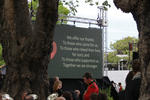
The Canterbury Earthquake Memorial
Audio, Radio New Zealand
When the new Canterbury Earthquake Memorial was revealed last month, something unusual happened for a work of public art. It was universally appreciated! Christchurch filmmaker Rick Harvie has documented the two year long project from seeking submissions though to the official ceremony. Rick tells Lynn Freeman he's about to put his now finished documentary, including footage of the ceremony and feedback from a range of people, online.
Healing quake-torn Kaikoura with music
Audio, Radio New Zealand
Music we know is a great healer, and members of the Christchurch Symphony Orchestra have just been to quake-hit Kaikoura to play for children and for people who're struggling. Kaikoura Earthquake Recovery Team invited five CSO musicians to perform for local schools, for residents in the Kaikoura Health Facility, and the wider community during the week. CSO first violin Cathy Irons talks to Lynn Freeman about the experience.
Tenants struggle to determine quake resilience
Audio, Radio New Zealand
The capital has a tight rental accommodation market, and the peak demand season is just a few weeks from beginning. One prospective Wellington flat hunter, who'd experienced the Christchurch earthquake - including knowledge of the collapse, or partial collapse, of 3 buildings he'd previously lived in - has contacted us, frustrated at the lack of information available from landlords or letting agencies. What rights to information do tenants have?
"Once you move, it's a different story" : the meaning of home for 1.5 gene…
Research papers, University of Canterbury Library
While some scholarship on refugee youth has focussed on leaving a place that is typically considered ‘home,’ there has been little attention to what ‘home’ means to them and how this is negotiated in the country of (re)settlement. This is particularly the case for girls and women. New Zealand research on refugee settlement has largely focussed on the economic integration of refugees. Although this research is essential, it runs the risk of overlooking the socio-cultural aspects of the resettlement experiences and renders partial our understanding of how particular generations and ethnic groups develop a sense of belonging to their adopted homeland. In order to address these research gaps, this thesis explores the experiences of 12 Afghan women, aged 19-29 years, of refugee background who relocated to Christchurch, New Zealand, during their childhood and early teenage years. This study employed semi-structured, one-to-one, in-depth interviews and photo-elicitation to encourage talk about participants’ experiences of leaving Afghanistan, often living in countries of protracted displacement (Iran and/or Pakistan) and making- and being-at-home in New Zealand. In this thesis, I explore the ways in which they frame Afghanistan, and the ways in which their experiences in Iran and Pakistan disrupt the dichotomisation of belonging in terms of ‘here’ (ancestral land) and ‘there’ (country of residence). Furthermore, I use affect theorising to analyse the participants’ expressions of resettlement and home in New Zealand. Feeling at home is as much about negotiating cultural and gendered identities in Western secular societies as it is about belonging to a particular community. Through their experiences of ‘living in two worlds’, the participants are able to strategically challenge cultural expectations without undermining their reputations as Muslims and as Afghan women. The participants discussed their emotional responses to double-displacement: one as a result of war and the other as a result of 2011 Canterbury earthquakes. Therefore, I suggest that for young Afghan women, Afghanistan was among several markers of home in a long embodied journey of (re)settlement.
Final whistle for Lancaster Park
Audio, Radio New Zealand
The Christchurch City Council has confirmed the demolition of the earthquake-damaged Lancaster Park sports stadium will begin this year. Lancaster Park Cricket club was one of the sports ground's first tenants when it was established in 1881. An act of parliament means the ground has to be used for sport and recreation. "We're certainly looking foward to being able to get back on the ground and for it to be turned back into green space," Ric Horsfall from the cricket club says.
The Breathe Urban Village competition: Why did it fail to deliver?
Research papers, Lincoln University
Successful urban regeneration projects generate benefits that are realised over a much longer timeframe than normal market developments and benefits well beyond those that can be uplifted by a market developer. Consequently there is substantial evidence in the literature that successful place-making and urban regeneration projects are usually public-private partnerships and involve a funder, usually local or central government, willing to contribute ‘patient’ capital. Following the 2010 and 2011 earthquakes that devastated the centre of Christchurch, there was an urgent need to rebuild and revitalise the heart of the city, and increasing the number of people living in or near the city centre was seen as a key ingredient of that. In October 2010, an international competition was launched to design and build an Urban Village, a project intended to stimulate renewed residential development in the city. The competition attracted 58 entrants from around world, and in October 2013 the winning team was chosen from four finalists. However the team failed to secure sufficient finance, and in November 2015 the Government announced that the development would not proceed. The Government was unwilling or unable to recognise that an insistence on a pure market approach would not deliver the innovative sustainable village asked for in the competition brief, and failed to factor in the opportunity cost to government, local government, local businesses and the wider Christchurch community of delaying by many years the residential development of the eastern side of the city. As a result, the early vision of the vitality that a thriving residential neighbourhood would bring to the city has not yet been realised.
North Canterbury relieved to see SH1 re-opening
Audio, Radio New Zealand
More than a year after North Canterbury's 7.8 magnitude earthquake forced its closure, State Highway 1 north of Kaikoura will re-open to the public on Friday. Thousands of cars and trucks have been diverted inland since one million tonnes of rubble, in the form of 85 landslides, came down on the road, which was the main route between Picton and Christchurch. It's meant a tough year for some of those based along the highway. Reporter Maja Burry checked in with locals and filed this report.
The Panel with Ali Jones and James Nokise (Part 2)
Audio, Radio New Zealand
Christchurch remembers six years on from the deadly earthquake. What panelists Ali Jones and James Nokise have been up to. John Gray from the Home Owners and Buyers Association believes the mayor is getting advice from self interest groups looking to shift the focus from their own shortcomings. Police in Hawkes Bay discovered 300 stolen garden gnomes with a growing trend to sell them on to fund meth purchases. Pie eating goalie in the UK has resigned for taking part in the bet that he would eat a pie during his team's match.
The Panel with Chris Clarke and Finlay MacDonald (Part 1)
Audio, Radio New Zealand
A report into why Statistics House failed in the November earthquake has revealed a design flaw in the building, and the Government says all buildings nationwide like Statistics House will now need checking. Christchurch man Jeremy Teaguea wants to overturn the law making wearing a bike helment compulsory. Former cyclone Debbie will make her presence felt here over the next week. Weatherman Richard Green tells us what to expect. Going up for Labour and a downward turn in the polls for National. Is it really because of Jacinda Ardern and Bill English?
Top Stories for Wednesday 7 June 2017
Audio, Radio New Zealand
There have been dramatic scenes at the America's cup in Bermuda with Team New Zealand capsizing at the start of its second race of the day against the Bristish team Ben Ainslie Racing. Our America's Cup correspondent Todd Niall was at the Team New Zealand base. Transport Minister Simon Bridges has been caught trying to block an Official Information request for details about a proposed new 50 million dollar Auckland railway line. Kiwirail argued it was legally required to release the information, but the idea of releasing that information was making Mr Bridges 'extremely uncomfortable.' A man believed to be an Algerian student has attacked a police officer with a hammer outside Notre-Dame Cathedral in Paris. Our correspondent Peter Allen says there is still a heavy police presence. The Labour Party says the government is short changing the health sector to the tune of $2.3 billion. The party's leader Andrew Little says funding hasn't kept up with the growing population and changing demographic. The United States secretary of state Rex Tillerson used a fleeting visit to Wellington yesterday to emphasise the importance of the Asia Pacific region and denying the US is stepping back from involvement here. Foreign affairs minister Gerry Brownlee says the US pulling out of the TPP doesn't prove anything. The immediate aftermath of the devastating 2011 Christchurch earthquake and its ongoing impact on residents' mental health is being described as a recovery of two halves. The latest wellbeing survey from the Canterbury District Health Board shows that one in five people, predominantly those living in the eastern suburbs, say they experience stress most or all of the time. Nicky Wagner, the Minister supporting Greater Christchurch Regeneration, says the city has a good quality of life when compared to the rest of the country, despite a new survey showing one in five people say they experience stress most or all of the time. Ms Wagner, says 82 per cent have a good or very good quality of life in Christchurch, which compares with 81 percent nationwide. She says the east side of the city is very low lying and suffered the most damage and work is still being down in that area.
Scrutinising The Prediction of Liquefaction Through New Zealand Case Histo…
Research papers, University of Canterbury Library
Background Liquefaction induced land damage has been identified in more than 13 notable New Zealand earthquakes within the past 150 years, as presented on the timeline below. Following the 2010-2011 Canterbury Earthquake Sequence (CES), the consequences of liquefaction were witnessed first-hand in the city of Christchurch and as a result the demand for understanding this phenomenon was heightened. Government, local councils, insurers and many other stakeholders are now looking to research and understand their exposure to this natural hazard.
20171103_5588_1D3-70 Cabbage Tree in the Red Zone
Images, eqnz.chch.2010
An impressive Cabbage Tree (Cordyline australis) that was in someone's back yard prior to the demolition of houses post the 2011 earthquake.
20171103_5586_1D3-66 Phoenix Palm in the Red Zone
Images, eqnz.chch.2010
A Phoenis Palm (Phoenix canariensis) that was in someone's back yard prior to the demolition of houses post the 2011 earthquake.
Previsione degli effetti di liquefazione su scala urbana
Research papers, University of Canterbury Library
Nel presente articolo si illustra una procedura per il processamento automatizzato di prove CPT, il calcolo di vari indici di liquefazione e la rappresentazione dei dati su mappa. La procedura è applicata al caso studio del terremoto di Christchurch, Nuova Zelanda, del 22 febbraio 2011 (magnitudo momento, Mw = 6.2). Dall’analisi spaziale dei risultati emerge una buona correlazione tra le mappe ottenute per l’indicatore degli effetti al suolo e i danni osservati (su terreni e strutture). Tuttavia, per confermare la validità di tale procedura, sarà necessario esaminare ulteriori casi studio nel mondo.
Between Grey and Green: Ecological Resilience in Urban Landscapes
Research papers, The University of Auckland Library
This paper analyses the city of Christchurch, New Zealand, which has been through dramatic changes since it was struck by a series of earthquakes of different intensities between 2010 and 2011. The objective is to develop a deeper understanding of resilience by looking at changes in green and grey infrastructures. The study can be helpful to reveal a way of doing comparative analysis using resilience as a theoretical framework. In this way, it might be possible to assess the blueprint of future master plans by considering how important the interplay between green and grey infrastructure is for the resilience capacity of cities.
Heroes come in many forms
Audio, Radio New Zealand
The Logie Collection of Canterbury University is one of the small miracles of this country - treasures of the Ancient World from classical Greece and Rome, right back to the Bronze Age - 7000 BC. And when the first big earthquake struck Christchurch in September 2010, there were fears that the priceless collection - described as "one of Australasia's finest collections of classical art" would be utterly destroyed. Well it was and it wasn't. The Logie Collection has a brand-new home - the Teece Museum of Classical Antiquities - and last week it was proudly displayed in an exhibition called We Could Be Heroes. But it certainly didn't look like it at the time. Simon Morris is joined by Terri Elder and Penny Minchin-Garvin, the co-curators of the museum.
The impact of subcontractor use on performance in civil construction: lear…
Research papers, University of Canterbury Library
Principal contractors can achieve better financial performance in civil construction projects by increasing the proportion of works delivered by subcontractors. However, anecdotally the use of subcontractors is thought to be make principal contractors less competitive due to compounding profit margins. This study found that projects with a higher proportion of subcontracted work exhibit better financial results than projects with less work delivered by subcontractors. This study uses the Christchurch Infrastructure Alliance (known as the Stronger Christchurch Infrastructure Rebuild Team, SCIRT) as a case study to observe why principal contracting firms engage subcontractors and the effect subcontracting has on the overall performance of a construction project. Five top tier civil contracting firms (known as ‘delivery teams’) participated in the alliance. Each team was responsible for the delivery of individual projects. A sample of 334 individual SCIRT projects were analysed, and key delivery team staff were surveyed, to investigate the effect subcontractor engagement has on performance. Between the five delivery teams there were clear differences in how much work was delivered via subcontracts. The extent of this subcontractor engagement had a significant effect on the relative performance of the principal contractor. A positive correlation between subcontractor engagement and overall financial performance is observed, and a negative correlation is observed between subcontractor engagement and non-financial performance. Although the causes of these relationships appear complex, the primary reason appears to be that subcontracting fosters increased productivity by cascading financial performance incentives closer to the physical construction task. To maximise competitiveness and financial performance, principal contractors must embrace the use of subcontractors and develop efficient systems of managing subcontracted work.
The Week In Review for week ending Fri May 5 2017
Audio, Radio New Zealand
A review of the week's news including... New questions are raised by leaked video footage showing a robot and two workers inside the Pike River mine just months after the 2010 disaster, fresh happy faces in the newly announced Labour list line up, the country's two biggest media companies have been given a strong message from the regions after their proposed merger is knocked back, a full biosecurity operation launched in Kerikeri, Wellington house prices soar, a helicopter pilot describes his crash north of Wellington as 'frightening', women in the Mongrel Mob say there is now less violence towards women, a review of the Kaikoura earthquake reveals it generated a tsunami of nearly 7 metres, the most annoying driving habits on Christchurch roads and one half of a champion rowing crew is surprised by the other half's retirement announcement.
Fragility functions for buried pipelines in liquefiable soils based on New…
Research papers, University of Canterbury Library
This poster aims to present fragility functions for pipelines buried in liquefaction-prone soils. Existing fragility models used to quantify losses can be based on old data or use complex metrics. Addressing these issues, the proposed functions are based on the Christchurch network and soil and utilizes the Canterbury earthquake sequence (CES) data, partially represented in Figure 1. Figure 1 (a) presents the pipe failure dataset, which describes the date, location and pipe on which failures occurred. Figure 1 (b) shows the simulated ground motion intensity median of the 22nd February 2011 earthquake. To develop the model, the network and soil characteristics have also been utilized
Fragility functions for buried pipelines in liquefaction-prone areas based…
Research papers, University of Canterbury Library
Motivation This poster aims to present fragility functions for pipelines buried in liquefaction-prone soils. Existing fragility models used to quantify losses can be based on old data or use complex metrics. Addressing these issues, the proposed functions are based on the Christchurch network and soil and utilizes the Canterbury earthquake sequence (CES) data, partially represented in Figure 1. Figure 1 (a) presents the pipe failure dataset, which describes the date, location and pipe on which failures occurred. Figure 1 (b) shows the simulated ground motion intensity median of the 22nd February 2011 earthquake. To develop the model, the network and soil characteristics have also been utilized.
Floodplain restoration principles for the Avon Ōtākaro Red Zone. Case stud…
Research papers, University of Canterbury Library
The Canterbury region of New Zealand experienced a sequence of strong earthquakes during 2010-2011. Responses included government acquisition of many thousands of residential properties in the city of Christchurch in areas with severe earthquake effects. A large and contiguous tract of this ‘red zoned’ land lies in close proximity to the Ōtākaro / Avon River and is known as the Avon-Ōtākaro Red Zone (AORZ). The focus of this study was to provide an overview of the floodplain characteristics of the AORZ and review of international experience in ecological restoration of similar river margin and floodplain ecosystems to extract restoration principles and associated learnings. Compared to pre-earthquake ground levels, the dominant trend in the AORZ is subsidence, together with lateral movement especially in the vicinity of waterway. An important consequence of land subsidence in the lower Ōtākaro / Avon River is greater exposure to flooding and the effects of sea level rise. Scenario modelling for sea level rise indicates that much of the AORZ is exposed to inundation within a 100 year planning horizon based on a 1 m sea level rise. As with decisions on built infrastructure, investments in nature-based ‘green infrastructure’ also require a sound business case including attention to risks posed by climate change. Future-proofing of the expected benefits of ecological restoration must therefore be secured by design. Understanding and managing the hydrology and floodplain dynamics are vital to the future of the AORZ. However, these characteristics are shared by other floodplain and river restoration projects worldwide. Identifying successful approaches provides a useful a source of useful information for floodplain planning in the AORZ. This report presents results from a comparative case study of three international examples to identify relevant principles for large-scale floodplain management at coastal lowland sites.
Investigating the effect of micronutrients on chronic insomnia in teachers…
Research papers, University of Canterbury Library
Over the last six years, Canterbury residents have lived through two major earthquakes and thousands of aftershocks, with such events negatively impacting psychological health. Research shows rates of post-traumatic stress symptoms in children have doubled post-quake, and a classroom containing children who are experiencing chronically high physiological arousal has been shown to be a stressful environment for teachers. Such stress therefore negatively impacts teachers’ ability to sleep well, meaning many Christchurch teachers may suffer from insomnia, a debilitating condition leading to psychological distress and often comorbid with other mental health conditions. The present research sought to investigate the use of a broadspectrum micronutrient formula called EMPowerplus (EMP+) for chronic insomnia in teachers. This study examined the effect of EMP+ over an 8-10 week period using a multiple-baseline design with placebo. Seventeen teachers were randomized to one of three baseline sequences where they completed a one week baseline period, before receiving five, nine, or 14 days, of placebo as well as 8-10 weeks of the micronutrient formula. After completion of the trial, a three-month follow up was conducted. All participants completed the trial, and results showed a statistically reliable and clinically significant decrease in insomnia severity (Cohen’s dav = - 1.37), on at least one or more aspects of the sleep diary, and on emotional exhaustion (Cohen’s dav = -1.08). EMP+ also statistically significantly reduced insomnia severity compared to placebo (Cohen’s dav = -0.66). Statistically significant reduction was not seen in stress, anxiety and depression scores as compared to placebo, and these levels were not generally clinically raised to begin with. Sixteen out of 17 participants were compliant, and side effects were generally mild and transitory. The current study provides evidence for the beneficial effect of micronutrient supplementation on chronic insomnia in Christchurch teachers working in a stressful environment. Future research incorporating measurement of nutritional intake and proinflammatory biomarkers, as well as conducting comparisons to other conventional treatments, is recommended.
A major ice-calving event at Tasman Glacier terminus, Southern Alps, 22 Fe…
Research papers, The University of Auckland Library
Terminus calving of icebergs is a common mass-loss mechanism from water-terminating glaciers globally, including the lake-calving glaciers in New Zealand’s central Southern Alps. Calving rates can increase dramatically in response to increases in ice velocity and/or retreat of the glacier margin. Here, we describe a large calving event (c. 4.5 × 10⁶ m3) observed at Tasman Glacier, which initiated around 30 min after the MW 6.2 Christchurch earthquake of 22 February 2011. The volume of this calving event was equalled or exceeded only once in a subsequent 13-month-long study. While the temporal association with the earthquake remains intriguing, the effects of any preconditioning factors remain unclear.
Trees in the Red Zone (307/365)
Images, eqnz.chch.2010
20171103_5582_1D3-38 Trees in the Red Zone (307/365) In what used to be sections with houses and yards. Between late 2011 and 2014 the houses (well 95% of them) were removed due to land dropping in the 2011 earthquakes and the proximity of the Avon River, tidal in this area. #8859
Governance and recovery: comparing recent disaster recoveries in Sri Lanka…
Research papers, Victoria University of Wellington
© 2018 The Authors. Published by Elsevier Ltd. Governance is understood to have considerable influence on the success of recoveries following a natural disaster. What constitutes good governance and successful recovery in these circumstances? This question is discussed in relation to two recent recovery processes. Sri Lanka has, for all intents and purposes, recovered from the tsunami that struck there and other parts of southern Asia in 2004. Christchurch, New Zealand was devastated by a sequence of earthquakes during 2010 and 2011 and recovery there is now well under way. The paper discusses the governance structures that have guided these two recoveries. While it is understood that the effects of disasters could potentially be life long and recovery from them complex, compatibility of the process and outcomes in relation to cultural norms and the critical issue of housing are the key issues discussed across the two cases.
The Week In Review for week ending Fri April 14 2017
Audio, Radio New Zealand
A review of the week's news including... Relief after cyclone Cook passes quickly down the North Island with limited damage, questions about what was known about the increasing risk of Edgecumbe stop banks bursting, the man who gave us Fred Dagg has died suddenly, three more former CERA staffers are being investigated after conflict of interests prompted calls for a wider inquiry, a warning more homeless families will be sleeping in cars parks and garages in Auckland this winter, the High Court rules excessive defamation damages against Colin Craig constitute a miscarriage of justice, a verdict in a defamation against the Labour leader Andrew Little, relatives of New Zealand soldiers killed on duty in South East Asia are relieved their family members will be finally returned home, US consumer campaigner Erin Brockovich visits Christchurch homeowners who are trying to settle earthquake insurance claims six years on, three teams have been cut from the Super Rugby competition and a more than 50 year old copper time capsule has been cracked open.
The Panel with Emma Espiner and Jonathan Krebs (Part 1)
Audio, Radio New Zealand
Rocket Lab's Electron rocket launch today on the Mahia Peninsula has been scrubbed again, sadly. A power fault this time. Kaikoura residents and businesses are celebrating the re-opening of State Highway 1 north following a year of earthquake repairs. The coastal highway link between Picton and Christchurch was badly damaged during the November 2016 quake but will now re-open during the day from 7am. It will close at 8:30 each night so more repairs and assesments can be done. Kaikoura Top Ten Holiday Park co-owner Ed Nolan tells us what this means for his business and others in the town. The Prime Minister Jainda Ardern says the Government's new families package will reduce child poverty in the country by 48 per cent. We ask the panellists whether this is realistic or if there are other, more entrenched imprediments to lowering poverty in New Zealand. The panellists also discuss the state of the books, and discuss if they worry about national debt iincreasing, as the opposition has warned. The Prime Minister says wealthy New Zealanders can opt out of the Government's Winter Energy Payment, which will see those on a benefit, NZ Superannuation or a Veterans Pension get an extra boost due the winter season. Many are doubtful that will happen though. The panellists discuss why some wealthy people have missed out on tax cuts only to be able to reap the reward of this package. We also ask if they suspect this money will be used for heating purposes. The University of Otago has a new degree which brings science and art together, the BaSc. It aims to break down barriers between the two disciplines. Two students are graduating the degree this week. We talk to Eirenie Taua'i who has been studying Pacific Studies and Neuroscience. We aslk her what careers she is considering now and what it was like to study to very different courses. The families of those who died in the CTV building collapse in Christchurch's 2011 earthquake say they will continue to fight for justice. Police announced earlier this month they won't be prosecuting the engineers of the building after a three-year long investigation. The families met with police to ask and why say they aren't convinced all has been done. We ask panellist, barrister Jonathan Krebs, if other charges could and should be laid.
Identification of cost-effective retrofit and/or rehabilitation strategies…
Research papers, University of Canterbury Library
Recently developed performance-based earthquake engineering framework, such as one provided by PEER (Deierlein et al. 2003), assist in the quantification in terms of performance such as casualty, monetary losses and downtime. This opens up the opportunity to identify cost-effective retrofit/rehabilitation strategies by comparing upfront costs associated with retrofit with the repair costs that can be expected over time. This loss assessment can be strengthened by learning from recent earthquakes, such as the 2010 Canterbury and 2016 Kaikoura earthquakes. In order to investigate which types of retrofit/rehabilitation strategies may be most cost-effective, a case study building was chosen for this research. The Pacific Tower, a 22-storey EBF apartment located within the Christchurch central business district (CBD), was damaged and repaired during the 2010 Canterbury earthquake series. As such, by taking hazard levels accordingly (i.e. to correspond to the Christchurch CBD), modelling and analysing the structure, and considering the vulnerability and repair costs of its different components, it is possible to predict the expected losses of the aforementioned building. Using this information, cost-effective retrofit/rehabilitation strategy can be determined. This research found that more often than not, it would be beneficial to improve the performance of valuable non-structural components, such as partitions. Although it is true that improving such elements will increase the initial costs, over time, the benefits gained from reduced losses should be expected to overcome the initial costs. Aftershocks do increase the predicted losses of a building even in lower intensities due to the fact that non-structural components can get damaged at such low intensities. By comparing losses computed with and without consideration of aftershocks for a range of historical earthquakes, it was found that the ratio between losses due to main shock with aftershocks to the losses due to the main shock only tended to increase with increasing main shock magnitude. This may be due to the fact that larger magnitude earthquakes tend to generate larger magnitude aftershocks and as those aftershocks happen within a region around the main shock, they are more likely to cause intense shaking and additional damage. In addition to this observation, it was observed that the most significant component of loss of the case study building was the non-structural partition walls.
Experimental validation of a non-contact, non-line of sight displacement s…
Research papers, University of Canterbury Library
This work investigates the possibility of developing a non-contact, non-line of sight sensor to measure interstorey drift through simulation and experimental validation. • The method uses frequency-modulated continuous wave (FMCW) radar to measure displacement. This method is commonly in use in a number of modern applications, including aircraft altimeters and automotive parking sensors. • The technique avoids numerous problems found in contemporary structural health monitoring methods, namely integral drift errors and structural modification requirements. • The smallest achievable detection error in displacement was found to be as low as 0.26%, through simulated against the displacement response of a single degree of freedom structure subject to ground motion excitation. • This was verified during experimentation, when a corner-style reflector was placed on a shake table running ground motion data taken from the 4th September 2010 earthquake in Christchurch. These results confirmed the conclusions drawn from simulation.
Soil-Foundation-Structure Interaction in the Earthquake Performance of Mul…
Research papers, The University of Auckland Library
The influence of nonlinear soil-foundation-structure interaction (SFSI) on the performance of multi-storey buildings during earthquake events has become increasingly important in earthquake resistant design. For buildings on shallow foundations, SFSI refers to nonlinear geometric effects associated with uplift of the foundation from the supporting soil as well as nonlinear soil deformation effects. These effects can potentially be beneficial for structural performance, reducing forces transmitted from ground shaking to the structure. However, there is also the potential consequence of residual settlement and rotation of the foundation. This Thesis investigates the influence of SFSI in the performance of multi-storey buildings on shallow foundations through earthquake observations, experimental testing, and development of spring-bed numerical models that can be incorporated into integrated earthquake resistant design procedures. Observations were made following the 22 February 2011 Christchurch Earthquake in New Zealand of a number of multi-storey buildings on shallow foundations that performed satisfactorily. This was predominantly the case in areas where shallow foundations, typically large raft foundations, were founded on competent gravel and where there was no significant manifestation of liquefaction at the ground surface. The properties of these buildings and the soils they are founded on directed experimental work that was conducted to investigate the mechanisms by which SFSI may have influenced the behaviour of these types of structure-foundation systems. Centrifuge experiments were undertaken at the University of Dundee, Scotland using a range of structure-foundation models and a layer of dense cohesionless soil to simulate the situation in Christchurch where multi-storey buildings on shallow foundations performed well. Three equivalent single degree of freedom (SDOF) models representing 3, 5, and 7 storey buildings with identical large raft foundations were subjected to a range of dynamic Ricker wavelet excitations and Christchurch Earthquake records to investigate the influence of SFSI on the response of the equivalent buildings. The experimental results show that nonlinear SFSI has a significant influence on structural response and overall foundation deformations, even though the large raft foundations on competent soil meant that there was a significant reserve of bearing capacity available and nonlinear deformations may have been considered to have had minimal effect. Uplift of the foundation from the supporting soil was observed across a wide range of input motion amplitudes and was particularly significant as the amplitude of motion increased. Permanent soil deformation represented by foundation settlement and residual rotation was also observed but mainly for the larger input motions. However, the absolute extent of uplift and permanent soil deformation was very small compared to the size of the foundation meaning the serviceability of the building would still likely be maintained during large earthquake events. Even so, the small extent of SFSI resulted in attenuation of the response of the structure as the equivalent period of vibration was lengthened and the equivalent damping in the system increased. The experimental work undertaken was used to validate and enhance numerical modelling techniques that are simple yet sophisticated and promote interaction between geotechnical and structural specialists involved in the design of multi-storey buildings. Spring-bed modelling techniques were utilised as they provide a balance between ease of use, and thus ease of interaction with structural specialists who have these techniques readily available in practice, and theoretically rigorous solutions. Fixed base and elastic spring-bed models showed they were unable to capture the behaviour of the structure-foundation models tested in the centrifuge experiments. SFSI spring-bed models were able to more accurately capture the behaviour but recommendations were proposed for the parameters used to define the springs so that the numerical models closely matched experimental results. From the spring-bed modelling and results of centrifuge experiments, an equivalent linear design procedure was proposed along with a procedure and recommendations for the implementation of nonlinear SFSI spring-bed models in practice. The combination of earthquake observations, experimental testing, and simplified numerical analysis has shown how SFSI is influential in the earthquake performance of multi-storey buildings on shallow foundations and should be incorporated into earthquake resistant design of these structures.