

Search
found 6693 results
Images for damaged; more images...


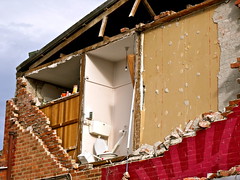
Lyttelton Review 3 October 2011
Articles, UC QuakeStudies
The "Lyttelton Review" newsletter for 3 October 2011, produced by the Lyttelton Harbour Information Centre.
Lyttelton Harbour Review 18 March 2013
Articles, UC QuakeStudies
The "Lyttelton Harbour Review" newsletter for 18 March 2013, produced by the Lyttelton Harbour Information Centre.
Lyttelton Review 3 September 2012
Articles, UC QuakeStudies
The "Lyttelton Review" newsletter for 3 September 2012, produced by the Lyttelton Harbour Information Centre.
Lyttelton Review 26 November 2012
Articles, UC QuakeStudies
The "Lyttelton Review" newsletter for 26 November 2012, produced by the Lyttelton Harbour Information Centre.
Lyttelton Harbour Review 25 February 2013
Articles, UC QuakeStudies
The "Lyttelton Harbour Review" newsletter for 25 February 2013, produced by the Lyttelton Harbour Information Centre.
Lyttelton Harbour Review 8 April 2013
Articles, UC QuakeStudies
The "Lyttelton Harbour Review" newsletter for 8 April 2013, produced by the Lyttelton Harbour Information Centre.
Post-earthquake decision-making on sewer recovery and the roles of damage …
Research papers, University of Canterbury Library
Decision making on the reinstatement of the Christchurch sewer system after the Canterbury (New Zealand) earthquake sequence in 2010–2011 relied strongly on damage data, in particular closed circuit television (CCTV). This paper documents that process and considers how data can influence decision making. Data are analyzed on 33,000 pipes and 13,000 repairs and renewals. The primary findings are that (1) there should be a threshold of damage per pipe set to make efficient use of CCTV; (2) for those who are estimating potential damage, care must be taken in direct use of repair data without an understanding of the actual damage modes; and (3) a strong correlation was found between the ratio of faults to repairs per pipe and the estimated peak ground velocity. Taken together, the results provide evidence of the extra benefit that damage data can provide over repair data for wastewater networks and may help guide others in the development of appropriate strategies for data collection and wastewater pipe decisions after disasters.
Women relive fear when quake damaged mall
Audio, Radio New Zealand
Colleagues of a Christchurch man killed in February's earthquake today relived the frightening moments when the quake struck.
Valued But Broken: Reconstructing Damaged Built Heritage
Research papers, Victoria University of Wellington
Heritage buildings are an important element of our urban environments, representing the hope and aspirations of a generation gone, reminding us of our achievements and our identity. When heritage buildings suffer damage, or fall into disrepair they are either met by one of two extremes; a bulldozer or painstaking repair. If the decision to conserve defeats the bulldozer, current heritage practice favours restoration into a mausoleum-type monument to yesteryear. But what if, rather than becoming a museum, these heritage buildings could live on and become a palimpsest of history? What if the damage was embraced and embodied in the repair? The Cathedral of the Blessed Sacrament on Barbadoes Street, Christchurch is the case study building for this thesis. Suffering damage in the Canterbury earthquakes of 2010 and 2011, the Cathedral sits in ruin waiting for decisions to be made around how it can be retained for future generations. This thesis will propose a reconstruction for the Cathedral through the analysis of precedent examples of reconstructing damaged heritage buildings and guided by a heritage framework proposed in this thesis. The employed process will be documented as an alternative method for reconstructing other damaged heritage buildings.
Christchurch Square Clock Tower damaged by Equake
Images, eqnz.chch.2010
The clock face on the left is showing the correct time. The clock face on the right stopped at the moment of the big earthquake in CHCH on Sept 4th at 4.25am. It stayed like that for a week until fixed. Interestingly that face has not shown the correct time since.
GIS based assessment of seismic risk for the Christchurch CBD and Mount Pl…
Research papers, University of Canterbury Library
This research employs a deterministic seismic risk assessment methodology to assess the potential damage and loss at meshblock level in the Christchurch CBD and Mount Pleasant primarily due to building damage caused by earthquake ground shaking. Expected losses in terms of dollar value and casualties are calculated for two earthquake scenarios. Findings are based on: (1) data describing the earthquake ground shaking and microzonation effects; (2) an inventory of buildings by value, floor area, replacement value, occupancy and age; (3) damage ratios defining the performance of buildings as a function of earthquake intensity; (4) daytime and night-time population distribution data and (5) casualty functions defining casualty risk as a function of building damage. A GIS serves as a platform for collecting, storing and analyzing the original and the derived data. It also allows for easy display of input and output data, providing a critical functionality for communication of outcomes. The results of this study suggest that economic losses due to building damage in the Christchurch CBD and Mount Pleasant will possibly be in the order of $5.6 and $35.3 million in a magnitude 8.0 Alpine fault earthquake and a magnitude 7.0 Ashley fault earthquake respectively. Damage to non-residential buildings constitutes the vast majority of the economic loss. Casualty numbers are expected to be between 0 and 10.
Performance of unreinforced clay brick masonry buildings during the 22nd F…
Research papers, The University of Auckland Library
In the early morning of 4th September 2010 the region of Canterbury, New Zealand, was subjected to a magnitude 7.1 earthquake. The epicentre was located near the town of Darfield, 40 km west of the city of Christchurch. This was the country’s most damaging earthquake since the 1931 Hawke’s Bay earthquake (GeoNet, 2010). Since 4th September 2010 the region has been subjected to thousands of aftershocks, including several more damaging events such as a magnitude 6.3 aftershock on 22nd February 2011. Although of a smaller magnitude, the earthquake on 22nd February produced peak ground accelerations in the Christchurch region three times greater than the 4th September earthquake and in some cases shaking intensities greater than twice the design level (GeoNet, 2011; IPENZ, 2011). While in September 2010 most earthquake shaking damage was limited to unreinforced masonry (URM) buildings, in February all types of buildings sustained damage. Temporary shoring and strengthening techniques applied to buildings following the Darfield earthquake were tested in February 2011. In addition, two large aftershocks occurred on 13th June 2011 (magnitudes 5.7 and 6.2), further damaging many already weakened structures. The damage to unreinforced and retrofitted clay brick masonry buildings in the 4th September 2010 Darfield earthquake has already been reported by Ingham and Griffith (2011) and Dizhur et al. (2010b). A brief review of damage from the 22nd February 2011 earthquake is presented here
Photograph of the Cranmer Centre, 40 Armagh Street (163)
Images, UC QuakeStudies
A photograph of the earthquake damage to the Cranmer Centre.
Christchurch Press Image: John Kirk-Anderson, 2011:02:23 10:18:45
Images, UC QuakeStudies
Photograph captioned by Fairfax, "Earthquake-damaged war memorial in Lyttelton".
Christchurch Press Image: John Kirk-Anderson, 2011:02:23 09:28:46
Images, UC QuakeStudies
Photograph captioned by Fairfax, "Earthquake-damaged St Josephs Church, Lyttelton".
Christchurch Press Image: John Kirk-Anderson, 2011:02:23 09:28:53
Images, UC QuakeStudies
Photograph captioned by Fairfax, "Earthquake-damaged St Josephs Church, Lyttelton".
Photograph of the Cranmer Centre, 40 Armagh Street (164)
Images, UC QuakeStudies
A photograph of the earthquake damage to the Cranmer Centre.
Photograph of the Cranmer Centre, 40 Armagh Street (168)
Images, UC QuakeStudies
A photograph of the earthquake damage to the Cranmer Centre.
Photograph of 231-235 Kilmore Street (12)
Images, UC QuakeStudies
A photograph of the earthquake damage to 231 Kilmore Street.
Koen Broekema's Photograph 023
Images, UC QuakeStudies
A close up of damaged stonework of Christ Church Cathedral.
Christchurch Press Infographic: 25 September 2010 (4)
Images, UC QuakeStudies
A map showing the locations of condemned and damaged buildings.
Photograph of 116 Lichfield Street (29)
Images, UC QuakeStudies
A photograph of the earthquake damage to 116 Lichfield Street.
Photograph of 22-24 Cranmer Square (10)
Images, UC QuakeStudies
A photograph of the earthquake damage to 22 Cranmer Square.
Photograph of 22-24 Cranmer Square (3)
Images, UC QuakeStudies
A photograph of the earthquake damage to 24 Cranmer Square.
Christchurch Press Infographic: 22 October 2010 (1)
Images, UC QuakeStudies
A page banner promoting an article about land damage assessment.
Photograph of Domo, 236 Tuam Street (5)
Images, UC QuakeStudies
A photograph of the earthquake damage to 236 Tuam Street.
Photograph by Jocelyn Kinghorn 407
Images, UC QuakeStudies
An earthquake damaged house where the front porch has crumbled.
Photograph of 90 Lichfield Street (7)
Images, UC QuakeStudies
A photograph of the earthquake damage to 90 Lichfield Street.
Photograph of 116 Lichfield Street (30)
Images, UC QuakeStudies
A photograph of the earthquake damage to 116 Lichfield Street.
Photograph of 217 Tuam Street (14)
Images, UC QuakeStudies
A photograph of the earthquake damage to 217 Tuam Street.