
Search
found 241 results
Images for Earthquake; more images...
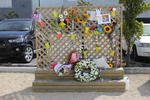
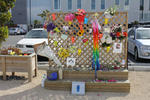
20170321_4180_7D2-70 Still bent and broken (12/52)
Images, eqnz.chch.2010
73 months after the earthquake that damaged it, the jetty at South New Brighton Domain is still not repaired. Seven years ago it was straight and level. Dull, flat and orrible (horrible) light meant this image was destined to become monochrome!
Piles, bones and marbles: what was under the Godleys’ house?
Articles, Christchurch uncovered
Way back in the winter of 2012, at the height of the post-earthquake demolition, I was pretty excited to learn we were going to get the chance to investigate the site of John and Charlotte Godley’s house in Lyttelton. John … Continue reading →
Repairs underway for quake-damaged statue of Antarctica's Scott
Audio, Radio New Zealand
The statue of the Antarctic explorer, Robert Falcon Scott, that toppled from its plinth and snapped at its ankles in the Christchurch earthquake is being repaired. all going well it will be reinstated later this year, just in time for the Antarctic summer.
Christchurch homes sit empty
Audio, Radio New Zealand
Post-earthquake most people would say it was difficult to find housing in Christchurch. But reports suggest that the market has flattened. And terraced housing and apartments are sitting empty. Christchurch Council finance committee chairman, Councillor Raf Manji, discusses future developments like The East Frame.
ACC court decision could set a major precedent - lawyer
Audio, Radio New Zealand
A lawyer says a District Court ruling could set a precedent for hundreds of people with PTSD. The ruling directs ACC to cover the medical costs of a Christchurch builder who volunteered in the earthquake rescue effort, but was later hit with PTSD.
CTV collapse: Will there be corporate manslaughter charge?
Audio, Radio New Zealand
Justice Minister Andrew Little said on Thursday that "everybody involved in this has walked away scot-free. And that's not right." Nigel Hampton QC, who was counsel for the families at the Royal Commission in to the Canterbury earthquakes, joins us to discuss the outcome.
Generalised parametric functions and spatial correlations for seismic velo…
Research papers, University of Canterbury Library
Post-earthquake decision-making on sewer recovery and the roles of damage …
Research papers, University of Canterbury Library
Decision making on the reinstatement of the Christchurch sewer system after the Canterbury (New Zealand) earthquake sequence in 2010–2011 relied strongly on damage data, in particular closed circuit television (CCTV). This paper documents that process and considers how data can influence decision making. Data are analyzed on 33,000 pipes and 13,000 repairs and renewals. The primary findings are that (1) there should be a threshold of damage per pipe set to make efficient use of CCTV; (2) for those who are estimating potential damage, care must be taken in direct use of repair data without an understanding of the actual damage modes; and (3) a strong correlation was found between the ratio of faults to repairs per pipe and the estimated peak ground velocity. Taken together, the results provide evidence of the extra benefit that damage data can provide over repair data for wastewater networks and may help guide others in the development of appropriate strategies for data collection and wastewater pipe decisions after disasters.
Christchurch rebuild offers training for Pasifika peoples
Audio, Radio New Zealand
Six years after Christchurch's destructive 6.3 magnitude earthquake the rebuild programme is now being used to provide training for workers from the Pacific. Twenty-four workers from Fiji, Tonga and Samoa are helping rebuild the city while learning new skills and earning money they can send home.
The Panel with Ali Jones and Michael Moynahan (Part 2)
Audio, Radio New Zealand
David Rockefeller has died. He was a believer in great responsibility coming with great wealth. What the Panelists Ali Jones and Michael Moynahan want to talk about. Kim Button of the Neighbourhood Trust talks about the emotional scars Christchurch children are bearing after the earthquakes.
New quake safety doubts over police stations, hospitals
Audio, Radio New Zealand
It's been revealed that not a single one of New Zealand's 315 police buildings constructed before 2011 have had a full earthquake safety check. Canterbury's district health buildings and a central Wellington cinema are among other major structures needing checks. Phil Pennington joins us with the details.
Planning for resilient communities: and every other day: learning from the…
Research papers, University of Canterbury Library
After a disaster, cities experience profound social and environmental upheaval. Current research on disasters describes this social disruption along with collective community action to provide support. Pre-existing social capital is recognised as fundamental to this observed support. This research examines the relationship between sense of place for neighbourhood, social connectedness and resilience. Canterbury residents experienced considerable and continued disruption following a large and protracted sequence of earthquakes starting in September 2010. A major aftershock on 22 February 2011 caused significant loss of life, destruction of buildings and infrastructure. Following this earthquake some suburbs of Christchurch showed strong collective action. This research examines the features of the built environment that helped to form this cooperative support. Data were collected through semi-structured interviews with 20 key informants followed by 38 participants from four case study suburbs. The objectives were to describe the community response of suburbs, to identify the key features of the built environment and the role of social infrastructure in fostering social connectedness. The last objective was to contribute to future planning for community resilience. The findings from this research indicated that social capital and community competence are significant resources to be called upon after a disaster. Features of the local environment facilitated the formation of neighbourhood connections that enabled participants to cope, manage and to collectively solve problems. These features also strengthened a sense of belonging and attachment to the home territory. Propinquity was important; the bumping and gathering places such as schools, small local shops and parks provided the common ground for meaningful pre-existing local interaction. Well-defined geography, intimate street typology, access to quality natural space and social infrastructure helped to build the local social connections and develop a sense of place. Resourceful individuals and groups were also a factor, and many are drawn to live near the inner city or more natural places. The features are the same well understood attributes that contribute to health and wellbeing. The policy and planning framework needs to consider broader social outcomes, including resilience in new and existing urban developments. The socio-political structures that provide access to secure and stable housing and local education should also be recognised and incorporated into local planning for resilience and the everyday.
The Breathe Urban Village competition: Why did it fail to deliver?
Research papers, Lincoln University
Successful urban regeneration projects generate benefits that are realised over a much longer timeframe than normal market developments and benefits well beyond those that can be uplifted by a market developer. Consequently there is substantial evidence in the literature that successful place-making and urban regeneration projects are usually public-private partnerships and involve a funder, usually local or central government, willing to contribute ‘patient’ capital. Following the 2010 and 2011 earthquakes that devastated the centre of Christchurch, there was an urgent need to rebuild and revitalise the heart of the city, and increasing the number of people living in or near the city centre was seen as a key ingredient of that. In October 2010, an international competition was launched to design and build an Urban Village, a project intended to stimulate renewed residential development in the city. The competition attracted 58 entrants from around world, and in October 2013 the winning team was chosen from four finalists. However the team failed to secure sufficient finance, and in November 2015 the Government announced that the development would not proceed. The Government was unwilling or unable to recognise that an insistence on a pure market approach would not deliver the innovative sustainable village asked for in the competition brief, and failed to factor in the opportunity cost to government, local government, local businesses and the wider Christchurch community of delaying by many years the residential development of the eastern side of the city. As a result, the early vision of the vitality that a thriving residential neighbourhood would bring to the city has not yet been realised.
A Teaspoon of Light with Peter and Cait O'Connor
Audio, Radio New Zealand
Father and daughter Peter and Cait O'Connor set up the Teaspoon of Light theatre company in Christchurch after the earthquakes, working with young children in the most quake-affected schools. Lynn Freeman speaks with Peter and Cait ahead of a trip to Mexico for similar work.
Dismay over police decision on CTV prosecution
Audio, Radio New Zealand
There's been widespread dismay at the decision not to prosecute anyone for the deaths of 115 people in the CTV building collapse during the 2011 Canterbury earthquake. Police say it was a tough decision - they wanted to hold someone to account but there simply wasn't the evidence to warrant a prosecution.
A comparison of CPT-Vs correlations using a liquefaction case history data…
Research papers, University of Canterbury Library
This study uses 44 high quality liquefaction case histories taken from 22 locations affected by the 2010-2011 Canterbury earthquake sequence to evaluate four commonly used CPT-VS correlations (i.e., Robertson, 2009; Hegazy and Mayne, 2006; Andrus et al., 2007; McGann et al., 2015b). Co-located CPT soundings and VS profiles, developed from surface wave testing, were obtained at 22 locations and case histories were developed for the Mw 7.1, 4 September 2010 Darfield and Mw 6.2, 22 February 2011 Christchurch earthquakes. The CPT soundings are used to generate VS profiles using each of four CPT-VS correlations. These correlated VS profiles are used to estimate the factor of safety against liquefaction using the Kayen et al. (2013) VS-based simplified liquefaction evaluation procedure. An error index is used to quantify the predictive capabilities of these correlations in relation to the observations of liquefaction (or the lack thereof). Additionally, the error indices from the CPT-correlated VS profiles are compared to those obtained using: (1) the Kayen et al. (2013) procedure with surface wave-derived VS profiles, and (2) the Idriss and Boulanger (2008) CPT-based liquefaction evaluation procedure. Based on the error indices, the evaluation procedures based on direct measurements of either CPT or VS provided more accurate liquefaction triggering estimates than those obtained from any of the CPT-VS correlations. However, the performance of the CPT-VS correlations varied, with the Robertson (2009) and Hegazy and Mayne (2006) correlations performing relatively poorly for the Christchurch soils and the Andrus et al. (2007) and McGann et al. (2015b) correlations performing better. The McGann et al. (2015b) correlation had the lowest error indices of the CPT-VS correlations tested, however, none of the CPT-VS correlations provided accurate enough VS predictions to be used for the evaluation of liquefaction triggering using the VS-based liquefaction evaluation procedures.
CTV families hold protest in Christchurch
Audio, Radio New Zealand
Some of the families of the 115 people who dies in the CTV building during the 2011 Canterbury earthquake protested in Latimer Square yesterday over the police decision not to prosecute the designers of the CTV building. They say they do want to see a prosecution go ahead, and they are seeking legal advice about what their options are.
The impact of subcontractor use on performance in civil construction: lear…
Research papers, University of Canterbury Library
Principal contractors can achieve better financial performance in civil construction projects by increasing the proportion of works delivered by subcontractors. However, anecdotally the use of subcontractors is thought to be make principal contractors less competitive due to compounding profit margins. This study found that projects with a higher proportion of subcontracted work exhibit better financial results than projects with less work delivered by subcontractors. This study uses the Christchurch Infrastructure Alliance (known as the Stronger Christchurch Infrastructure Rebuild Team, SCIRT) as a case study to observe why principal contracting firms engage subcontractors and the effect subcontracting has on the overall performance of a construction project. Five top tier civil contracting firms (known as ‘delivery teams’) participated in the alliance. Each team was responsible for the delivery of individual projects. A sample of 334 individual SCIRT projects were analysed, and key delivery team staff were surveyed, to investigate the effect subcontractor engagement has on performance. Between the five delivery teams there were clear differences in how much work was delivered via subcontracts. The extent of this subcontractor engagement had a significant effect on the relative performance of the principal contractor. A positive correlation between subcontractor engagement and overall financial performance is observed, and a negative correlation is observed between subcontractor engagement and non-financial performance. Although the causes of these relationships appear complex, the primary reason appears to be that subcontracting fosters increased productivity by cascading financial performance incentives closer to the physical construction task. To maximise competitiveness and financial performance, principal contractors must embrace the use of subcontractors and develop efficient systems of managing subcontracted work.
Laying down foundations: reflecting on disaster management planning in mus…
Research papers, University of Canterbury Library
This thesis looks at the protocols museums and galleries adopt for the safeguarding of art, artefacts and cultural heritage. In particular, it analyses these procedures in relation to the 2010 and 2011 earthquakes in Christchurch, and considers how these events shaped the preventative conservation measures in place in museum and gallery institutions. Through gathering, assessing, and comparing this information about Christchurch’s institutions to disaster management best practices in national and international organisations, this thesis gauges the extent to which disaster management was changed in response to the events in Christchurch. This thesis first considers the growth in disaster management as a field, before examining what are considered best practices within this sector. Finally, it looks at specific institutions in Christchurch, including the Christchurch Art Gallery Te Puna o Waiwhetu, Canterbury Museum, and the Air Force Museum of New Zealand.
Kaikoura coastline - Professor urges people to keep away
Audio, Radio New Zealand
University of Canterbury's Professor David Schiel is looking at how biological habitats are responding and recovering along the approximately 130km of coastline effected by November's magnitude 7.8 earthquakes. He wants people who are riding quad bikes over the newly uplifted land to be mindful of the possible consequences on the bird and sea life living there.
Christchurch city is a recovery of two halves
Audio, Radio New Zealand
The immediate aftermath of the devastating 2011 Christchurch earthquake and its ongoing impact on residents' mental health is being described as a recovery of two halves. The latest wellbeing survey from the Canterbury District Health Board shows that one in five people, predominantly those living in the eastern suburbs, say they experience stress most or all of the time.
Six years after quake, stress remains part of daily life
Audio, Radio New Zealand
Six years on from the Christchurch earthquakes, one in five residents of the city say the disaster is still taking its toll. The latest wellbeing survey by the Canterbury DHB found people living in north-east and east Christchurch were the most likely to be suffering from issues such as anxiety, from ongoing aftershocks, being in a damaged environment, and surrounded by construction.
Christchurch red zone housing plans 'unsafe'
Audio, Radio New Zealand
A proposal to put houses back into Christchurch red zones is being shot down by some worried locals who say it's unfair and potentially unsafe. On Friday the crown-led agency, Regenerate Christchurch, released ten options for one area by the Avon river that 9 thousand people used to call home. Almost every house in the 602 hectare zone was demolished after the earthquakes.
Development of a 3D High-Resolution Velocity Model of the Canterbury, New …
Research papers, University of Canterbury Library
A 3D high-resolution model of the geologic structure and associated seismic velocities in the Canterbury, New Zealand region is developed utilising data from depthconverted seismic reflection lines, petroleum and water well logs, cone penetration tests, and implicitly guided by existing contour maps and geologic cross sections in data sparse subregions. The model, developed using geostatistical Kriging, explicitly represents the significant and regionally recognisable geologic surfaces that mark the boundaries between geologic units with distinct lithology and age. The model is examined in the form of both geologic surface elevation contour maps as well as vertical cross sections of shear wave velocity, with the most prominent features being the Banks Peninsula Miocene-Pliocene volcanic edifice, and the Pegasus and Rakaia late Mesozoic-Neogene sedimentary basins. The adequacy of the modelled geologic surfaces is assessed through a residual analysis of point constraints used in the Kriging and qualitative comparisons with previous geologic models of subsets of the region. Seismic velocities for the lithological units between the geologic surfaces have also been derived, thus providing the necessary information for a Canterbury velocity model (CantVM) for use in physics-based seismic wave propagation. The developed model also has application for the determination of depths to specified shear wave velocities for use in empirical ground motion modelling, which is explicitly discussed via an example.
Remembrance (129/365)
Images, eqnz.chch.2010
20170509_6305_7D2-62 Remembrance (129/365) Today was the first time I have been to the earthquake memorial since it was completed and opened on 22nd February 2017, six years after the devastating quake that killed the 185 that are named on this wall. I knew two of the people on the list.
Trees in the Red Zone (307/365)
Images, eqnz.chch.2010
20171103_5582_1D3-38 Trees in the Red Zone (307/365) In what used to be sections with houses and yards. Between late 2011 and 2014 the houses (well 95% of them) were removed due to land dropping in the 2011 earthquakes and the proximity of the Avon River, tidal in this area. #8859
Healing quake-torn Kaikoura with music
Audio, Radio New Zealand
Music we know is a great healer, and members of the Christchurch Symphony Orchestra have just been to quake-hit Kaikoura to play for children and for people who're struggling. Kaikoura Earthquake Recovery Team invited five CSO musicians to perform for local schools, for residents in the Kaikoura Health Facility, and the wider community during the week. CSO first violin Cathy Irons talks to Lynn Freeman about the experience.
Tenants struggle to determine quake resilience
Audio, Radio New Zealand
The capital has a tight rental accommodation market, and the peak demand season is just a few weeks from beginning. One prospective Wellington flat hunter, who'd experienced the Christchurch earthquake - including knowledge of the collapse, or partial collapse, of 3 buildings he'd previously lived in - has contacted us, frustrated at the lack of information available from landlords or letting agencies. What rights to information do tenants have?
What is the place of nature in the urban regeneration of central Christchu…
Research papers, Lincoln University
Please contact supervisor Lin Roberts at Lincoln University to request a copy of this dissertation to read.Cities around the world are becoming greener, with many striving to make their cities as green as possible. Christchurch was devastated by an Earthquake in 2011, which resulted in many fatalities. Though this impacted the city negatively, this sad event was used as an opportunity for the broken city to become a better one. The Christchurch City Council (CCC) ran an exercise called ‘Share an Idea’, which asked the public what they wanted the new city to look like. The main theme extrapolated by researchers was that people wanted the city to be greener. A draft plan was created by the CCC but was deemed not good enough and replaced by a new plan called the Blueprint Plan created by the government. Through the process of public consultation to the finalized plan and the implementation of the finalized plan, there were many changes made to the inclusion of nature into Central Christchurch’s urban regeneration. The aim of this research is to assess the role of nature in the urban regeneration of Christchurch, by evaluating the recovery process, and comparing the level of greenness the public wanted by looking at what they said in Share an Idea, and then seeing how that translated into the proposed plans, and then finally looking at what is being implemented.
Final whistle for Lancaster Park
Audio, Radio New Zealand
The Christchurch City Council has confirmed the demolition of the earthquake-damaged Lancaster Park sports stadium will begin this year. Lancaster Park Cricket club was one of the sports ground's first tenants when it was established in 1881. An act of parliament means the ground has to be used for sport and recreation. "We're certainly looking foward to being able to get back on the ground and for it to be turned back into green space," Ric Horsfall from the cricket club says.