
Search
found 262 results
Images for risk; more images...

The Gutting of the Ozone
Images, UC QuakeStudies
The damaged Ozone Hotel has had its window frames removed, and the interior has been gutted. The photographer comments, "The Ozone was badly damaged in Christchurch's February earthquake, but at considerable risk someone has removed the windows and door".
Developer says they 'rejected' builder involved with earthquake prone buil…
Audio, Radio New Zealand
A property developer says he rejected an approach from a company who went on to build a substandard multistorey building in Christchurch's central mall. The building at 230 High Street is in limbo, having finally been ruled substandard with numerous design weaknesses that are an earthquake risk. Phil Pennington reports.
Christchurch Press Image: Richard Cosgrove 2010:09:07 15:09:41
Images, UC QuakeStudies
Photograph captioned by Fairfax, "Urban Search and Rescue workers remove the insides of the historic MLC building built in 1906 on the corner of Manchester/Hereford Streets. The seven storey building will be demolished as it is at risk of collapsing".
Firefighter's efforts in CTV rescue recognised
Audio, Radio New Zealand
Twenty seven men and women who risked their lives to save others after the February 2011 earthquake in Christchurch have been recognised for their bravery. Joining us is a Christchurch firefighter, Paul Rodwell, one of the first on scene at the CTV building and who has been awarded a medal in the awards.
Christchurch Press Image: Richard Cosgrove 2010:09:07 15:22:27
Images, UC QuakeStudies
Photograph captioned by Fairfax, "Urban Search and Rescue workers remove the insides of the historic MLC building built in 1906 on the corner of Manchester/Hereford Streets. The seven storey building will be demolished as it is at risk of collapsing".
Christchurch Press Image: Richard Cosgrove 2010:09:07 15:21:25
Images, UC QuakeStudies
Photograph captioned by Fairfax, "Urban Search and Rescue workers remove the insides of the historic MLC building built in 1906 on the corner of Manchester/Hereford Streets. The seven storey building will be demolished as it is at risk of collapsing".
Christchurch Press Image: Richard Cosgrove 2010:09:07 15:22:18
Images, UC QuakeStudies
Photograph captioned by Fairfax, "Urban Search and Rescue workers remove the insides of the historic MLC building built in 1906 on the corner of Manchester/Hereford Streets. The seven storey building will be demolished as it is at risk of collapsing".
Christchurch Press Image: Richard Cosgrove 2010:09:07 15:11:18
Images, UC QuakeStudies
Photograph captioned by Fairfax, "Urban Search and Rescue workers remove the insides of the historic MLC building built in 1906 on the corner of Manchester/Hereford Streets. The seven storey building will be demolished as it is at risk of collapsing".
Christchurch Press Image: Richard Cosgrove 2010:09:07 14:13:40
Images, UC QuakeStudies
Photograph captioned by Fairfax, "Urban Search and Rescue workers remove the insides of the historic MLC building built in 1906 on the corner of Manchester and Hereford Streets. The seven-storey building will be demolished as it is at risk of collapsing".
Christchurch Press Image: Richard Cosgrove 2010:09:07 15:11:34
Images, UC QuakeStudies
Photograph captioned by Fairfax, "Urban Search and Rescue workers remove the insides of the historic MLC building built in 1906 on the corner of Manchester/Hereford Streets. The seven storey building will be demolished as it is at risk of collapsing".
Christchurch Press Image: Richard Cosgrove 2010:09:07 14:44:13
Images, UC QuakeStudies
Photograph captioned by Fairfax, "Urban Search and Rescue workers remove the insides of the historic MLC building built in 1906 on the corner of Manchester/Hereford Streets. The seven storey building will be demolished as it is at risk of collapsing".
Christchurch Press Image: Richard Cosgrove 2010:09:07 14:35:11
Images, UC QuakeStudies
Photograph captioned by Fairfax, "Urban Search and Rescue workers remove the insides of the historic MLC building built in 1906 on the corner of Manchester/Hereford Streets. The seven storey building will be demolished as it is at risk of collapsing".
Christchurch Press Image: Richard Cosgrove 2010:09:07 14:13:40
Images, UC QuakeStudies
Photograph captioned by Fairfax, "Urban Search and Rescue workers remove the insides of the historic MLC building built in 1906 on the corner of Manchester/Hereford Streets. The seven storey building will be demolished as it is at risk of collapsing".
Christchurch Press Image: Richard Cosgrove 2010:09:07 15:21:17
Images, UC QuakeStudies
Photograph captioned by Fairfax, "Urban Search and Rescue workers remove the insides of the historic MLC building built in 1906 on the corner of Manchester/Hereford Streets. The seven storey building will be demolished as it is at risk of collapsing".
Christchurch Press Image: Richard Cosgrove 2010:09:07 14:43:57
Images, UC QuakeStudies
Photograph captioned by Fairfax, "Urban Search and Rescue workers remove the insides of the historic MLC building built in 1906 on the corner of Manchester/Hereford Streets. The seven storey building will be demolished as it is at risk of collapsing".
Christchurch Press Image: Richard Cosgrove 2010:09:07 14:30:02
Images, UC QuakeStudies
Photograph captioned by Fairfax, "Urban Search and Rescue workers remove the insides of the historic MLC building built in 1906 on the corner of Manchester/Hereford Streets. The seven storey building will be demolished as it is at risk of collapsing".
The life of a geotechnical earthquake engineer
Audio, Radio New Zealand
Rick Wentz is a Chartered geotechnical engineer originally from Northern California who has lived in New Zealand since 2011 - coming here in response to the Christchurch earthquakes. Rick talks to Mark about seismic risk - what it means for the general community and the role of a geotechnical engineering in helping to manage it.
Earthquake hazard and risk assessment study Stage 1 Part A: Earthquake sou…
Articles, UC QuakeStudies
This study compiled and tabulated all relevant available information on earthquake sources (active faults) in Canterbury and mapped the fault locations onto 1:50,000 or 1:250,000 overlays on topographic maps (later digitised into the Environment Canterbury active faults database). The study also reviewed information on historic earthquakes, instrumental seismicity and paleoseismic studies and identified information gaps. It recommended an approach for a probabilistic seismic hazard analysis and development of earthquake scenarios. See Object Overview for background and usage information.
A combined SHM/IDA method for assessing collapse capacity and risk in subs…
Research papers, University of Canterbury Library
© 2019, Springer-Verlag GmbH Germany, part of Springer Nature. Prediction of building collapse due to significant seismic motion is a principle objective of earthquake engineers, particularly after a major seismic event when the structure is damaged and decisions may need to be made rapidly concerning the safe occupation of a building or surrounding areas. Traditional model-based pushover analyses are effective, but only if the structural properties are well understood, which is not the case after an event when that information is most useful. This paper combines hysteresis loop analysis (HLA) structural health monitoring (SHM) and incremental dynamic analysis (IDA) methods to identify and then analyse collapse capacity and the probability of collapse for a specific structure, at any time, a range of earthquake excitations to ensure robustness. This nonlinear dynamic analysis enables constant updating of building performance predictions following a given and subsequent earthquake events, which can result in difficult to identify deterioration of structural components and their resulting capacity, all of which is far more difficult using static pushover analysis. The combined methods and analysis provide near real-time updating of the collapse fragility curves as events progress, thus quantifying the change of collapse probability or seismic induced losses very soon after an earthquake for decision-making. Thus, this combination of methods enables a novel, higher-resolution analysis of risk that was not previously available. The methods are not computationally expensive and there is no requirement for a validated numerical model, thus providing a relatively simpler means of assessing collapse probability immediately post-event when such speed can provide better information for critical decision-making. Finally, the results also show a clear need to extend the area of SHM toward creating improved predictive models for analysis of subsequent events, where the Christchurch series of 2010–2011 had significant post-event aftershocks.
Impacts of the property investment market on seismic retrofit decisions
Research papers, Lincoln University
Implementing seismic risk mitigation is a major challenge in many earthquake prone regions. The objective of this research is to investigate how property investment market practices can be used to enhance building owners’ decisions to improve seismic performance of earthquake prone buildings (EPBs). A case study method adopted, revealed the impacts of the property market stakeholders’ practices on seismic retrofit decisions. The findings from this research provide significant new insights on how property market-based incentives such as such as mandatory disclosure of seismic risks in all transactions in the property market, effective awareness seismic risk program and a unified earthquake safety assessment information system, can be used to enhance EPBs owners seismic retrofit decisions. These market-based incentives offer compelling reasons for the different property market stakeholders and the public at large to retain, care, invest, and act responsibly to rehabilitate EPBs. The findings suggest need for stakeholders involved in property investment and retrofit decisions to work together to foster seismic rehabilitation of EPBs.
Photograph by Eroica Ritchie 117
Images, UC QuakeStudies
A notice nailed to a tree near the river reads, "Health warning, contaminated water. Due to sewage overflows this water is unsafe for human contact and activity and is a public health risk. Please keep all people and pets out of contact with the water and do not consume any seafood or shellfish collected from this area".
Nisbet, Alistair, 1958-: "I AM focused on the summit... and they don't get…
Images, Alexander Turnbull Library
Text across the top of the cartoon reads 'Mayor in Nepal' Christchurch Mayor Bob Parker climbs a snowy slope towards 'Mt Junket'; he is followed by sherpas carrying candles, dining table and wine glasses. Bob Parker says 'I am focused on the summit and they don't get much bigger than this!' Context - Bob Parker gave the keynote address at a United Nations-sanctioned symposium in Nepal on disaster-risk reduction. The UN and the United States Government paid Parker's costs. The disaster risk symposium featured speakers from Pakistan and Haiti - two countries struck by large earthquakes.(The Press 15 February 2011) Quantity: 1 digital cartoon(s).
Top Stories for Thursday 21 July 2011
Audio, Radio New Zealand
The foreign affairs minister says he's satisfied police computers were not at risk from a group of Israelis caught up in the Christchurch earthquake. In a fierce parliamentary debate the British Prime Minister says he regrets hiring a former News of the World journalist, but won't yet apologise for it and the last fugitive indicted for war crimes in the former Yugoslavia is arrested in Serbia.
Updated probabilistic seismic hazard assessment for the Canterbury region:…
Articles, UC QuakeStudies
This study updated the 1999 Earthquake hazard and risk assessment study Stage 1 Part B: Probabilistic seismic hazard assessment and Earthquake scenarios for the Canterbury region, and historic earthquakes in Christchurch report. It incorporated new fault data, a new distributed seismicity model and new methods for estimating Modified Mercalli intensities. See Object Overview for background and usage information.
Fairfax Video, May 2013 (11)
Videos, UC QuakeStudies
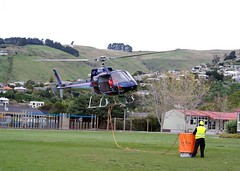
A video of an interview with Chris Bartholomeusz, Construction Manager at Downer Construction, about the work the team has been doing to stabilise a former quarry on Gleaning Spur. More than 12,000 cubic metres of soil have been removed from the hillside in order to remove a risk of a landslide hitting the houses below.
Updated probabilistic seismic hazard assessment for the Canterbury region
Articles, UC QuakeStudies
This study updated the 1999 Earthquake hazard and risk assessment study Stage 1 Part B: Probabilistic seismic hazard assessment and Earthquake scenarios for the Canterbury region, and historic earthquakes in Christchurch report. It incorporated new fault data, a new distributed seismicity model and new methods for estimating Modified Mercalli intensities. See Object Overview for background and usage information.
Canterbury region earthquake source identification and characterisation
Articles, UC QuakeStudies
This study updated and superseded Earthquake hazard and risk assessment study Stage 1 Part A: Earthquake source identification and characterisation (Pettinga et al, 1998). It compiled and tabulated all relevant available information on earthquake sources in Canterbury and updated the active faults database with new fault locations and information. See Object Overview for background and usage information.
Integrating building information modelling and geographic information syst…
Research papers, University of Canterbury Library
The development of Digital City technologies to manage and visualise spatial information has increasingly become a focus of the research community, and application by city authorities. Traditionally, the Geographic Information Systems (GIS) and Building Information Models (BIM) underlying Digital Cities have been used independently. However, integrating GIS and BIM into a single platform provides benefits for project and asset management, and is applicable to a range of issues. One of these benefits is the means to access and analyse large datasets describing the built environment, in order to characterise urban risk from and resilience to natural hazards. The aim of this thesis is to further explore methodologies of integration in two distinct areas. The first, integration through connectivity of heterogeneous datasets where GIS spatial infrastructure data is merged with 3D BIM building data to create a digital twin. Secondly, integration through analysis whereby data from the digital twin are extracted and integrated with computational models. To achieve this, a workflow was developed to identify the required datasets of a digital twin, and develop a process of integrating those datasets through a combination of; semi-autonomous conversion, translation and extension of data; and semantic web and services-based processes. Through use of a designed schema, the data were streamed in a homogenous format in a web-based platform. To demonstrate the value of this workflow with respect to urban risk and resilience, the process was applied to the Taiora: Queen Elizabeth II recreation and sports centre in eastern Christchurch, New Zealand. After integration of as-built GIS and BIM datasets, targeted data extraction was implemented, with outputs tailored for analysis in an infrastructure serviceability loss model, which assessed potable water network performance in the 22nd February 2011 Christchurch Earthquake. Using the same earthquake conditions as the serviceability loss model, performance of infrastructure assets in service at the time of the 22nd February 2011 Christchurch Earthquake was compared to new assets rebuilt at the site, post-earthquake. Due to improved potable water infrastructure resilience resulting from installation of ductile piles, a decrease of 35.5% in the probability of service loss was estimated in the serviceability loss model. To complete the workflow, the results from the external analysis were uploaded to the web-based platform. One of the more significant outcomes from the workflow was the identification of a lack of mandated metadata standards for fittings/valves connecting a building to private laterals. Whilst visually the GIS and BIM data show the building and pipes as connected, the semantic data does not include this connectivity relationship. This has no material impact on the current serviceability loss model as it is not one of the defined parameters. However, a proposed modification to the model would utilise the metadata to further assess the physical connection robustness, and increase the number of variables for estimating probability of service loss. This thesis has made a methodological contribution to urban resilience analysis by demonstrating how readily available up-to-date building and infrastructure data can be integrated, and with tailored extraction from a Digital City platform, be used for disaster impact analysis in an external computational engine, with results in turn imported and visualised in the Digital City platform. The workflow demonstrated that translation and integration of data would be more successful if a regional/national mandate was implemented for the submission of consent documentation in a specified standard BIM format. The results of this thesis have identified that the key to ensuring the success of an integrated tool lies in the initial workflow required to safeguard that all data can be either captured or translated in an interoperable format.
Integrating building information modelling and geographic information syst…
Research papers, University of Canterbury Library
The development of Digital City technologies to manage and visualise spatial information has increasingly become a focus of the research community, and application by city authorities. Traditionally, the Geographic Information Systems (GIS) and Building Information Models (BIM) underlying Digital Cities have been used independently. However, integrating GIS and BIM into a single platform provides benefits for project and asset management, and is applicable to a range of issues. One of these benefits is the means to access and analyse large datasets describing the built environment, in order to characterise urban risk from and resilience to natural hazards. The aim of this thesis is to further explore methodologies of integration in two distinct areas. The first, integration through connectivity of heterogeneous datasets where GIS spatial infrastructure data is merged with 3D BIM building data to create a digital twin. Secondly, integration through analysis whereby data from the digital twin are extracted and integrated with computational models. To achieve this, a workflow was developed to identify the required datasets of a digital twin, and develop a process of integrating those datasets through a combination of; semi-autonomous conversion, translation and extension of data; and semantic web and services-based processes. Through use of a designed schema, the data were streamed in a homogenous format in a web-based platform. To demonstrate the value of this workflow with respect to urban risk and resilience, the process was applied to the Taiora: Queen Elizabeth II recreation and sports centre in eastern Christchurch, New Zealand. After integration of as-built GIS and BIM datasets, targeted data extraction was implemented, with outputs tailored for analysis in an infrastructure serviceability loss model, which assessed potable water network performance in the 22nd February 2011 Christchurch Earthquake. Using the same earthquake conditions as the serviceability loss model, performance of infrastructure assets in service at the time of the 22nd February 2011 Christchurch Earthquake was compared to new assets rebuilt at the site, post-earthquake. Due to improved potable water infrastructure resilience resulting from installation of ductile piles, a decrease of 35.5% in the probability of service loss was estimated in the serviceability loss model. To complete the workflow, the results from the external analysis were uploaded to the web-based platform. One of the more significant outcomes from the workflow was the identification of a lack of mandated metadata standards for fittings/valves connecting a building to private laterals. Whilst visually the GIS and BIM data show the building and pipes as connected, the semantic data does not include this connectivity relationship. This has no material impact on the current serviceability loss model as it is not one of the defined parameters. However, a proposed modification to the model would utilise the metadata to further assess the physical connection robustness, and increase the number of variables for estimating probability of service loss. This thesis has made a methodological contribution to urban resilience analysis by demonstrating how readily available up-to-date building and infrastructure data can be integrated, and with tailored extraction from a Digital City platform, be used for disaster impact analysis in an external computational engine, with results in turn imported and visualised in the Digital City platform. The workflow demonstrated that translation and integration of data would be more successful if a regional/national mandate was implemented for the submission of consent documentation in a specified standard BIM format. The results of this thesis have identified that the key to ensuring the success of an integrated tool lies in the initial workflow required to safeguard that all data can be either captured or translated in an interoperable format.
Resettled Refugee Communities’ Experiences of the Canterbury Earthquakes a…
Research papers, The University of Auckland Library
This paper presents a qualitative study with multiple refugee background communities living in Christchurch, New Zealand about their perspectives and responses to the Canterbury earthquakes of 2010-2011 (32 semi-structured interviews and 11 focus group discussions comprising 112 participants). Whilst the Canterbury earthquakes created significant challenges for the entire region, several refugee background communities found multiple ways to effectively respond to such adversity. Central to this response were their experiences of belonging which were comprised of both ‘civic’ and ‘ethno’ conceptualisations. This discussion includes an analysis on the intersectionality of identity to highlight the gendered, contextual and chronological influences that impact people’s perspectives of and responses to a disaster. As the study was conducted over 18 months, the paper discusses how social capital resources and experiences of belonging can help inform urban disaster risk reduction (DRR) with refugee groups. http://3icudr.org/program