
Search
found 199 results
Images for NEW-ZEALAND; more images...
Digital Photograph: Brass Band at the Canterbury Earthquake Memorial Servi…
Images, Canterbury Museum
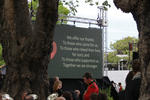
One landscape colour digital photograph taken 22 February 2017 showing brass band members at the Canterbury Earthquake Memorial Service. Behind the band is a digital screen showing an image of flowers floating in the Avon River.
Digital Photograph: Members of the Media at the Canterbury Earthquake Memo…
Images, Canterbury Museum
One landscape colour digital photograph taken 22 February 2017 showing cameramen and journalists at the Canterbury Earthquake Memorial Service.
Digital Photograph: Media Viewing Area at the Canterbury Earthquake Memori…
Images, Canterbury Museum
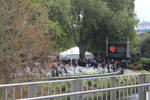
One landscape colour digital photograph taken 22 February 2017 showing the appointed media viewing area at the Canterbury Earthquake Memorial Service.
Digital Photograph: First Responders and Public Viewing Areas at the Cante…
Images, Canterbury Museum
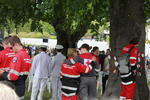
One landscape colour digital photograph taken 22 February 2017 showing the appointed first responders and public viewing areas at the Canterbury Earthquake Memorial Service.
Digital Photograph: First Responders Laying Wreaths at the Canterbury Eart…
Images, Canterbury Museum
One landscape colour digital photograph taken 22 February 2017 showing first responders laying wreaths at the Canterbury Earthquake Memorial Service.
Digital Photograph: Commemoration Board at the Canterbury Earthquake Memor…
Images, Canterbury Museum
One landscape colour digital photograph taken 22 February 2017 showing a gentleman reading messages on a commemoration board at the Canterbury Earthquake Memorial Service.
Digital Photograph: Flowers Floating in the Avon River
Images, Canterbury Museum
One landscape colour digital photograph taken 22 February 2017 showing flowers floating in the Avon River as part of the Canterbury Earthquake Memorial Service.
Digital Photograph: Sunflower Atop a Road Works Cone
Images, Canterbury Museum
One landscape colour digital photograph taken 22 February 2017 showing a sunflower sitting atop a road works cone as part of the Canterbury Earthquake Memorial Service.
Digital Photograph: Earthquake Memorial Trellis
Images, Canterbury Museum
One landscape colour digital photograph taken 22 February 2017 showing an earthquake memorial trellis at the site of the former Canterbury Television building.
Digital Photograph: Commemorative Note to Andrew Bishop
Images, Canterbury Museum
One landscape colour digital photograph taken 22 February 2017 showing a commemorative note to, and photograph of, Andrew Bishop attached to an earthquake memorial trellis at the site of the former Canterbury Television building.
Digital Photograph: Flowers on an Earthquake Memorial Trellis
Images, Canterbury Museum
One landscape colour digital photograph taken 22 February 2017 showing a bouquet of flowers and a note attached to an earthquake memorial trellis at the site of the former Canterbury Television building.
Digital Photograph: Earthquake Memorial Trellis
Images, Canterbury Museum
One landscape colour digital photograph taken 22 February 2017 showing an earthquake memorial trellis at the site of the former Canterbury Television building.
Digital Photograph: Karen Bishop at an Earthquake Memorial Trellis
Images, Canterbury Museum
One landscape colour digital photograph taken 22 February 2017 showing Karen Bishop attaching a windmill to an earthquake memorial trellis in memory of her son Andrew Bishop at the site of the former Canterbury Television building.
Digital Photograph: Windmill Attached to an Earthquake Memorial Trellis
Images, Canterbury Museum
One landscape colour digital photograph taken 22 February 2017 showing a windmill attached to an earthquake memorial trellis by Karen Bishop in memory of her son Andrew Bishop at the site of the former Canterbury Television building.
Digital Photograph: Flowers at the Site of the Former Canterbury Televisio…
Images, Canterbury Museum
One landscape colour digital photograph taken 22 February 2017 showing a bouquet of flowers left at the site of the former Canterbury Television building by the Toyama Language School in memory of earthquake victims.
Digital Photograph: Flowers at the Site of the Former Canterbury Televisio…
Images, Canterbury Museum
One landscape colour digital photograph taken 22 February 2017 showing bouquets of flowers and gifts left at the site of the former Canterbury Television building in memory of earthquake victims.
"Once you move, it's a different story" : the meaning of home for 1.5 gene…
Research papers, University of Canterbury Library
While some scholarship on refugee youth has focussed on leaving a place that is typically considered ‘home,’ there has been little attention to what ‘home’ means to them and how this is negotiated in the country of (re)settlement. This is particularly the case for girls and women. New Zealand research on refugee settlement has largely focussed on the economic integration of refugees. Although this research is essential, it runs the risk of overlooking the socio-cultural aspects of the resettlement experiences and renders partial our understanding of how particular generations and ethnic groups develop a sense of belonging to their adopted homeland. In order to address these research gaps, this thesis explores the experiences of 12 Afghan women, aged 19-29 years, of refugee background who relocated to Christchurch, New Zealand, during their childhood and early teenage years. This study employed semi-structured, one-to-one, in-depth interviews and photo-elicitation to encourage talk about participants’ experiences of leaving Afghanistan, often living in countries of protracted displacement (Iran and/or Pakistan) and making- and being-at-home in New Zealand. In this thesis, I explore the ways in which they frame Afghanistan, and the ways in which their experiences in Iran and Pakistan disrupt the dichotomisation of belonging in terms of ‘here’ (ancestral land) and ‘there’ (country of residence). Furthermore, I use affect theorising to analyse the participants’ expressions of resettlement and home in New Zealand. Feeling at home is as much about negotiating cultural and gendered identities in Western secular societies as it is about belonging to a particular community. Through their experiences of ‘living in two worlds’, the participants are able to strategically challenge cultural expectations without undermining their reputations as Muslims and as Afghan women. The participants discussed their emotional responses to double-displacement: one as a result of war and the other as a result of 2011 Canterbury earthquakes. Therefore, I suggest that for young Afghan women, Afghanistan was among several markers of home in a long embodied journey of (re)settlement.
Transport infrastructure performance and management in the South Island of…
Research papers, University of Canterbury Library
At 00:02 on 14th November 2016, a Mw 7.8 earthquake occurred in and offshore of the northeast of the South Island of New Zealand. Fault rupture, ground shaking, liquefaction, and co-seismic landslides caused severe damage to distributed infrastructure, and particularly transportation networks; large segments of the country’s main highway, State Highway 1 (SH1), and the Main North Line (MNL) railway line, were damaged between Picton and Christchurch. The damage caused direct local impacts, including isolation of communities, and wider regional impacts, including disruption of supply chains. Adaptive measures have ensured immediate continued regional transport of goods and people. Air and sea transport increased quickly, both for emergency response and to ensure routine transport of goods. Road diversions have also allowed critical connections to remain operable. This effective response to regional transport challenges allowed Civil Defence Emergency Management to quickly prioritise access to isolated settlements, all of which had road access 23 days after the earthquake. However, 100 days after the earthquake, critical segments of SH1 and the MNL remain closed and their ongoing repairs are a serious national strategic, as well as local, concern. This paper presents the impacts on South Island transport infrastructure, and subsequent management through the emergency response and early recovery phases, during the first 100 days following the initial earthquake, and highlights lessons for transportation system resilience.
Transport infrastructure performance and management in the South Island of…
Research papers, University of Canterbury Library
At 00:02 on 14th November 2016, a Mw 7.8 earthquake occurred in and offshore of the northeast of the South Island of New Zealand. Fault rupture, ground shaking, liquefaction, and co-seismic landslides caused severe damage to distributed infrastructure, and particularly transportation networks; large segments of the country’s main highway, State Highway 1 (SH1), and the Main North Line (MNL) railway line, were damaged between Picton and Christchurch. The damage caused direct local impacts, including isolation of communities, and wider regional impacts, including disruption of supply chains. Adaptive measures have ensured immediate continued regional transport of goods and people. Air and sea transport increased quickly, both for emergency response and to ensure routine transport of goods. Road diversions have also allowed critical connections to remain operable. This effective response to regional transport challenges allowed Civil Defence Emergency Management to quickly prioritise access to isolated settlements, all of which had road access 23 days after the earthquake. However, 100 days after the earthquake, critical segments of SH1 and the MNL remain closed and their ongoing repairs are a serious national strategic, as well as local, concern. This paper presents the impacts on South Island transport infrastructure, and subsequent management through the emergency response and early recovery phases, during the first 100 days following the initial earthquake, and highlights lessons for transportation system resilience.
The Canterbury Earthquake Memorial
Audio, Radio New Zealand
When the new Canterbury Earthquake Memorial was revealed last month, something unusual happened for a work of public art. It was universally appreciated! Christchurch filmmaker Rick Harvie has documented the two year long project from seeking submissions though to the official ceremony. Rick tells Lynn Freeman he's about to put his now finished documentary, including footage of the ceremony and feedback from a range of people, online.
The Central finally arrives at Christchurch's Arts Centre
Audio, Radio New Zealand
It's been a long, long wait but Christchurch's Arts Centre finally has a contemporary art gallery space again - and it's just opened. It's the latest 'reveal' in the Arts Centre post-earthquake rebuild. The new gallery's called The Central and is housed in the original Canterbury College Library. Four Christchurch families and gallerist Jonathan Smart have made it happen and artists including local sculptor Neil Dawson, photographer Peter Peryer, glitter specialist Reuben Patterson and painter Dick Frizzell are in the mix for the opening group show. There are some new names there too. Lynn Freeman speaks to The Central's Jonathan Smart and Ngai Tahu artist Lonnie Hutchinson who has work in the opening show.
Question Time for 14 March 2017
Audio, Radio New Zealand
ANDREW LITTLE to the Prime Minister: Does he stand by his statement that “Nick Smith has dealt with some of the most complex problems of resource law and housing more successfully than any other politician here could have”; if so, in what ways, if any, does he think the housing situation for New Zealanders has improved under Hon Nick Smith? BRETT HUDSON to the Minister of Finance: What steps is the Government taking to improve productivity in the public service? MARAMA FOX to the Minister of Health: Does he agree with counsellor Andrew Hopgood, regarding P addicts, that “… a lack of detox and live-in rehabilitation centres limits options for addicts seeking help”; if so, what is he doing to address this shortage? JONATHAN YOUNG to the Minister for Economic Development: What update can he give on ways the Government is supporting economic development in the Gisborne region? CHRIS HIPKINS to the Associate Minister of Education: How many schools across the country are currently using libraries, halls, and other areas not intended for regular teaching as temporary classrooms? ANDREW BAYLY to the Minister of Justice: What recent announcements has she made regarding phase two of the anti-money laundering and counter-financing of terrorism regime? CATHERINE DELAHUNTY to the Minister for the Environment: Will he put a moratorium on bottled water exports, in response to a 15,000 strong petition and nationwide rallies on water issues taking place today? KELVIN DAVIS to the Minister for Māori Development: Does he have confidence that his leadership of Te Puni Kōkiri and its programmes are resulting in the best outcomes for Māori? MAUREEN PUGH to the Minister of Education: What announcements has she made about the Government’s education-related Better Public Services targets? Dr DAVID CLARK to the Minister of Health: How much did the Canterbury District Health Board receive from the Government for mental health and addiction services support in response to the Kaikōura earthquake, after paying off the debt of Kaikōura’s health centre? Rt Hon WINSTON PETERS to the Minister of Foreign Affairs: Does he stand by all his statements; if so, why? Dr PARMJEET PARMAR to the Minister for Disability Issues: What recent announcements has she made regarding a nationwide transformation of the disability support system?
Kaikoura coastline - Professor urges people to keep away
Audio, Radio New Zealand
University of Canterbury's Professor David Schiel is looking at how biological habitats are responding and recovering along the approximately 130km of coastline effected by November's magnitude 7.8 earthquakes. He wants people who are riding quad bikes over the newly uplifted land to be mindful of the possible consequences on the bird and sea life living there.
Question Time for 2 May 2017
Audio, Radio New Zealand
METIRIA TUREI to the Minister for the Environment: Ki Te Minita mō Te Taiao: Ka tukua e ngā paerewa e whakaarohia akehia nei mō te pai ake o te wai i roto i te pūhera Wai Mā, te kaha kē atu, te iti kē iho rānei o te uru atu o te tūkinotanga ki roto i ō tātou awa wai, e ngā mea whakakapi? Translation: Do the proposed standards for water quality in the Clean Water package allow more pollution or less to enter our waterways than the ones they will replace? BRETT HUDSON to the Minister of Finance: How much is the Government committing to spend on infrastructure over the next 4 years? ANDREW LITTLE to the Prime Minister: Given his predecessor told the Pike River families, “I’m here to give you absolute reassurance we’re committed to getting the boys out, and nothing’s going to change that”, when, if ever, will he be announcing the re-entry of the drift? STUART SMITH to the Minister of Transport: What announcements has he made recently regarding the Government’s commitment to reinstate key transport links following the Kaikōura earthquake? JACINDA ARDERN to the Minister for Children: When was she first notified that the Ministry for Vulnerable Children Oranga Tamariki, or its predecessor CYF, were placing children and younger persons in a hotel or motel for short-term care without a supervisor, and what was her first action, if any? MELISSA LEE to the Minister of Health: Can he confirm that 55,000 care and support workers will share in the $2 billion pay equity settlement announced on 18 April 2017? GRANT ROBERTSON to the Minister of Finance: Does he agree with the Dominion Post editorial that his Government has “singularly failed to answer the pressures of Auckland”; if not, why does he think they would write this? ANDREW BAYLY to the Minister for Building and Construction: How do the latest reports on the level of building activity in Auckland and nationwide for the month, quarter, and year compare with 2016? Rt Hon WINSTON PETERS to the Prime Minister: Does he stand by all his statements; if so, how? PHIL TWYFORD to the Minister of Transport: Why has the completion of the $2.4 billion Western Ring Route been delayed, and when can Aucklanders expect the new motorway to be open? EUGENIE SAGE to the Minister of Conservation: Is it Government policy to increase the logging of native forests on West Coast conservation land? Dr MEGAN WOODS to the Minister supporting Greater Christchurch Regeneration: Does she agree that the first homes in the East Frame will be completed 5 months ahead of schedule? Questions to Members CLARE CURRAN to the Chairperson of the Commerce Committee: Does she intend to call for further submissions on the petition of Dame Fiona Kidman before it is reported back to the House, in light of the recently released footage shot inside the drift of the Pike River mine?
Heroes come in many forms
Audio, Radio New Zealand
The Logie Collection of Canterbury University is one of the small miracles of this country - treasures of the Ancient World from classical Greece and Rome, right back to the Bronze Age - 7000 BC. And when the first big earthquake struck Christchurch in September 2010, there were fears that the priceless collection - described as "one of Australasia's finest collections of classical art" would be utterly destroyed. Well it was and it wasn't. The Logie Collection has a brand-new home - the Teece Museum of Classical Antiquities - and last week it was proudly displayed in an exhibition called We Could Be Heroes. But it certainly didn't look like it at the time. Simon Morris is joined by Terri Elder and Penny Minchin-Garvin, the co-curators of the museum.
Healing quake-torn Kaikoura with music
Audio, Radio New Zealand
Music we know is a great healer, and members of the Christchurch Symphony Orchestra have just been to quake-hit Kaikoura to play for children and for people who're struggling. Kaikoura Earthquake Recovery Team invited five CSO musicians to perform for local schools, for residents in the Kaikoura Health Facility, and the wider community during the week. CSO first violin Cathy Irons talks to Lynn Freeman about the experience.
Question Time for 29 June 2017
Audio, Radio New Zealand
PHIL TWYFORD to the Minister for Building and Construction: Does he agree with Mainfreight founder and Chairman Bruce Plested that housing is a “social disgrace”, that the market cannot sort out this problem, and that real leadership and intestinal fortitude is needed now? JONATHAN YOUNG to the Minister of Finance: What reports has he received on real after-tax wages rising in New Zealand? CHRIS HIPKINS to the Minister of Education: Will she apologise on behalf of the Government for the flawed handling of the Canterbury school mergers and closures after the 2011 earthquakes; if not, why not? ANDREW BAYLY to the Minister for Building and Construction: What progress has the Government made in improving the tenancy laws and guidance for dealing with the problem of methamphetamine testing and contamination? CARMEL SEPULONI to the Associate Minister for Social Housing: What motels has the Government purchased in response to the increased emergency housing demand, and how much has this cost? RON MARK to the Prime Minister: Does he stand by all his statements on the Clutha-Southland electorate office issue even if facts known to him make doing so extraordinarily difficult? MAUREEN PUGH to the Minister of Corrections: How is Budget 2017 investing in rehabilitation and reintegration outcomes for offenders? Hon DAVID PARKER to the Minister of Local Government: Does she agree with the Prime Minister’s answer yesterday that drinking-water contamination in Havelock North was “about local government performance and overseeing ratepayer-funded assets whose purpose is to deliver clean and healthy water to its local people. The extensive inquiry into that incident was warranted by widespread illness in the area ... it is about local body performance in overseeing their clean water system”? BRETT HUDSON to the Minister of Local Government: What recent announcements has she made regarding Wellington’s resilience to natural hazards? JULIE ANNE GENTER to the Minister of Transport: Will the Government start building rail to the airport sooner if Auckland hosts the next America’s Cup regatta or will Aucklanders still have to wait 30 years? STUART NASH to the Minister of Police: Does she have any concerns about any of the results of the New Zealand Police Workplace Survey 2017; if so, what in particular? ALASTAIR SCOTT to the Associate Minister of Education: What recent announcements has he made to improve school infrastructure in the Wairarapa?
After the earthquakes, Lyttelton Redux
Audio, Radio New Zealand
Lyttelton was hit harder than most by the Christchurch earthquakes - particularly the Lyttelton Museum. But now it's back - triumphantly, we may say! - with a little help from its friends, past and present. Key historical figures in Lyttelton's history are brought back to life in a new exhibition by Julia Holden - Lyttelton Redux - which has just opened at Canterbury Museum.
Question Time for 27 July 2017
Audio, Radio New Zealand
SARAH DOWIE to the Minister of Finance: What reports has he received on New Zealand’s trade exports? EUGENIE SAGE to the Minister for Land Information: Has he asked Land Information New Zealand to withdraw the 997-hectare Riversdale Flats from the proposed sale of Mt White Station pastoral lease; if not, why not? PHIL TWYFORD to the Minister for Social Housing: Will she confirm that as of 30 June the Government has only delivered 323 of the additional 1,400 emergency beds they promised at the start of November last year? STUART SMITH to the Minister of Transport: What update can he provide on the reinstatement of State Highway 1 following the Kaikōura earthquakes? STEFFAN BROWNING to the Minister for the Environment: Does he have confidence in the Environmental Protection Authority’s review of glyphosate? Dr DAVID CLARK to the Minister of Health: Does he support the establishment of a cross-agency working group with Canterbury District Health Board on their finances, funding, and facilities? DAVID SEYMOUR to the Minister of Health: Does he stand by all his answers to Oral Question No. 6 on 6 June regarding intraoperative radiotherapy for breast cancer? BARBARA KURIGER to the Minister of Immigration: What recent announcements has he made in relation to immigration settings? Hon NANAIA MAHUTA to the Minister for Treaty of Waitangi Negotiations: Does he believe that the signing of the Pare Hauraki Collective Settlement with the inclusion of redress disputed by Tauranga Moana iwi is a breach of Te Tiriti o Waitangi? CHRIS BISHOP to the Associate Minister of Education: What recent announcements have the Government made on school property in the Wellington region? PITA PARAONE to the Minister for Māori Development: Does he stand by all his statements; if so, why? JENNY SALESA to the Minister of Education: Is she satisfied that the Government is doing all that it can to ensure an adequate supply of teachers, particularly in Auckland?
Shared Lines - art after an earthquake
Audio, Radio New Zealand
Wellington's about to host a symposium called Shared Lines, inviting artists from Japan, Kaikoura and Christchurch to talk about their experiences and their art.