
Search
found 14117 results
Images for christchurch earthquake; more images...


Sam Butcher's LEGO Cathedral, Photograph 45
Images, UC QuakeStudies
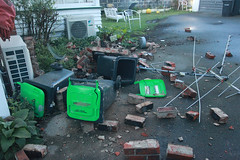
A photograph of components of a model of the ChristChurch Cathedral being built from LEGO by Sam Butcher. Sam comments "Fixing a large variety of bits that were wrong/annoying/cheating (not purist) about the last model. The new one is set AFTER the Feb 22 earthquake. This newer, and much stronger model is also completely modular for easier transport. Obviously still a WIP, I'm currently waiting for a pretty large bricklink order at the moment, and will probably need to place a couple more after that too. Here you can see a couple of aspects of how the model is put together. The technique used proved - from what I tried - to be the best and strongest way to do it".
Who Pays for a Managed Retreat? Lessons from the Christchurch Residential …
Research papers, University of Canterbury Library
After the Christchurch earthquakes, the government declared about 8000 houses as Red Zoned, prohibiting further developments in these properties, and offering the owners to buy them out. The government provided two options for owners: the first was full payment for both land and dwelling at the 2007 property evaluation, the second was payment for land, and the rest to be paid by the owner’s insurance. Most people chose the second option. Using data from LINZ combined with data from StatNZ, this project empirically investigates what led people to choose this second option, and what were the implications of these choices for the owners’ wealth and income.
"Unfortunately, this is a NORTH Canterbury collapse - so you'll only get y…
Images, Alexander Turnbull Library
A man sits in an armchair in the ruins of his house with his wife beside him. A man carrying a briefcase marked 'EQC' has come to make an insurance assessment and says 'Unfortunately, this is a North Canterbury collapse - so you'll only get your first $100,000 back'. Context; the Christchurch earthquake of 4th September and the collapse of the South Canterbury Finance Company. Quantity: 1 digital cartoon(s).
WEMO ERT Set 1 - February 2011 - Photograph 26
Images, UC QuakeStudies
A photograph of the earthquake damage to the Provincial Hotel on the corner of Barbadoes and Cashel Streets. The second storey walls have crumbled, and the bricks have fallen onto the ground below. Scaffolding erected in front of the building is now on a lean. Wire fencing has been placed around the building as a cordon.
“We’re looking out through a window to a field of weeds and sand and stone…
Research papers, University of Canterbury Library
This paper explores the scope of small-scale radio to create an auditory geography of place. It focuses on the short term art radio project The Stadium Broadcast, which was staged in November 2014 in an earthquake-damaged sports stadium in Christchurch, New Zealand. Thousands of buildings and homes in Christchurch have been demolished since the Februrary 22, 2011 earthquake, and while Lancaster Park sports stadium is still standing, it has been unused since that date and its future remains uncertain. The Stadium Broadcast constructed a radio memorial to the Park’s 130 year history through archival recordings, the memories of local people, observation of its current state, and a performed site-specificity. The Stadium Broadcast reflected on the spatiality of radio sounds and transmissions, memory, post-disaster transitionality, and the im-permanence of place.
Impact on the North Island freight infrastructure in the event of a disrup…
Research papers, Lincoln University
This research provides an investigation into the impact on the North Island freight infrastructure, in the event of a disruption of the Ports of Auckland (POAL). This research is important to New Zealand, especially having experienced the Canterbury earthquake disaster in 2010/2011 and the current 2012 industrial action plaguing the POAL. New Zealand is a net exporter of a combination of manufactured high value goods, commodity products and raw materials. New Zealand’s main challenge lies in the fact of its geographical distances to major markets. Currently New Zealand handles approximately 2 million containers per annum, with a minimum of ~40% of those containers being shipped through POAL. It needs to be highlighted that POAL is classified as an import port in comparison to Port of Tauranga (POT) that has traditionally had an export focus. This last fact is of great importance, as in a case of a disruption of the POAL, any import consigned to the Auckland and northern region will need to be redirected through POT in a quick and efficient way to reach Auckland and the northern regions. This may mean a major impact on existing infrastructure and supply chain systems that are currently in place. This study is critical as an element of risk management, looking at how to mitigate the risk to the greater Auckland region. With the new Super City taking hold, the POAL is a fundamental link in the supply chain to the largest metropolitan area within New Zealand.
Restoration and Loss after Disaster: Applying the Dual Process Model of Co…
Research papers, University of Canterbury Library
The article asks whether disasters that destroy life but leave the material infrastructure relatively intact tend to prompt communal coping focussing on loss, while disasters that destroy significant material infrastructure tend to prompt coping through restoration / re-building. After comparing memorials to New Zealand’s Christchurch earthquake and Pike River mine disasters, we outline circumstances in which collective restorative endeavour may be grassroots, organised from above, or manipulated, along with limits to effective restoration. We conclude that bereavement literature may need to take restoration more seriously, while disaster literature may need to take loss more seriously.
Recycling: Tim McGurk
Audio, Radio New Zealand
Over the summer on The Weekend we've been talking to recyclers and upcyclers, people who like the Wombles, are making good use of the things that they find, things that the everyday folks leave behind. This is true of Christchurch builder, artist and furniture maker, Tim McGurk. He says he works with whatever junk and materials he can find. Tim crafted several items from the materials salvaged from an earthquake damaged Christchurch house, as part of the Whole House Reuse project. He also made the news when he made a Star Wars inspired X-wing sculpture/lamp out of salvaged rimu.
Eight Months to Mars - Andre Lovatt
Audio, Radio New Zealand
Andre Lovatt grew up in Christchurch and completed a masters degree in Civil Engineering at Canterbury before taking up a position in Singapore working on, among other things, the $6.7 billion Marina Bay Sands waterfront resort. After almost 10 years in Southeast Asia he has returned to his earthquake ravaged home to take on a project with a much smaller price tag. Andre is the new CEO of the Christchurch Arts Centre and his job is to oversee the $290 million dollar project that will, if it's successful, return the centre to its former glory by the end of 2019.
Quake Makes World Headlines
Images, UC QuakeStudies
A stack of wooden frames with the words "Quake makes world headlines" written on the uppermost frame. The photographer comments, "This is a sculpture at the CPIT facility in Christchurch. It is a series of squares placed over a column with writing on the squares. It is an excellent movable sculpture that conveys the Christchurch earthquake very well. The squares are placed so that they can slide over each other and even fall inside the other on one side. It is a pity that only two sides of the squares are written on".
Scott of the Antarctic
Images, UC QuakeStudies
A digitally manipulated image of the damaged statue of Scott which was removed from its original site beside Worcester Boulevard for safekeeping. The photographer comments, "During the February 2011 earthquake in Christchurch, New Zealand the statue of Robert Falcon Scott broke across the ankles and most of the statue came crashing to the ground. To commemorate a 100 years of association with Antarctica Christchurch council has laid out for viewing the statue in a prostrate position. I was lucky to encounter the statue before it was put into its glass display enclosure".
Kaikoura: Tourist travel behaviour and recovery framework
Research papers, Lincoln University
Initial recovery focus is on road access (especially the inland SH70) although attention also needs to be focussed on the timelines for reopening SH1 to the south. Information on progress and projected timelines is updated daily via NZTA (www.nzta.govt.nz/eq-travel ). Network analyses indicate potential day trip access and re-establishment of the Alpine Pacific triangle route. When verified against ‘capacity to host’ (Part 2 (15th December) there appears to potential for the reestablishment of overnight visits. Establishing secure road access is the key constraint to recovery. In terms of the economic recovery the Kaikoura District has traditionallyattracted a large number of visitors which can be grouped as: second home (and caravan) owners, domestic New Zealand and international travellers. These have been seen through a behaviour lens as “short stop”, ‘day” (where Kaikoura is the specific focal destination) and overnight visitors. At the present restricted access appears to make the latter group less amenable to visiting Kaikoura, not the least because the two large marine mammal operators have a strong focus on international visitors. For the present the domestic market provides a greater initial pathway to recovery. Our experiences in and reflections on Christchurch suggest Kaikoura will not go back to what it once was. A unique opportunity exists to reframe the Kaikoura experience around earthquake geology and its effects on human and natural elements. To capitalise on this opportunity there appears to be a need to move quickly on programming and presenting such experiences as part of a pathway to re-enabling domestic tourists while international visitor bookings and flows can be re-established. The framework developed for this study appears to be robust for rapid post disaster assessment. It needs to be regularly updated and linked with emerging governance and recovery processes.
Identification of cost-effective retrofit and/or rehabilitation strategies…
Research papers, University of Canterbury Library
Recently developed performance-based earthquake engineering framework, such as one provided by PEER (Deierlein et al. 2003), assist in the quantification in terms of performance such as casualty, monetary losses and downtime. This opens up the opportunity to identify cost-effective retrofit/rehabilitation strategies by comparing upfront costs associated with retrofit with the repair costs that can be expected over time. This loss assessment can be strengthened by learning from recent earthquakes, such as the 2010 Canterbury and 2016 Kaikoura earthquakes. In order to investigate which types of retrofit/rehabilitation strategies may be most cost-effective, a case study building was chosen for this research. The Pacific Tower, a 22-storey EBF apartment located within the Christchurch central business district (CBD), was damaged and repaired during the 2010 Canterbury earthquake series. As such, by taking hazard levels accordingly (i.e. to correspond to the Christchurch CBD), modelling and analysing the structure, and considering the vulnerability and repair costs of its different components, it is possible to predict the expected losses of the aforementioned building. Using this information, cost-effective retrofit/rehabilitation strategy can be determined. This research found that more often than not, it would be beneficial to improve the performance of valuable non-structural components, such as partitions. Although it is true that improving such elements will increase the initial costs, over time, the benefits gained from reduced losses should be expected to overcome the initial costs. Aftershocks do increase the predicted losses of a building even in lower intensities due to the fact that non-structural components can get damaged at such low intensities. By comparing losses computed with and without consideration of aftershocks for a range of historical earthquakes, it was found that the ratio between losses due to main shock with aftershocks to the losses due to the main shock only tended to increase with increasing main shock magnitude. This may be due to the fact that larger magnitude earthquakes tend to generate larger magnitude aftershocks and as those aftershocks happen within a region around the main shock, they are more likely to cause intense shaking and additional damage. In addition to this observation, it was observed that the most significant component of loss of the case study building was the non-structural partition walls.
Reality-check and renewed challenges in earthquake engineering: Implementi…
Research papers, University of Canterbury Library
Earthquake Engineering is facing an extraordinarily challenging era, the ultimate target being set at increasingly higher levels by the demanding expectations of our modern society. The renewed challenge is to be able to provide low-cost, thus more widely affordable, high-seismic-performance structures capable of sustaining a design level earthquake with limited or negligible damage, minimum disruption of business (downtime) or, in more general terms, controllable socio-economical losses. The Canterbury earthquakes sequence in 2010-2011 has represented a tough reality check, confirming the current mismatch between societal expectations over the reality of seismic performance of modern buildings. In general, albeit with some unfortunate exceptions, modern multi-storey buildings performed as expected from a technical point of view, in particular when considering the intensity of the shaking (higher than new code design) they were subjected to. As per capacity design principles, plastic hinges formed in discrete regions, allowing the buildings to sway and stand and people to evacuate. Nevertheless, in many cases, these buildings were deemed too expensive to be repaired and were consequently demolished. Targeting life-safety is arguably not enough for our modern society, at least when dealing with new building construction. A paradigm shift towards damage-control design philosophy and technologies is urgently required. This paper and the associated presentation will discuss motivations, issues and, more importantly, cost-effective engineering solutions to design buildings capable of sustaining low-level of damage and thus limited business interruption after a design level earthquake. Focus will be given to the extensive research and developments in jointed ductile connections based upon controlled rocking & dissipating mechanisms for either reinforced concrete and, more recently, laminated timber structures. An overview of recent on-site applications of such systems, featuring some of the latest technical solutions developed in the laboratory and including proposals for the rebuild of Christchurch, will be provided as successful examples of practical implementation of performance-based seismic design theory and technology.
Shaking table testing of a three-storey steel frame building incorporating…
Research papers, University of Canterbury Library
Recent severe earthquakes, such as Christchurch earthquake series, worldwide have put emphasis on building resilience. In resilient systems, not only life is protected, but also undesirable economic effects of building repair or replacement are minimized following a severe earthquake. Friction connections are one way of providing structure resilience. These include the sliding hinge joint with asymmetric friction connections (SHJAFCs) in beam-to-column connections of the moment resisting steel frames (MRSFs), and the symmetric friction connections (SFCs) in braces of the braced frames. Experimental and numerical studies on components have been conducted internationally. However, actual building performance depends on the many interactions, occurring within a whole building system, which may be difficult to determine accurately by numerical modelling or testing of structural components alone. Dynamic inelastic testing of a full-scale multi-storey composite floor building with full range of non-structural elements (NSEs) has not yet been performed, so it is unclear if surprises are likely to occur in such a system. A 9 m tall three-storey configurable steel framed composite floor building incorporating friction-based connections is to be tested using two linked bi-directional shake tables at the International joint research Laboratory of Earthquake Engineering (ILEE) facilities, Shanghai, China. Beams and columns are designed to remain elastic during an earthquake event, with all non-linear behaviour occurring through stable sliding frictional behaviour, dissipating energy by SHJAFCs used in MRFs and SFCs in braced frames, with and without Belleville springs. Structural systems are configurable, allowing different moment and braced frame structural systems to be tested in two horizontal directions. In some cases, these systems interact with rocking frame or rocking column system in orthogonal directions subjected to unidirectional and bidirectional horizontal shaking. The structure is designed and detailed to undergo, at worst, minor damage under series of severe earthquakes. NSEs applied include precast-concrete panels, glass curtain walling, internal partitions, suspended ceilings, fire sprinkler piping as well as some other common contents. Some of the key design considerations are presented and discussed herein
20160703_144759_GT-S7275T-04 New sea wall at Redcliffs (185/366)
Images, eqnz.chch.2010
20160703_144759_GT-S7275T-04 New sea wall at Redcliffs (185/366) I went for a drive in my second car mainly to charge the battery up and forgot to take my camera gear so only had my phone. This is the new rock wall to replace the severely damaged previous one (in the February 2011 earthquake). Work is still underway on the car parking and p...
The role of the planner in recovery after disaster: A case study of the Ca…
Research papers, Lincoln University
The world experiences a number of disasters each year. Following a disaster, the affected area moves to a phase of recovery which involves multiple stakeholders. An important element of recovery is planning the rebuild of the affected environment guided by the legislative framework to which planning is bound to (March & Kornakova, 2017). Yet, there appears to be little research that has investigated the role of planners in a recovery setting and the implications of recovery legislative planning frameworks. This study was conducted to explore the role of the planner in the Canterbury earthquake recovery process in New Zealand and the impact of the Canterbury Earthquake Recovery Act 2011 (CER Act) on planners’ roles and how they operated. The methodology comprised a combination of document analysis of legislation and related recovery material and 21 semi-structured interviews with key planners, politicians and professionals involved in the recovery. The results suggest that the majority of planners interviewed were affected by the CER Act in their role and how they operated, although institutional context, especially political constraints, was a key factor in determining the degree of impact. It is argued that planners played a key role in recovery and were generally equipped in terms of skills needed in a recovery setting. In order to better utilise planners in post-disaster recovery or disaster risk management, two suggestions are proposed. Firstly, better promote planners and their capabilities to improve awareness of what planners can do. Secondly, educate and build an understanding between central government politicians and planners over each others role to produce better planning outcomes.
Development of an expanded earthquake and ground motion catalogue for New …
Research papers, University of Canterbury Library
In the last two decades, New Zealand (NZ) has experienced significant earthquakes, including the 2010 M 7.2 Darfield, 2011 M 6.2 Christchurch, and 2016 M 7.8 Kaikōura events. Amongst these large events, tens of thousands of smaller earthquakes have occurred. While previous event and ground-motion databases have analyzed these events, many events below M 4 have gone undetected. The goal of this study is to expand on previous databases, particularly for small magnitude (M<4) and low-amplitude ground motions. This new database enables a greater understanding of regional variations within NZ and contributes to the validity of internationally developed ground-motion models. The database includes event locations and magnitude estimates with uncertainty considerations, and tectonic type assessed in a hierarchical manner. Ground motions are extracted from the GeoNet FDSN server and assessed for quality using a neural network classification approach. A deep neural network approach is also utilized for picking P and S phases for determination of event hypocentres. Relative hypocentres are further improved by double-difference relocation and will contribute toward developing shallow (< 50 km) seismic tomography models. Analysis of the resulting database is compared with previous studies for discussion of implications toward national hazard prediction models.
The geotechnical characterisation of Christchurch sands for advanced soil …
Research papers, University of Canterbury Library
In 2010 and 2011 Christchurch, New Zealand experienced a series of earthquakes that caused extensive damage across the city, but primarily to the Central Business District (CBD) and eastern suburbs. A major feature of the observed damage was extensive and severe soil liquefaction and associated ground damage, affecting buildings and infrastructure. The behaviour of soil during earthquake loading is a complex phenomena that can be most comprehensively analysed through advanced numerical simulations to aid engineers in the design of important buildings and critical facilities. These numerical simulations are highly dependent on the capabilities of the constitutive soil model to replicate the salient features of sand behaviour during cyclic loading, including liquefaction and cyclic mobility, such as the Stress-Density model. For robust analyses advanced soil models require extensive testing to derive engineering parameters under varying loading conditions for calibration. Prior to this research project little testing on Christchurch sands had been completed, and none from natural samples containing important features such as fabric and structure of the sand that may be influenced by the unique stress-history of the deposit. This research programme is focussed on the characterisation of Christchurch sands, as typically found in the CBD, to facilitate advanced soil modelling in both res earch and engineering practice - to simulate earthquake loading on proposed foundation design solutions including expensive ground improvement treatments. This has involved the use of a new Gel Push (GP) sampler to obtain undisturbed samples from below the ground-water table. Due to the variable nature of fluvial deposition, samples with a wide range of soil gradations, and accordingly soil index properties, were obtained from the sampling sites. The quality of the samples is comprehensively examined using available data from the ground investigation and laboratory testing. A meta-quality assessment was considered whereby a each method of evaluation contributed to the final quality index assigned to the specimen. The sampling sites were characterised with available geotechnical field-based test data, primarily the Cone Penetrometer Test (CPT), supported by borehole sampling and shear-wave velocity testing. This characterisation provides a geo- logical context to the sampling sites and samples obtained for element testing. It also facilitated the evaluation of sample quality. The sampling sites were evaluated for liquefaction hazard using the industry standard empirical procedures, and showed good correlation to observations made following the 22 February 2011 earthquake. However, the empirical method over-predicted liquefaction occurrence during the preceding 4 September 2010 event, and under-predicted for the subsequent 13 June 2011 event. The reasons for these discrepancies are discussed. The response of the GP samples to monotonic and cyclic loading was measured in the laboratory through triaxial testing at the University of Canterbury geomechanics laboratory. The undisturbed samples were compared to reconstituted specimens formed in the lab in an attempt to quantify the effect of fabric and structure in the Christchurch sands. Further testing of moist tamped re- constituted specimens (MT) was conducted to define important state parameters and state-dependent properties including the Critical State Line (CSL), and the stress-strain curve for varying state index. To account for the wide-ranging soil gradations, selected representative specimens were used to define four distinct CSL. The input parameters for the Stress-Density Model (S-D) were derived from a suite of tests performed on each representative soil, and with reference to available GP sample data. The results of testing were scrutinised by comparing the data against expected trends. The influence of fabric and structure of the GP samples was observed to result in similar cyclic strength curves at 5 % Double Amplitude (DA) strain criteria, however on close inspection of the test data, clear differences emerged. The natural samples exhibited higher compressibility during initial loading cycles, but thereafter typically exhibited steady growth of plastic strain and excess pore water pressure towards and beyond the strain criteria and initial liquefaction, and no flow was observed. By contrast the reconstituted specimens exhibited a stiffer response during initial loading cycles, but exponential growth in strains and associated excess pore water pressure beyond phase-transformation, and particularly after initial liquefaction where large strains were mobilised in subsequent cycles. These behavioural differences were not well characterised by the cyclic strength curve at 5 % DA strain level, which showed a similar strength for both GP samples and MT specimens. A preliminary calibration of the S-D model for a range of soil gradations is derived from the suite of laboratory test data. Issues encountered include the influence of natural structure on the peak-strength–state index relationship, resulting in much higher peak strengths than typically observed for sands in the literature. For the S-D model this resulted in excessive stiffness to be modelled during cyclic mobility, when the state index becomes large momentarily, causing strain development to halt. This behaviour prevented modelling the observed re- sponse of silty sands to large strains, synonymous with “liquefaction”. Efforts to reduce this effect within the current formulation are proposed as well as future research to address this issue.
Restoring the Townsend Telescope
Research papers, University of Canterbury Library
The Townsend Observatory is located in the Arts Centre of Christchurch, in what used to be Canterbury College (now University of Canterbury). The Townsend telescope itself is a historic 6-inch Cooke refractor built in 1864 for early Christchurch colonist, Mr James Townsend, and gifted by him to Christchurch College in 1891. At the same time, the Canterbury Astronomical Society handed over its funds to the College to help erect an observatory. The College used this, and money it had set aside for a medical school, to build a biological laboratory with an attached observatory tower, which was completed in 1896. The Biology Building and Observatory Tower was the last major design by architect Benjamin Mountfort. Mr Walter Kitson was appointed custodian of the telescope and regular public open nights commenced. and continued until 2010, with the telescope being operated by students of the Department of Physics and Astronomy, University of Canterbury. The Observatory Tower was badly damaged in the 4 September 2010 earthquake and collapsed in the 22 February 2011 earthquake. The telescope was badly damaged by the collapse, but, amazingly, the optics were found entirely intact. The Department of Physics and Astronomy plans to restore the Townsend Telescope so that it can be returned to a replica Observatory Tower in its central city home, enabling the people of Christchurch, and visitors, to enjoy views of the night sky through this beautiful and historic telescope once again.
A survey of community attitudes to Akaroa hosting cruise ship arrivals
Research papers, Lincoln University
Akaroa is a small township situated within Akaroa Harbour, on the southern side of Banks Peninsula. It is approximately 75 kilometres, or 90 minutes by car, from Christchurch City. At the 2006 Census of Population and Dwellings, the ‘usually resident’ population of the township was 510 people. In addition to the usually resident population, Akaroa has a large number of non-resident property owners/ratepayers, many of whom own holiday homes. Many of these holiday homes are available as casual rentals (i.e., they may be occupied by people other than the property owners). The township acts as a service centre for the scattered population of the outer bays area of Akaroa Harbour, many of whom work in Akaroa. Akaroa is a popular day trip or short stay destination for Christchurch residents. Akaroa is also known as a destination which draws upon the French heritage of its pioneer settlers and the associated village charm derived from this heritage. Not unexpectedly, given the size and village character of Akaroa, the increase in cruise ship arrivals and passenger numbers has had an impact upon the town’s community.This research was commissioned and funded by Christchurch and Canterbury Tourism (CCT).
Educating for disaster: Determining the core elements of a disaster curric…
Research papers, The University of Auckland Library
In 2010 and 2011, Aotearoa New Zealand was hit by a number of major disasters involving loss of human life and severe disruption to social, ecological and economic wellbeing. The Pike River mine explosions were closely followed by a sequence of major earthquakes in Christchurch, seismic events that have permanently altered the lives of thousands of people in our third largest city, the closure of the central business district and the effective abandonment of whole residential areas. In early October 2011, the ship, Rena, grounded on a reef off the port of Tauranga and threatened a major oil spill throughout the Bay of Plenty, where local communities with spiritual and cultural connections to the land depend on sea food as well as thrive on tourism. The Council for Social Work Education Aotearoa New Zealand (CSWEANZ), representing all the Schools of Social Work in New Zealand, held a ‘Disaster Curriculum’ day in November 2011, at which social workers and Civil Defence leaders involved in the Christchurch earthquakes, the Rena Disaster, Fiji floods and the Boxing Day tsunami presented their narrative experience of disaster response and recovery. Workshops discussed and identified core elements that participants considered vital to a social work curriculum that would enable social work graduates in a range of community and cultural settings to respond in safe, creative and informed ways. We present our core ideas for a social work disaster curriculum and consider a wide range of educational content based on existing knowledge bases and new content within a disaster framework. http://www.swsd-stockholm-2012.org/
Surface rupture morphology and paleoseismology of the western Hope Fault a…
Research papers, University of Canterbury Library
Documenting earthquake-induced ground deformation is significant to assess the characteristics of past and contemporary earthquakes and provide insight into seismic hazard. This study uses airborne light detection and ranging (LiDAR) and conducts multi-disciplinary field techniques to document the surface rupture morphology and evaluate the paleoseismicity and seismic hazard parameters of the Hurunui segment of the Hope Fault in the northern South Island of New Zealand. It also documents and evaluates seismically induced features and ground motion characteristics of the 2010 Darfield and 2011 Christchurch earthquakes in the Port Hills, south of Christchurch. These two studies are linked in that they investigate the near-field coseismic features of large (Mw ~7.1) earthquakes in New Zealand and produce data for evaluating seismic hazards of future earthquakes. In the northern South Island of New Zealand, the Australian-Pacific plate boundary is characterised by strike-slip deformation across the Marlborough Fault System (MFS). The ENE-striking Hope Fault (length: ~230 km) is the youngest and southernmost fault in the MFS, and the second fastest slipping fault in New Zealand. The Hope Fault is a major source of seismic hazard in New Zealand and has ruptured (in-part) historically in the Mw 7.1 1888 Amuri earthquake. In the west, the Hurunui segment of the Hope Fault is covered by beech forest. Hence, its seismic hazard parameters and paleoearthquake chronology were poorly constrained and it was unknown whether the 1888 earthquake ruptured this segment or not and if so, to what extent. Utilising LiDAR and field data, a 29 km-long section of the Hurunui segment of the Hope Fault is mapped. LiDAR-mapping clearly reveals the principal slip zone (PSZ) of the fault and a suite of previously unrecognised structures that form the fault deformation zone (FDZ). FDZ width measurements from 415 locations reveal a spatially-variable, active FDZ up to ~500 m wide with an average width of 200 m. Kinematic analysis of the fault structures shows that the Hurunui segment strikes between 070° and 075° and is optimally oriented for dextral strike-slip within the regional stress field. This implies that the wide FDZ observed is unlikely to result from large-scale fault mis-orientation with respect to regional stresses. The analysis of FDZ width indicates that it increases with increased hanging wall topography and increased topographic relief suggesting that along-strike topographic perturbations to fault geometry and stress states increase fault zone complexity and width. FDZ width also increases where the tips of adjacent PSZ strands locally vary in strike, and where the thickness of alluvial deposits overlying bedrock increases. LiDAR- and photogrammetrically-derived topographic mapping indicates that the boundary between the Hurunui and Hope River segments is characterised by a ~850-m-wide right stepover and a 9º-14° fault bend. Paleoseismic trenching at Hope Shelter site reveals that 6 earthquakes occurred at A.D. 1888, 1740-1840, 1479-1623, 819-1092, 439-551, and 373- 419. These rupture events have a mean recurrence interval of ~298 ± 88 yr and inter-event times ranging from 98 to 595 yrs. The variation in the inter-event times is explained by (1) coalescing rupture overlap from the adjacent Hope River segment on to the Hurunui segment at the study site, (2) temporal clustering of large earthquakes on the Hurunui segment, and/or (3) ‘missing’ rupture events. It appears that the first two options are more plausible to explain the earthquake chronologies and rupture behaviour on the Hurunui segment, given the detailed nature of the geologic and chronologic investigations. This study provides first evidence for coseismic multi-segment ruptures on the Hope Fault by identifying a rupture length of 44-70 km for the 1888 earthquake, which was not confined to the Hope River segment (primary source for the 1888 earthquake). LiDAR data is also used to identify and measure dextral displacements and scarp heights from the PSZ and structures within the FDZ along the Hurunui segment. Reconstruction of large dextrally-offset geomorphic features shows that the vertical component of slip accounts for only ~1% of the horizontal displacements and confirms that the fault is predominantly strike-slip. A strong correlation exists between the dextral displacements and elevations of geomorphic features suggesting the possibility of age correlation between the geomorphic features. A mean single event displacement (SED) of 3.6 ± 0.7 m is determined from interpretation of sets of dextral displacements of ≤ 25 m. Using the available surface age data and the cumulative dextral displacements from Matagouri Flat, McKenzie Fan, Macs Knob and Hope River sites, and the mean SED, a mean slip rate of 12.2 ± 2.4 mm/yr, and a mean recurrence interval of ~320 ± 120 yr, and a potential earthquake magnitude of Mw 7.2 are determined for the Hurunui segment. This study suggests that the fault slip rate has been constant over the last ~15000 yr. Strong ground motions from the 2010 Darfield (Canterbury) earthquake displaced boulders and caused ground damage on some ridge crests in the Port Hills. However, the 2011 Christchurch earthquake neither displaced boulders nor caused ground damage at the same ridge crests. Documentation of locations (~400 m a.s.l.), lateral displacements (8-970 cm), displacement direction (250° ± 20°) of displaced boulders, in addition to their hosting socket geometries (< 1 cm to 50 cm depth), the orientation of the ridges (000°-015°) indicate that boulders have been displaced in the direction of instrumentally recorded transient peak ground horizontal displacements nearby and that the seismic waves have been amplified at the study sites. The co-existence of displaced and non-displaced boulders at proximal sites suggests small-scale ground motion variability and/or varying boulder-ground dynamic interactions relating to shallow phenomena such as variability in soil depth, bedrock fracture density and/or microtopography on the bedrock-soil interface. Shorter shaking duration of the 2011 Christchurch event, differing frequency contents and different source characteristics were all factors that may have contributed to generating circumstances less favourable to boulder displacement in this earthquake. Investigating seismically induced features, fault behaviour, site effects on the rupture behaviour, and site response to the seismic waves provides insights into fault rupture hazards.
Artificial neural networks approach to predict principal ground motion par…
Research papers, The University of Auckland Library
Having a quick but reliable insight into the likelihood of damage to bridges immediately after an earthquake is an important concern especially in the earthquake prone countries such as New Zealand for ensuring emergency transportation network operations. A set of primary indicators necessary to perform damage likelihood assessment are ground motion parameters such as peak ground acceleration (PGA) at each bridge site. Organizations, such as GNS in New Zealand, record these parameters using distributed arrays of sensors. The challenge is that those sensors are not installed at, or close to, bridge sites and so bridge site specific data are not readily available. This study proposes a method to predict ground motion parameters for each bridge site based on remote seismic array recordings. Because of the existing abundant source of data related to two recent strong earthquakes that occurred in 2010 and 2011 and their aftershocks, the city of Christchurch is considered to develop and examine the method. Artificial neural networks have been considered for this research. Accelerations recorded by the GeoNet seismic array were considered to develop a functional relationship enabling the prediction of PGAs. http://www.nzsee.org.nz/db/2013/Posters.htm
Performance of Precast Concrete Floor Systems during the 2010/2011 Canterb…
Research papers, The University of Auckland Library
The 2010/2011 Canterbury earthquakes have provided a unique opportunity to investigate the seismic performance of both traditional and modern buildings constructed in New Zealand. It is critical that the observed performance is examined and compared against the expected levels of performance that are outlined by the Building Code and Design Standards. In particular, in recent years there has been a significant amount of research into the seismic behaviour of precast concrete floor systems and the robustness of the support connections as a building deforms during an earthquake. An investigation of precast concrete floor systems in Christchurch has been undertaken to assess both the performance of traditional and current design practice. The observed performance for each type of precast floor unit was collated from a number of post-earthquake recognisance activities and compared against the expected performance determined for previous experimental testing and analysis. Possible reasons for both the observed damage, and in some cases the lack of damage, were identified. This critical review of precast concrete floor systems will assist in determining the success of current design practice as well as identify any areas that require further research and/or changes to design standards.
Photographic Services Photograph 07
Images, UC QuakeStudies
A photograph of Graeme Kershaw, Technician at the University of Canterbury Department of Physics and Astronomy, scratching his head as he looks at the damaged clock drive of the Townsend Telescope. The telescope was damaged during the 22 February 2011 earthquake, when the Observatory tower at the Christchurch Arts Centre collapsed. Kershaw has been given the task of restoring the telescope.
The Panel with John Barnett and Rosemary McLeod (Part 1)
Audio, Radio New Zealand
A new council report into Wellington's resilience has found the city's economy would take a $37 billion hit if it experienced an event like the Christchurch earthquake. Old people stand accused of displacing more than 40,000 teenagers from jobs over the past five years, as more of them choose to stay in the workforce and employers choose experience over youth.
Christ Church Cathedral restoration: Massive steel frame being installed t…
Audio, Radio New Zealand
Moves towards returning the famed rose window to Christ Church Cathedral begin today. An eighteen-tonne steel frame is being installed onto the cathedral's west facade as part of restoration work. It will eventually housing the rose window. The cathedral was critically damaged in the Christchurch earthquake of 2011. Project director Keith Paterson is in Cathedral Square. He speaks to Susie Ferguson.
Diary of the Canterbury Cultural Collections Recovery Centre Intern: Mont…
Articles, UC QuakeStudies
A blog post from Moya Sherriff about her sixth month as Intern for the Canterbury Cultural Collections Recovery Centre (CCCRC). In this post Sherriff interviews Jane Teal, the Archivist of the Anglican Diocese of Christchurch, about her experiences rescuing the archive after the earthquakes and moving in to the Recovery Centre. This blog post was downloaded on 18 November 2014.
Fairfax Media Image: Lawrence Smith 2010:09:11 16:49:01
Images, UC QuakeStudies
Photograph captioned by Fairfax, "Christchurch begins the slow recovery process after last weeks devastating 7.1 earthquake. Laura and Angus Chisholm pictured at their property off Harewood Road. Ironically their property was seriously damaged by a boy racer who careered off the road and smashed through their garden fence and hit the front of the house knocking part of it off its foundations".