
Search
found 13175 results
Images for earthquakes; more images...
Extreme landscapes: A 21st century sublime
Research papers, Lincoln University
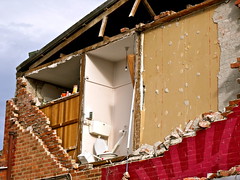
Queenstown and Christchurch are twin poles of New Zealand's landscape of risk. As the country's 'adventure capital', Queenstown is a spectacular landscape in which risk is a commodity. Christchurch's landscape is also risky, ruptured by earthquakes, tentatively rebuilding. As a far-flung group of tiny islands in a vast ocean, New Zealand is the poster-child of the sublime. Queenstown and Christchurch tell two different, yet complementary, stories about the sublime. Christchurch and Queenstown are vehicles for exploring the 21st-century sublime, for reflecting on its expansive influence on shaping cultural landscapes. Christchurch and Queenstown stretch and challenge the sublime's influence on the designed landscape. Circling the paradoxes of risk and safety, suffering and pleasure, the sublime feeds an infinite appetite for fear as entertainment, and at the same time calls for an empathetic caring for a broken landscape and its residents.
Accumulation of trace elements in aquatic food chains due to sea-fill acti…
Research papers, University of Canterbury Library
Elevated levels of trace elements in the environment are of great concern because of their persistence, and their high potential to harm living organisms. The exposure of aquatic biota to trace elements can lead to bioaccumulation, and toxicity can result. Furthermore, the transfer of these elements through food chains can result in exposure to human consumers. Sea-fill or coastal fill sites are among the major anthropogenic sources of trace elements to the surrounding marine environment. For example, in the Maldives, Thilafushi Island is a sea-fill site consisting of assorted municipal solid waste, with multiple potential sources of trace elements. However, there is limited data on environmental trace element levels in the Maldives, and although seafood is harvested from close to this site, there is no existing data regarding trace element levels in Maldivian diets. Following the Christchurch earthquakes of 2011,
Seismic response and design of subassemblies for multi-storey prestressed …
Research papers, University of Canterbury Library
Timber has experienced renewed interests as a sustainable building material in recent times. Although traditionally it has been the prime choice for residential construction in New Zealand and some other parts of the world, its use can be increased significantly in the future through a wider range of applications, particularly when adopting engineered wood material, Research has been started on the development of innovative solutions for multi-storey non-residential timber buildings in recent years and this study is part of that initiative. Application of timber in commercial and office spaces posed some challenges with requirements of large column-free spaces. The current construction practice with timber is not properly suited for structures with the aforementioned required characteristics and new type of structures has to be developed for this type of applications. Any new structural system has to have adequate capacity for carry the gravity and lateral loads due to occupancy and the environmental effects. Along with wind loading, one of the major sources of lateral loads is earthquakes. New Zealand, being located in a seismically active region, has significant risk of earthquake hazard specially in the central region of the country and any structure has be designed for the seismic loading appropriate for the locality. There have been some significant developments in precast concrete in terms of solutions for earthquake resistant structures in the last decade. The “Hybrid” concept combining post-tensioning and energy dissipating elements with structural members has been introduced in the late 1990s by the precast concrete industry to achieve moment-resistant connections based on dry jointed ductile connections. Recent research at the University of Canterbury has shown that the concept can be adopted for timber for similar applications. Hybrid timber frames using post-tensioned beams and dissipaters have the potential to allow longer spans and smaller cross sections than other forms of solid timber frames. Buildings with post-tensioned frames and walls can have larger column-free spaces which is a particular advantage for non-residential applications. While other researchers are focusing on whole structural systems, this research concentrated on the analysis and design of individual members and connections between members or between member and foundation. This thesis extends existing knowledge on the seismic behaviour and response of post-tensioned single walls, columns under uni-direction loads and small scale beam-column joint connections into the response and design of post-tensioned coupled walls, columns under bi-directional loading and full-scale beam-column joints, as well as to generate further insight into practical applications of the design concept for subassemblies. Extensive experimental investigation of walls, column and beam-column joints provided valuable confirmation of the satisfactory performance of these systems. In general, they all exhibited almost complete re-centering capacity and significant energy dissipation, without resulting into structural damage. The different configurations tested also demonstrated the flexibility in design and possibilities for applications in practical structures. Based on the experimental results, numerical models were developed and refined from previous literature in precast concrete jointed ductile connections to predict the behaviour of post-tensioned timber subassemblies. The calibrated models also suggest the values of relevant parameters for applications in further analysis and design. Section analyses involving those parameters are performed to develop procedures to calculate moment capacities of the subassemblies. The typical features and geometric configurations the different types of subassemblies are similar with the only major difference in the connection interfaces. With adoption of appropriate values representing the corresponding connection interface and incorporation of the details of geometry and configurations, moment capacities of all the subassemblies can be calculated with the same scheme. That is found to be true for both post-tensioned-only and hybrid specimens and also applied for both uni-directional and bi-directional loading. The common section analysis and moment capacity calculation procedure is applied in the general design approach for subassemblies.
Intertidal foraminifera of the Avon-Heathcote Estuary; response to coseism…
Research papers, University of Canterbury Library
The Avon-Heathcote Estuary, located in Christchurch, New Zealand, experienced coseismic deformation as a result of the February 22nd 2011 Christchurch Earthquake. The deformation is reflected as subsidence in the northern area and uplift in the southern area of the Estuary, in addition to sand volcanoes which forced up sediment throughout the floor of the Estuary altering estuary bed height and tidal flow. The first part of the research involved quantifying the change in the modern benthic foraminifera distribution as a result of the coseismic deformation caused by the February 22nd 2011 earthquake. By analysing the taxa present immediately post deformation and then the taxa present 2 years post deformation a comparison of the benthic foraminifera distribution can be made of the pre and post deformation. Both the northern and the southern areas of the Estuary were sampled to establish whether foraminifera faunas migrated landward or seaward as a result of subsidence and uplift experienced in different areas. There was no statistical change in overall species distribution in the two year time period since the coseismic deformation occurred, however, there were some noticeable changes in foraminifera distribution at BSNS-Z3 showing a landward migration of taxa. The changes that were predicted to occur as a result of the deformation of the Estuary are taking longer than expected to show up in the foraminiferal record and a longer time period is needed to establish these changes. The second stage involved establishing the modern distribution of foraminifera at Settlers Reserve in the southern area of the Avon-Heathcote Estuary by detailed sampling along a 160 m transect. Foraminifera are sensitive to environmental parameters, tidal height, grainsize, pH and salinity were recorded to evaluate the effect these parameters have on distribution. Bray-Curtis two-way cluster analysis was primarily used to assess the distribution pattern of foraminifera. The modern foraminifera distribution is comparable to that of the modern day New Zealand brackish-water benthic foraminifera distribution and includes species not yet found in other studies of the Avon-Heathcote Estuary. Differences in sampling techniques and the restricted intertidal marshland area where the transect samples were collected account for some of the differences seen between this model and past foraminifera studies. xiii The final stage involved sampling a 2.20 m core collected from Settlers Reserve and using the modern foraminiferal distribution to establish a foraminiferal history of Settlers Reserve. As foraminifera are sensitive to tidal height they may record past coseismic deformation events and the core was used to ascertain whether record of past coseismic deformation is preserved in Settlers Reserve sediments. Sampling the core for foraminifera, grainsize, trace metals and carbon material helped to build a story of estuary development. Using the modern foraminiferal distribution and the tidal height information collected, a down core model of past tidal heights was established to determine past rates of change. Foraminifera are not well preserved throughout the core, however, a sudden relative rise in sea level is recorded between 0.25 m and 0.85 m. Using trace metal and isotope analysis to develop an age profile, this sea level rise is interpreted to record coseismic subsidence associated with a palaeoseismic event in the early 1900’s. Overall, although the Avon-Heathcote Estuary experienced clear coseismic deformation as a result of the 22nd of February 2011 earthquake, modern changes in foraminiferal distribution cannot yet be tracked, however, past seismic deformation is identified in a core. The modern transect describes the foraminifera distribution which identifies species that have not been identified in the Avon-Heathcote Estuary before. This thesis enhances the current knowledge of the Avon-Heathcote Estuary and is a baseline for future studies.
Multi-Hazard Analysis: Gap Analysis Report
Research papers, University of Canterbury Library
Christchurch City Council (Council) is undertaking the Land Drainage Recovery Programme in order to assess the effects of the earthquakes on flood risk to Christchurch. In the course of these investigations it has become better understood that floodplain management should be considered in a multi natural hazards context. Council have therefore engaged the Jacobs, Beca, University of Canterbury, and HR Wallingford project team to investigate the multihazards in eastern areas of Christchurch and develop flood management options which also consider other natural hazards in that context (i.e. how other hazards contribute to flooding both through temporal and spatial coincidence). The study has three stages: Stage 1 Gap Analysis – assessment of information known, identification of gaps and studies required to fill the gaps. Stage 2 Hazard Studies – a gap filling stage with the studies identified in Stage 1. Stage 3 Collating, Optioneering and Reporting – development of options to manage flood risk. This present report is to document findings of Stage 1 and recommends the studies that should be completed for Stage 2. It has also been important to consider how Stage 3 would be delivered and the gaps are prioritised to provide for this. The level of information available and hazards to consider is extensive; requiring this report to be made up of five parts each identifying individual gaps. A process of identifying information for individual hazards in Christchurch has been undertaken and documented (Part 1) followed by assessing the spatial co-location (Part 2) and probabilistic presence of multi hazards using available information. Part 3 considers multi hazard presence both as a temporal coincidence (e.g. an earthquake and flood occurring at one time) and as a cascade sequence (e.g. earthquake followed by a flood at some point in the future). Council have already undertaken a number of options studies for managing flood risk and these are documented in Part 4. Finally Part 5 provides the Gap Analysis Summary and Recommendations to Council. The key findings of Stage 1 gap analysis are: - The spatial analysis showed eastern Christchurch has a large number of hazards present with only 20% of the study area not being affected by any of the hazards mapped. Over 20% of the study area is exposed to four or more hazards at the frequencies and data available. - The majority of the Residential Red Zone is strongly exposed to multiple hazards, with 86% of the area being exposed to 4 or more hazards, and 24% being exposed to 6 or more hazards. - A wide number of gaps are present; however, prioritisation needs to consider the level of benefit and risks associated with not undertaking the studies. In light of this 10 studies ranging in scale are recommended to be done for the project team to complete the present scope of Stage 3. - Stage 3 will need to consider a number of engineering options to address hazards and compare with policy options; however, Council have not established a consistent policy on managed retreat that can be applied for equal comparison; without which substantial assumptions are required. We recommend Council undertake a study to define a managed retreat framework as an option for the city. - In undertaking Stage 1 with floodplain management as the focal point in a multi hazards context we have identified that Stage 3 requires consideration of options in the context of economics, implementation and residual risk. Presently the scope of work will provide a level of definition for floodplain options; however, this will not be at equal levels of detail for other hazard management options. Therefore, we recommend Council considers undertaking other studies with those key hazards (e.g. Coastal Hazards) as a focal point and identifies the engineering options to address such hazards. Doing so will provide equal levels of information for Council to make an informed and defendable decision on which options are progressed following Stage 3.
Disaster waste in Waitaha – Canterbury : estimating hazard specific volume…
Research papers, University of Canterbury Library
Effective management of waste and debris generated by a disaster event is vital to ensure rapid and efficient response and recovery that supports disaster risk reduction (DRR). Disaster waste refers to any stream of debris that is created from a natural disaster that impacts the environment, infrastructure, and property. This waste can be problematic due to extensive volumes, environmental contamination and pollution, public health risks, and the disruption of response and recovery efforts. Due to the complexities in dealing with these diverse and voluminous materials, having disaster waste management (DWM) planning in place pre-event is crucial. In particular, coordinated, interagency plans that have been informed by estimates of waste volumes and types are vital to ensure management facilities, personnel, and recovery resources do not become overwhelmed. Globally, a priority when formulating DWM plans is the robust estimation of disaster waste stream types and volumes. This is a relatively under-researched area, despite the growing risk of natural disasters and increasingly inadequate waste management facilities. In Aotearoa New Zealand, a nation-wide DWM planning tool has been proposed for local government use, and waste amounts from events such as the Christchurch Earthquakes have been estimated. However, there has been little work undertaken to estimate waste types and volumes with a region-specific, multi-hazard focus, which is required to facilitate detailed regional DWM planning. This research provides estimates of potential disaster waste volumes and types in the Waitaha-Canterbury region of the South Island (Te Waipounamu) for three key hazard scenarios: a M8.0 Alpine Fault earthquake with a south-to-north rupture pattern, a far-sourced tsunami using a maximum credible event model for a Peru-sourced event, and major flooding using geospatial datasets taken from available local government modelling. Conducted in partnership with Environment Canterbury and Canterbury CDEM, this estimation work informed stakeholder engagement through multi-agency workshops at the district level. This research was comprised of two key parts. The first was enhancing and extending a disaster waste estimation model used in Wellington and applying it to the Canterbury region to quantify waste volumes and types. The second part was using this model and its estimates to inform engagement with stakeholders in multi-agency, district-level workshops in Kaikōura, Hurunui, and Waimakariri. In these workshops, the waste estimates were used to catalyse discussion around potential issues associated with the management of disaster waste. Regionally, model estimates showed that the earthquake scenario would generate the highest total volume of disaster waste (1.94 million m³), compared to the tsunami scenario (1.89 million m³) and the flood scenario (173,900 m³). Flood waste estimates are likely underrepresented due to limited flood modelling coverage, but still provide a valuable comparison. Whilst waste estimates differ significantly between districts, waste volumes were shown to be not solely dependent on building/population density. The district-level workshops showed that DWM challenges revolved around logistical constraints, public concerns, governance complexities, and environmental issues. Future work should further enhance this estimation model and apply it to other regions of Aotearoa New Zealand, to help develop a set of cohesive DWM plans for each region. The waste estimation model could also be adapted and applied internationally. The findings from this research provide a foundation for advancing DWM planning and stakeholder engagement in the Waitaha-Canterbury region. By offering region-specific waste estimates across multiple hazard scenarios, this work supports district councils and emergency managers in developing informed, proactive strategies for disaster preparedness and response. The insights gained from district-level workshops highlight key challenges that must be addressed in future planning. These outcomes contribute to a broader research agenda for DWM in Aotearoa New Zealand, and offer a framework adaptable to international contexts.
Question Time for 11 June 2013
Audio, Radio New Zealand
TE URUROA FLAVELL to the Minister of Justice: Is she satisfied with the Electoral Commission's engagement with whanau, hapū, iwi and marae around the 2013 Māori Electoral Option; if so, what advice has she received that would explain why halfway through the process there are only 5,000 new enrolments? DAVID SHEARER to the Prime Minister: On what date was he, his office or the Department of Prime Minister and Cabinet first informed that David Henry would not meet his deadline of the end of May as set out in the terms of reference for reporting back and what reason did Mr Henry provide for the delay? KATRINA SHANKS to the Minister of Finance: What do recent indicators show about the economy's performance this year and its outlook for the next three to four years? DAVID SHEARER to the Prime Minister: Has he received any information that shows foreign intelligence agencies are routinely collecting emails, other communication or location data on New Zealand citizens and residents while they are in New Zealand; if so, has the resulting information been passed on to the Government Communications Security Bureau? ALFRED NGARO to the Minister of Education: What recent announcement has she made about achievement against National Standards? METIRIA TUREI to the Minister for Economic Development: Will the Government sign the legal contract between it and SkyCity for the SkyCity Convention Centre this week; if not, when will it sign this agreement? JAMI-LEE ROSS to the Minister of Housing: What policy conclusions, if any, does the Government draw from Priced Out – How New Zealand Lost its Housing Affordability and how consistent are its findings with those of the 2012 Productivity Commission Report on housing affordability? Hon ANNETTE KING to the Minister of Health: Does he stand by all his statements on health; if not, why not? NICKY WAGNER to the Minister for Canterbury Earthquake Recovery: How will the Government support the redevelopment and repopulation of the Christchurch Central Business District following the Canterbury earthquakes? CHRIS HIPKINS to the Minister of Education: Is she confident that the National Standards data being released today gives an accurate picture of student progress; if not, why not? Rt Hon WINSTON PETERS to the Prime Minister: Did he discuss with David Henry the requirement for Mr Henry to see the full unedited electronic record connected with the Kitteridge report leak; if not, why not? JOHN HAYES to the Minister of Customs: What information has he received regarding the success of automated passenger processing systems at the border?
Question Time for 16 June 2011
Audio, Radio New Zealand
Questions to Ministers 1. Hon DAVID PARKER to the Minister of Finance: What was the combined increase in the value of the Crown's equity in Meridian, Mighty River Power, Solid Energy, Genesis and Air New Zealand for each of the last five years? 2. SIMON BRIDGES to the Minister of Finance: How did Budget 2011 continue the Government's programme to build faster growth, higher incomes and more jobs? 3. Hon MARYAN STREET to the Minister of Foreign Affairs: Have all recent actions of New Zealand's diplomats been consistent with Government policy? 4. Hon TAU HENARE to the Minister of Health: What reports has he received about improved access to dialysis for patients in Auckland and Waitemata? 5. Dr RUSSEL NORMAN to the Minister of Finance: Will the Government have to borrow further to pay for the latest Christchurch earthquakes? 6. GRANT ROBERTSON to the Minister of Health: Does he agree with the statement of the Auditor-General, "Despite the encouraging improvements made in the last 10 years, we do not yet have a system for scheduled services that can demonstrate national consistency and equitable treatment for all"? 7. AMY ADAMS to the Minister for the Environment: What steps has the Government taken to facilitate resource consents for work required at the Lyttelton Port to ensure it is able to recover quickly from earthquake damage? 8. JACINDA ARDERN to the Prime Minister: Does he stand by the statement made on his behalf that "this Government is focused on improvements within the economy in order to create the platform on which business and New Zealanders can invest and grow jobs"? 9. TE URUROA FLAVELL to the Minister of Health: Does he agree that under section 118 of the Health Practitioners Competence Assurance Act 2003, the Medical Council has a responsibility to ensure the cultural competence of doctors, and what support has the Government provided to the health sector to ensure cultural competence is achieved across the health sector? 10. DAVID SHEARER to the Minister of Science and Innovation: Does he agree with Professor Sir Paul Callaghan's statement on science and innovation "it's clear that the Minister of Finance and the Prime Minister have not really seen this as a top priority"? 11. CHESTER BORROWS to the Minister of Justice: What progress is being made on preparations for the referendum on the electoral system to be held in conjunction with this year's general election? 12. Hon RICK BARKER to the Minister of Veterans' Affairs: When can veterans expect to have a full response from the Government in response to the Law Commission's report "A New Support Scheme for Veterans"?
Question Time for 5 October 2011
Audio, Radio New Zealand
Questions to Ministers 1. PESETA SAM LOTU-IIGA to the Minister of Finance: What progress has the Government made in building a more competitive economy and getting on top of New Zealand's longstanding reliance on foreign debt? 2. Hon PHIL GOFF to the Prime Minister: Does he have confidence in his Minister of Finance? 3. KEVIN HAGUE to the Prime Minister: Does he stand by all his statements regarding the safety of mining in New Zealand; and does he consider his Government has met all its responsibilities arising out of the Pike River mine disaster? 4. Hon DAVID CUNLIFFE to the Minister of Finance: What are the latest official forecasts for the current account balance and the net international investment position over the next four years under his Government's policies? 5. JONATHAN YOUNG to the Minister of Justice: What progress has been made on the development of alternative court processes for child witnesses? 6. Hon CLAYTON COSGROVE to the Minister of Finance: In light of his statement yesterday regarding foreign-owned assets that "we need to generate the kind of savings that will help New Zealand buy back those assets", is it still the Government's policy to sell State assets if it is re-elected, given that up to 30 percent of the shares he proposes selling could go to overseas buyers? 7. Hon JOHN BOSCAWEN to the Minister of Finance: Does he think that implementing the 2025 Taskforce's recommendations in November 2009 would have avoided New Zealand's double credit downgrade; if not, why not? 8. GRANT ROBERTSON to the Minister of Health: Has he been advised of a reduction in funding for home-based health support services in the Wellington region? 9. TIM MACINDOE to the Minister of Corrections: Has she received any progress reports on the implementation of the Government's Prisoner Skills and Employment Strategy? 10. STUART NASH to the Minister of Finance: By how many percent has the GDP per capita gap between Australia and New Zealand widened since his Government took office? 11. NIKKI KAYE to the Minister for Communications and Information Technology: How many schools will benefit from ultra-fast broadband in the first year of the roll-out? 12. BRENDON BURNS to the Minister for Canterbury Earthquake Recovery: Does he stand by all of his statements on Canterbury's earthquake recovery? Questions to Members 1. SU'A WILLIAM SIO to the Chairperson of the Social Services Committee: Will she call a meeting to consider the Inquiry into the identification, rehabilitation, and care and protection of child offenders; if not, why not?
Question Time for 12 April 2011
Audio, Radio New Zealand
1. Hon PHIL GOFF to the Prime Minister: Does he have confidence in his Minister of Finance? 2. CRAIG FOSS to the Minister of Finance: How much does the Government expect to spend over the next few years to help rebuild Christchurch in the aftermath of the two earthquakes? 3. Hon ANNETTE KING to the Minister for Social Development and Employment: Does she stand by her statement in regard to hardship assistance that "…I think it proves that the help is there when people need it,"; if so, why? 4. RAHUI KATENE to the Minister of Health: What action, if any, has been taken in light of the study Ethnicity and Management of Colon Cancer in New Zealand: Do Indigenous Patients Get a Worse Deal?, which concluded that Māori New Zealanders with colon cancer were less likely to receive adjuvant chemotherapy and experienced a lower quality of care compared with non-Māori patients? 5. CHRIS AUCHINVOLE to the Minister for the Environment: What steps is the Government taking to increase renewable electricity generation in light of reports that greenhouse gas emissions from this sector have increased by 120 percent, which is more than any other sector since 1990? 6. Hon CLAYTON COSGROVE to the Minister of Finance: Excluding the banks and non-bank financial institutions covered by the deposit guarantee scheme, are there any other companies that might be provided with a government guarantee while the Rt Hon John Key is Prime Minister? 7. JONATHAN YOUNG to the Acting Minister of Energy and Resources: What is Petrobras able to do under the permit granted to it in the Raukumara Basin? 8. DAVID CLENDON to the Acting Minister of Energy and Resources: What environmental protection provisions, if any, did the Government include in the permit granted to Petrobras to explore for oil and drill off the East Cape? 9. Hon TREVOR MALLARD to the Prime Minister: Does he have confidence in all Ministers involved in the Mediaworks frequency payment arrangement? 10. AARON GILMORE to the Minister of Revenue: What has Inland Revenue done to assist the people in Christchurch after the February earthquake? 11. GRANT ROBERTSON to the Minister responsible for Ministerial Services: Does he stand by his statements in relation to the purchase of 34 BMWs by Ministerial Services, including one with heated seats, that "Yeah I don't know what's in Dunedin" and "It's beyond me, it's not my car anyway"? 12. SHANE ARDERN to the Minister of Fisheries and Aquaculture: What has been the result of enforcement action taken by the Ministry of Fisheries under Operation Paid and Taskforce Webb?
Question time for 2 August 2012
Audio, Radio New Zealand
PAUL GOLDSMITH to the Minister of Finance: What reports has he received on progress in lifting New Zealand’s household savings and reducing household debt? EUGENIE SAGE to the Minister for Canterbury Earthquake Recovery: Did the advice he has received on Christchurch City Council assets contemplate a sell off or sell down of shares in companies supervised by Christchurch City Holdings Ltd or of other council assets; if so, which ones? Hon DAVID PARKER to the Minister of Finance: Does he stand by his answer to yesterday’s primary question “as I understand it, there are no regional statistics that specifically isolate the number of people leaving any particular region to move overseas” and has the Treasury reported to him the existence of official statistics on permanent and long-term migration compiled by local council area and region? SCOTT SIMPSON to the Minister for Tertiary Education, Skills and Employment: What changes is the Government making to improve results from industry training? Hon LIANNE DALZIEL to the Minister for Canterbury Earthquake Recovery: Which of the assets identified by CERA in response to his request has he ruled out asking Christchurch City Council to sell? KATRINA SHANKS to the Minister of Justice: What changes is she making to improve the Family Court? Le'aufa'amulia ASENATI LOLE-TAYLOR to the Minister for Whānau Ora: Does she stand by her statement that “I don’t object to any vulnerable family receiving Whānau Ora support, because that’s what the money is for”? Hon ANNETTE KING to the Minister of Housing: Does he stand by all his comments on housing; if not, why not? Dr KENNEDY GRAHAM to the Minister of Foreign Affairs: What is the total number and cost of uncontested contracts given by the Ministry of Foreign Affairs and Trade to external consultants in the last two financial years? MARK MITCHELL to the Minister for Communications and Information Technology: Has she received any reports on the progress of the Government’s Ultra-Fast Broadband and Rural Broadband Initiatives? DARIEN FENTON to the Minister of Labour: Does she stand by her statement regarding foreign chartered fishing vessels “If breaches of labour law occur – such as underpayment of wages or illegal deductions or breaches of the Code of Practice, the Department of Labour will be able to investigate them and take action”? NICKY WAGNER to the Minister for the Environment: What recent announcements has she made in relation to the Waste Minimisation Fund?
Seismic Behaviour of Grouted Connections in Precast Concrete Panels
Research papers, The University of Auckland Library
Following the 2010/2011 Canterbury (New Zealand) earthquakes the seismic design of buildings with precast concrete panels has received significant attention. Although this form of construction generally performed adequately in Christchurch, there were a considerable number of precast concrete panel connection failures. This observation prompted a review of more than 4700 panel details to establish representative details used in both existing and new multi-storey and low rise industrial precast concrete buildings. The detailing and quantity of each reviewed connection type in the sampled data is reported, and advantages and potential deficiencies of each connection type are discussed. Following the Canterbury earthquakes, it was observed that brittle failure had occurred in some grouted metal duct connections used for precast concrete wall panels, resulting in recommendations for more robust detailing of this connection type. A set of experimental tests was subsequently performed to investigate the in-plane seismic behaviour of precast concrete wall panel connections. This testing comprised of seven reversed cyclic in-plane tests of fullscale precast concrete wall panels having wall-to-foundation grouted metal duct connections. Walls with existing connection detailing were found to perform adequately when carrying low axial loads, but performance was found to be less satisfactory as the axial load and wall panel length increased. The use of new recommended detailing was observed to prevent brittle connection response and to improve the robustness of the reinforcement splice. A parametric investigation was conducted using the finite element method to predict the failure mode of metal duct connections. From the results of the parametric study on metal duct connections it was identified that there were three possible failure modes, being reinforcement fracture, concrete spalling without metal duct pull out, and concrete spalling with metal duct pull-out. An alternative simple analytical method was proposed in order to determine the type of connection failure without using a time-consuming finite element method. Grouted sleeves inserts are an alternative connector that is widely used to connect wall panels to the foundations. The two full-scale wall panels were subjected to reversed cyclic in-plane demands until failure of either the connection or the wall panel. Wall panel failure was due to a combination of connection reinforcement pulling-out from the coupler and reinforcement fracture. In addition, non-embedded grouted sleeve tests filled with different quality of grout were conducted by subjecting these coupler assemblages to cyclic and monotonic forces.
Three dimensional formulation for the stress-strain-dilatancy elasto-plast…
Research papers, University of Canterbury Library
Recent experiences from the Darfield and Canterbury, New Zealand earthquakes have shown that the soft soil condition of saturated liquefiable sand has a profound effect on seismic response of buildings, bridges and other lifeline infrastructure. For detailed evaluation of seismic response three dimensional integrated analysis comprising structure, foundation and soil is required; such an integrated analysis is referred to as Soil Foundation Structure Interaction (SFSI) in literatures. SFSI is a three-dimensional problem because of three primary reasons: first, foundation systems are three-dimensional in form and geometry; second, ground motions are three-dimensional, producing complex multiaxial stresses in soils, foundations and structure; and third, soils in particular are sensitive to complex stress because of heterogeneity of soils leading to a highly anisotropic constitutive behaviour. In literatures the majority of seismic response analyses are limited to plane strain configuration because of lack of adequate constitutive models both for soils and structures, and computational limitation. Such two-dimensional analyses do not represent a complete view of the problem for the three reasons noted above. In this context, the present research aims to develop a three-dimensional mathematical formulation of an existing plane-strain elasto-plastic constitutive model of sand developed by Cubrinovski and Ishihara (1998b). This model has been specially formulated to simulate liquefaction behaviour of sand under ground motion induced earthquake loading, and has been well-validated and widely implemented in verifcation of shake table and centrifuge tests, as well as conventional ground response analysis and evaluation of case histories. The approach adopted herein is based entirely on the mathematical theory of plasticity and utilises some unique features of the bounding surface plasticity formalised by Dafalias (1986). The principal constitutive parameters, equations, assumptions and empiricism of the existing plane-strain model are adopted in their exact form in the three-dimensional version. Therefore, the original two-dimensional model can be considered as a true subset of the three-dimensional form; the original model can be retrieved when the tensorial quantities of the three dimensional version are reduced to that of the plane-strain configuration. Anisotropic Drucker-Prager type failure surface has been adopted for the three-dimensional version to accommodate triaxial stress path. Accordingly, a new mixed hardening rule based on Mroz’s approach of homogeneous surfaces (Mroz, 1967) has been introduced for the virgin loading surface. The three-dimensional version is validated against experimental data for cyclic torsional and triaxial stress paths.
Christchurch's always controversial Cathedral
Audio, Radio New Zealand
It was so nearly lost. As the Christ Church Anglican Cathedral is being rebuilt, historian Edmund Bohan is releasing a history of the distinctive Gothic building. It shows it was controversial even before work started on designing it, let alone building in. From the laying of the foundations to the official opening, it took 40 years, after squabbles over pretty much every aspect of its construction - not to mention the huge problems raising the money to build it in the City Centre. In Heart of the City: The Story of Christchurch's Controversial Cathedral, Edmund is critical of the former Anglican Bishop Victoria Matthews' determination to demolish the badly-damaged cathedral after the Canterbury earthquakes, to replace it with a modern church. And he tells Lynn Freeman he's very much looking forward to seeing the Cathedral restored to its former glory after a lengthy and pricey rebuild. But first he sets the scene. Back in the 1860s, there was controversy over where the cathedral should go, its design, whether it should be in stone or timber - even if there should be a cathedral built at all! Heart of the City: The Story of Christchurch's Controversial Cathedral, by Edmund Bohan is published by Quentin Wilson Publishing.
Southern Response appeal on Dodds decision largely dismissed
Audio, Radio New Zealand
A Christchurch couple locked in an ongoing legal battle with state-owned quake insurer Southern Response says it is sobering for a Court of Appeal decision to go their way, one decade on from the harrowing earthquakes. An earlier High Court decision found Southern Response guilty of misleading and deceptive behaviour when it short-changed Karl and Alison Dodds tens of thousands of dollars after their quake damaged house was written off. The Dodds say they were tricked into accepting a lower offer from Southern Response only to later discover the insurer had kept secret from them a second higher estimate to rebuild their damaged house, a so-called second secret detailed repair and rebuild analysis (DRA). The High Court ordered Southern Response to pay the Dodds almost $180,000 in damages, plus costs. But the government appealed the decision, saying it needed clarity, because of the thousands of similar cases it could be liable for. The Court of Appeal reduced the damages Southern Response has to pay $10,656.44 due to an earlier error in calculations. The Minister responsible Grant Robertson has declined to be interviewed. Southern Response also declined to be interviewed. Neither have ruled out appealing the decision in the Supreme Court.
Deborah McCormick and SCAPE Public Art
Audio, Radio New Zealand
Since Standing Room Only started some of the biggest changes we've seen in attitudes towards art and artists has happened in Otautahi Christchurch. How much artists contributed to the city's emotional recovery from the earthquakes through projects like Gap Filler, but also how many individual people created and shared their work. Before the quakes, Neil Dawson's monumental sculpture The Challice in the Square was initially criticised, but within days of its unveiling it became an impromptu shrine for the New York victims of 9/11. Back in 1998, the SCAPE Public Art started commissioning large outdoor works by international and Kiwi sculptors and artists. Some stayed but most of them were temporary. Some attracted criticism but they certainly got people talking. As SCAPE reaches its quarter century, its founder and Executive Director Deborah McCormick is standing down in March next year. Deborah's last SCAPE will see her tick off one of her long held ambitions - to secure a permanent sculpture for Christchurch by Auckland-based artist Dr Brett Graham. Lynn Freeman talks with Deborah and Brett, first asking Deborah to take us back to the lightbulb moment that led to SCAPE public art event.
Experimental study on the seismic performance of RC moment resisting frame…
Research papers, University of Canterbury Library
A three dimensional approximately half scale experimental subassemblage is currently being tested at the University of Canterbury to investigate the effect of precast-prestressed floor units, which do not span past the internal columns, on the seismic performance of reinforced concrete moment resisting frames. This paper reports the preliminary results from the test, with the focus on elongation within the plastic hinges and strength enhancement in the frames. The preliminary results have shown that elongation between the external and internal plastic hinges varies by more than two fold. With the addition of the prestressed floor units, the strength of the moment resisting frame used in the test was found to be 25% higher than the current code specified value. In other situations, particularly where there are more than 2 bays in a moment resisting frame, greater strength enhancement may be expected. Any underestimation of beam strength is undesirable as it may result in the development of nonductile failure modes in a major earthquake.
Financial and non-financial information transfer and communication within …
Research papers, University of Canterbury Library
This participant-observation study explores the process of gathering and evaluating both financial and non-financial information and communication and transfer of that information within a medium-sized electrical service company in Christchurch, New Zealand. The previous literature has established the importance and the main characteristics of small and medium enterprises, mainly studying manufacturing companies. However, there has been little research done in New Zealand on the overall communication process and the financial and non-financial information usage in a small-medium enterprise. The Electrical Company has a flat structure which allows flexibility. The two owners understand the importance of financial management and use financial information extensively to ensure the business expenses are under control. The owners also gather and use non-financial information through talking to their accountant, their customers and people in the same industry and they keenly follow the news on the rebuilding of Christchurch after the recent earthquakes.
Proposed resolutions to the controversial standard of gross negligence man…
Research papers, Victoria University of Wellington
This paper begins with a discussion of the history of negligent manslaughter in New Zealand and its development from the standard of ordinary negligence to the current test of a “major departure” from the expected standard of care, as set out under s 150A of the Crimes Act 1961. The paper then examines failings in s 150A’s current application, arguing that the “major departure” test has created injustices due to its strictly objective nature. Two examples of this are discussed in-depth, Bawa-Garba v R (UK) where a doctor was convicted of grossly negligent manslaughter for the death of her patient; and the decision not to prosecute the negligent engineers of the CTV building which collapsed in the Christchurch earthquake of 2011. The paper discusses three potential resolutions moving forward. It concludes that a more subjective interpretation of the wording of s 150A, which takes account of circumstances excusing or condemning a defendant’s conduct, would prevent future injustices and be a reasonably open interpretation on the wording of s 150A.
The ebb and flow of purpose : a history of the public’s interaction with t…
Research papers, University of Canterbury Library
This research seeks to understand if memorials like the CWM operate as effective prompts for collective memory as distance from the event it commemorates grows. The Citizens’ War Memorial (CWM) was built to honour the men and women who died serving New Zealand in World War One. While the original purpose of the memorial was clear, the way the public have interacted with the memorial throughout time has seen its function vary. This dissertation addresses how the public has viewed and interacted with the CWM from the planning phase up to the present year of 2025. By systematically tracking the key events through time, it argues that key events such as WWII, the Anti-Vietnam War protest period, the Anzac Revival and Canterbury 2011 earthquake have seen the public use and view the memorial differently to its intended purpose. In the current day, the memorial is once again used as a place to remember and honour the dead from WWI showing that purpose of a memorial can ebb and flow as generations change.
(Un)successful urban regeneration and wellbeing: inter-sector collaboratio…
Research papers, University of Canterbury Library
In 2010/2011, Ōtautahi Christchurch, Aotearoa New Zealand, suffered a devastating series of earthquakes and aftershocks that resulted in loss of life and significant damage to infrastructure and housing. This created an opportunity to re-build and regenerate a city ready to meet the challenges of the twenty-first century. This paper examines the effectiveness of cross sector collaboration to deliver a more resilient, sustainable, and healthy city. Drawing on case studies focused on a proposed innercity housing project, we highlight the challenges and barriers to alternative healthier development. We found a series of barriers to an urban recovery and rebuild that included a lack of skills to transact between the private and public sector, a lack of cooperation and shared drivers, and a lack of bold leadership and workable relationships. This paper underlines some of the failures to support regeneration that in turn highlights what is needed for regeneration approaches and processes to foster innovation and deliver healthier and more sustainable urban living.
Hubbard, James, 1949- : "And to show we're not neglecting priorities in th…
Images, Alexander Turnbull Library
Surrounded by mud and puddles in Christchurch Prime Minister John Key puts his arm round co-leader of the Maori Party Pita Sharples and smiles happily; behind them is a brand new plastic portaloo. On the ground lies a newspaper with a headline that reads 'Govt. to fund $2m giant RWC plastic waka'. Pita Sharples says 'and to show we're not neglecting our priorities in these austere times, Christchurch will get a new plastic portaloo!' Context - The government has hit back at criticism over a $2 million venue centre in the shape of a waka for the Rugby World Cup (RWC), defending the cost as necessary to host a world-class event. Co-leader of the Maori Party Pita Sharples says the waka will promote Maori culture during the Rugby World Cup and at other events (like the America's Cup). Labour Party MP Shane Jones asks "How can Dr Sharples and Prime Minister John Key actually believe that this expensive indulgence is a positive advertisement for Maori? The truth is they don't but they're both working together in a desperate effort to keep the Maori Party afloat. Quantity: 1 digital cartoon(s).
Deferential Tailoring: a grounded theory of how women respond and adapt to…
Research papers, University of Canterbury Library
In this article we utilize grounded theory to explore women’s experiences in the unique construction industry context that followed the 2010 Canterbury (New Zealand) earthquakes. Data were obtained from 36 semi-structured interviews conducted with women working in a variety of occupations in the construction industry. We identify three inter-related categories: capitalizing on opportunity, demonstrating capability and surface tolerance, which together represent a response process that we label ‘deferential tailoring’. The deferential tailoring process explains how women intentionally shape their response to industry conditions through self-regulating behaviors that enables them to successfully seize opportunities and manage gender-related challenges in the working environment. Our findings challenge existing research which suggests that women adopt submissive coping strategies to conform to androcentric norms in the construction industry. Instead, we argue that the process of deferential tailoring can empower women to build positive workplace relationships, enhance career development, and help shift perceptions of the value of their work in the industry.
Question Time for 24 March 2011
Audio, Radio New Zealand
Questions to Ministers 1. JACQUI DEAN to the Minister of Finance: What reports has he received on the economy? 2. Hon PHIL GOFF to the Prime Minister: Will he rule out making cuts to Working for Families payments this year; if not, why not? 3. TIM MACINDOE to the Minister for Social Development and Employment: What changes is the Government making to Family Start to ensure a greater focus on protecting children from abuse and neglect? 4. Hon ANNETTE KING to the Minister for Social Development and Employment: Does she agree with the Prime Minister that "anyone on a benefit actually has a lifestyle choice…some make poor choices, and they do not have money left"? 5. KANWALJIT SINGH BAKSHI to the Minister of Civil Defence: Did he meet with business leaders in Christchurch yesterday to discuss the Civil Defence state of national emergency operations; if so, what was the outcome of that meeting? 6. Hon DAVID CUNLIFFE to the Minister of Finance: Who was right, the Prime Minster who predicted that the New Zealand economy would grow "reasonably aggressively" in 2010-11, or the last four quarterly NZIER consensus forecast updates for GDP, which have progressively declined from 3.2 percent to just 0.8 percent for the year to March 2011? 7. Dr RUSSEL NORMAN to the Minister of Finance: Which response to the Christchurch earthquake carries a greater risk of a credit downgrade: increased government borrowing or a temporary earthquake levy? 8. PHIL TWYFORD to the Minister of Local Government: When he said "Auckland's fragmented governance has meant a lack [of] leadership and vision, but soon its leaders will be able to think regionally, plan strategically and act decisively", did he mean only if they agree with the Government's plan for Auckland? 9. JO GOODHEW to the Minister of Education: What were the results of the Accelerating Learning in Mathematics Pilot Study? 10. Hon DAMIEN O'CONNOR to the Minister for Biosecurity: Does he agree with the statements made by John Lancashire and Stew Wadey, President of Waikato Federated Farmers, in the Dominion Post yesterday that New Zealand is exposed to greater risk of incursions or exotic pests at our borders as a result of the "fast-tracking of tourists", the "attempts to abolish import restrictions", and his axing of 60 frontline border staff? 11. MICHAEL WOODHOUSE to the Acting Minister of Energy and Resources: What reports has she received on levels of renewable electricity generation? 12. CHRIS HIPKINS to the Minister for ACC: Does he stand by his answer to question 4 on Thursday last week "that funding will be taken from either the earners account or the work account" and "that a higher proportion of claims than the overall average for ACC are actually in the work account"; if not, why not?
Question Time for 8 February 2012
Audio, Radio New Zealand
Questions to Ministers 1. DAVID SHEARER to the Prime Minister: Does he stand by his statement in the House yesterday, in answer to Oral Question No 2, that his Government is selling assets because "New Zealanders want less debt, more productive assets, and an economy that is going to function, not a load more debt"? 2. PAUL GOLDSMITH to the Minister for Economic Development: What progress is the Government making in implementing its economic growth agenda? 3. PHIL TWYFORD to the Minister of Transport: Does the Government consider it important for its transport spending to be cost-effective and provide a good return on investment? 4. Dr RUSSEL NORMAN to the Minister for State Owned Enterprises: What, according to the Crown Ownership Monitoring Unit, was the average total shareholder return of Genesis, Meridian, Mighty River Power and Solid Energy over the last five years and how does that compare to the average cost of borrowing to the Government right now? 5. NICKY WAGNER to the Minister of Local Government: What reports has he received on how much rates increased nationally in the decade since the Local Government Act 2002 and how does this compare to the previous decade? 6. GRANT ROBERTSON to the Minister for the Environment: Does he stand by his statement made in the House yesterday in relation to the grounding of the Rena that "the statute sets down very clearly that I as Minister for the Environment should not be encouraging or discouraging a proper, independent decision by Environment Bay of Plenty as to whether they should or should not take a prosecution"? 7. KANWALJIT SINGH BAKSHI to the Minister of Broadcasting: What recent announcements has the Government made on progress towards digital switchover? 8. Rt Hon WINSTON PETERS to the Prime Minister: Does he still have confidence in all his Ministers? 9. Hon LIANNE DALZIEL to the Minister for Canterbury Earthquake Recovery: How many written comments were received on the draft Recovery Plan for the Christchurch CBD and is it his intention to consider them all before making a decision on the draft Recovery Plan for the CBD, in accordance with the process set out on the Canterbury Earthquake Recovery Authority's website? 10. MELISSA LEE to the Minister of Internal Affairs: What recent steps have there been to promote New Zealand citizenship as a successful settlement pathway for migrants? 11. CLARE CURRAN to the Minister of Broadcasting: Does he stand by the Prime Minister's statement in relation to the appointment of the Prime Minister's electorate chairman Stephen McElrea to the NZ On Air board that "if you look at the vast array of appointments we make, I think the balance is about right"? 12. CATHERINE DELAHUNTY to the Minister of Education: Will she rule out implementing Treasury's advice to increase class sizes in schools?
Question Time for 6 September 2011
Audio, Radio New Zealand
Questions to Ministers 1. Dr RUSSEL NORMAN to the Minister of Finance: What is the cost impact for the Earthquake Commission following Friday's High Court decision, and what now is the total cost to the Crown of the Canterbury earthquakes? 2. PESETA SAM LOTU-IIGA to the Minister of Finance: What steps has the Government taken to build a more competitive, export-focused economy? 3. Hon PHIL GOFF to the Prime Minister: Does he stand by his statement that "New Zealand simply can't afford a future where 20 percent of our workforce does not have the skills necessary for modern jobs"? 4. TIM MACINDOE to the Minister of Health: What was the average annual increase in elective discharges from 2000/2001 to 2007/2008, and how does this compare to the average annual increase in elective discharges over the last three financial years? 5. Hon PHIL GOFF to the Prime Minister: Does he stand by his statement in relation to part-privatisation of State-owned assets that "there will be some wholesale investors from overseas who will want to buy a little bit of these shares"? 6. KEITH LOCKE to the Minister of Defence: Was he briefed as to the presence of United States personnel at the Provincial Reconstruction Team base in Bamiyan and their duties; if so, what are the duties of the United States personnel at Bamiyan? 7. Hon ANNETTE KING to the Prime Minister: Does he stand by all his answers to Oral Question No 1 on 16 August 2011? 8. NIKKI KAYE to the Minister of Transport: What progress has the Government made on improving Auckland's commuter rail network? 9. Hon DAVID CUNLIFFE to the Minister of Finance: If he expects at least 85 to 90 percent of the State-owned assets he intends to privatise would remain in New Zealand's ownership, including the Crown's holding, what percent of the shares he plans to sell would be bought by foreign buyers? 10. NICKY WAGNER to the Minister of Education: What recent announcements has she made regarding trades academies? 11. Hon DAVID PARKER to the Acting Minister of Energy and Resources: Does she stand by the Government's decision to require Meridian Energy to sell some of its hydro-electricity dams on the Waitaki River to Genesis Energy, and how have the proceeds of the sale been used? 12. JONATHAN YOUNG to the Minister of Corrections: What reports has she received about efforts to cut re-offending rates and rehabilitate offenders? Questions to Members 1. CLARE CURRAN to the Chairperson of the Transport and Industrial Relations Committee: Has he requested any submissions of evidence about the petition to the Transport and Industrial Relations Committee signed by nearly 14,000 people calling on the Government to retain the Hillside and Woburn workshops?
Question Time for 24 August 2016
Audio, Radio New Zealand
ANDREW LITTLE to the Prime Minister: Does he have confidence in the Minister for Building and Housing given the falling rate of homeownership, especially among young people? RON MARK to the Prime Minister: Does he stand by all his statements? MATT DOOCEY to the Minister of Finance: Does he stand by his statement that “There are more jobs, and people are being better paid”; if so, why? Dr MEGAN WOODS to the Minister supporting Greater Christchurch Regeneration: Does he agree with the Prime Minister, who said with regard to the Canterbury earthquakes, “on behalf of the Government, let me be clear that no one will be left to walk this journey alone”; if so, does he think all relevant information prepared by his Government has been made available to Cantabrians to assist them in navigating post-earthquake decisions? METIRIA TUREI to the Prime Minister: Ka tū a ia i runga i te mana o āna kaupapa here Kāwanatanga katoa, nē? Translation: Does he stand by all his Government’s policies? Dr JIAN YANG to the Minister of Education: What recent announcements has she made about expanding 21st century learning options for parents and whanau? CHRIS HIPKINS to the Minister of Education: How will her Communities of Online Learning (CoOL) proposal differ from online charter schools in the United States, given a study partially funded by a private pro-charter foundation found students attending those schools lost an average of about 72 days of learning in reading, and 180 days of learning in maths during the course of a 180-day school year? CATHERINE DELAHUNTY to the Minister for the Environment: Will he commit to a regulatory regime that includes swimmable rivers in light of the comment from a Havelock North café owner who said that, “we’d trade all the compensation in the world if it would spur the Government into tidying up or cleaning up the waterways”? IAIN LEES-GALLOWAY to the Minister of Immigration: How many of the 209,000 work visas issued last year were for occupations on one of the Essential Skills in Demand lists? JONO NAYLOR to the Minister of Police: What is the Police doing to assist potential victims of family violence? STUART NASH to the Minister of Police: Does she believe that the Police have enough resources to implement their part of the Prime Minister’s 2009 promise to use the full force of the Government’s arsenal to “confront the P problem” given that P is cheaper, and as easy as it was to get in 2008? PAUL FOSTER-BELL to the Minister for Primary Industries: What recent reports has he received on growth in wine exports?
The New Eastside: Re-populating East Christchurch Through Diverse, Context…
Research papers, Victoria University of Wellington
At the conclusion of the 2010 and 2011 Canterbury earthquakes more than 5100 homes had been deemed unsafe for habitation. The land and buildings of these were labelled “red zoned” and are too badly damaged for remediation. These homes have been demolished or are destined for demolition. To assist the red zone population to relocate, central government have offered to ‘buy out’ home owners at the Governmental Value (GV) that was last reviewed in 2007. While generous in the economic context at the time, the area affected was the lowest value land and housing in Christchurch and so there is a capital shortfall between the 2007 property value and the cost of relocating to more expensive properties. This shortfall is made worse by increasing present day values since the earthquakes. Red zone residents have had to relocate to the far North and Western extremities of Christchurch, and some chose to move even further to neighbouring towns or cities. The eastern areas and commercial centres close to the red zone are affected as well. They have lost critical mass which has negatively impacted businesses in the catchments of the Red Zone. This thesis aims to repopulate the suburbs most affected by the abandonment of the red zone houses. Because of the relative scarcity of sound building sites in the East and to introduce affordability to these houses, an alternative method of development is required than the existing low density suburban model. Smart medium density design will be tested as an affordable and appropriate means of living. Existing knowledge in this field will be reviewed, an analysis of what East Christchurch’s key characteristics are will occur, and an examination of built works and site investigations will also be conducted. The research finds that at housing densities of 40 units per hectare, the spatial, vehicle, aesthetic needs of East Christchurch can be accommodated. Centralising development is also found to offer better lifestyle choices than the isolated suburbs at the edges of Christchurch, to be more efficient using existing infrastructure, and to place less reliance on cars. Stronger communities are formed from the outset and for a full range of demographics. Eastern affordable housing options are realised and Christchurch’s ever expanding suburban tendencies are addressed. East Christchurch presently displays a gaping scar of devastated houses that ‘The New Eastside’ provides a bandage and a cure for. Displaced and dispossessed Christchurch residents can be re-housed within a new heart for East Christchurch.
Lived experiences of Bhutanese former refugee youth : coping, resilience a…
Research papers, University of Canterbury Library
This thesis explores the lived experiences of a group of young Bhutanese former refugees between the ages of 18 to 24 years who were resettled in Christchurch between 2008 and 2010 – prior to the first major earthquake. The main goal of the thesis was to gain an understanding of their ways of coping and a second goal was to explore whether their participation in up to five mindfulness infused counselling sessions had influenced their ways of coping. A qualitative research methodology was used to guide the thesis. Participants were interviewed about the major events in their life and how they coped with them. They were then invited to participate in five sessions of mindfulness infused counselling. Approximately five weeks after their final session had ended they were invited to one final interview to explore the influence of the sessions on their ways of coping. Interviews were recorded and transcribed and research notes were taken of the mindfulness infused counselling sessions. Max van Manen’s method of phenomenology was adopted to interpret the narratives of the youth. Three main themes emerged from the data analysis and these are described as essences of lived coping experiences. The first captures their strong sense of community back in the refugee camp. The second presents the sense of resilience that exists among the Bhutanese former refugees. The third essence indicated the inner strengths of the participants which they said helped them deal with the challenging circumstances that life cast in their direction. This meant that their first experience of an earthquake was not considered the biggest event in their lives. After attending the mindfulness infused counselling sessions’ participants reported positive benefits from giving non-judgemental attention to their thoughts and feelings and they found themselves dealing with their issues proactively. For some participants their ‘accepting’ attitude facilitated better control over their emotions while others reported being able to form deeper connections with nature and other people as a result of being mindful. Other participants reported being able to make peace with the events in their past and even found that they were able to forgive those who tormented their community. However, in the absence of any major event in any of the participants’ lives in the time period following their final counselling session, the research was not able to definitely conclude that using mindful-based counselling facilitates better coping in the face extremely stressful events. There is currently very little research that focuses on the experiences of former refugee youth within New Zealand and how they utilize their capacities to deal with adversities. When this thesis commenced, the Bhutanese were the newest refugee community to be accepted for resettlement in New Zealand. This research partly addresses the limited voice of this community.
Morphostructural and paleo-seismic analysis of fault interactions in the O…
Research papers, University of Canterbury Library
This study investigates evidence for linkages and fault interactions centred on the Cust Anticline in Northwest Canterbury between Starvation Hill to the southwest and the Ashley and Loburn faults to the northeast. An integrated programme of geologic, geomorphic, paleo-seismic and geophysical analyses was undertaken owing to a lack of surface exposures and difficulty in distinguishing active tectonic features from fluvial and/or aeolian features across the low-relief Canterbury Plains. LiDAR analysis identified surface expression of several previously unrecognised active fault traces across the low-relief aggradation surfaces of the Canterbury Plains. Their presence is consistent with predictions of a fault relay exploiting the structural mesh across the region. This is characterised by interactions of northeast-striking contractional faults and a series of re-activating inherited Late Cretaceous normal faults, the latter now functioning as E–W-striking dextral transpressive faults. LiDAR also allowed for detailed analysis of the surface expression of individual faults and folds across the Cust Anticline contractional restraining bend, which is evolving as a pop-up structure within the newly established dextral shear system that is exploiting the inherited, now re-activated, basement fault zone. Paleo-seismic trenches were located on the crest of the western arm of the Cust Anticline and across a previously unrecognised E–W-striking fault trace, immediately southwest of the steeply plunging Cust Anticline termination. These studies confirmed the location and structural style of north-northeast-striking faults and an E–W-striking fault associated with the development of this structural culmination. A review of available industry seismic reflection lines emphasised the presence of a series of common structural styles having the same underlying structural drivers but with varying degrees of development and expression, both in the seismic profiles and in surface elevations across the study area. Based on LiDAR surface mapping and preliminary re-analysis of industry seismic reflection data, four fault zones are identified across the restraining bend structural culminations, which together form the proposed Oxford–Cust–Ashley Fault System. The 2010–2012 Canterbury Earthquake Sequence showed many similarities to the structural pattern established across the Oxford–Cust–Ashley Fault System, emphasising the importance of identification and characterization of presently hidden fault sources, and the understanding of fault network linkages, in order to improve constraints on earthquake source potential. Improved understanding of potentially-interactive fault sources in Northwest Canterbury, with the potential for combined initial fault rupture and spatial and temporal rupture propagation across this fault system, can be used in probabilistic seismic hazard analysis for the region, which is essential for the suitability and sustainability of future social and economic development.