

Search
found 167 results
Images for EARTHQUAKE; more images...
Catharsis as Christchurch quake redzone development opens
Audio, Radio New Zealand
Christchurch residents forced away from their redzone homes returned today for the unveiling of the the Avon loop pathway - the first redevelopment, nine years on from the deadly earthquake. Reporter Conan Young went along to hear from them.
Outrage in Canterbury over Brownlee's promotion
Audio, Radio New Zealand
The appointment of Christchurch MP Gerry Brownlee as National's deputy leader has been met with a chorus of outrage from some Cantabrians - who say he is responsible for lengthy delays in settling insurance claims from the Canterbury earthquakes.
Digital Photograph: Cathedral of the Blessed Sacrament being demolished by…
Images, Canterbury Museum
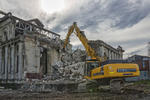
One digital photograph showing the Cathedral of the Blessed Sacrament being demolished with a yellow digger. Taken by photographer Helen McLeod in September 2020.
How would changes to serviceability limit state design criteria impact lik…
Research papers, University of Canterbury Library
The earthquake engineering community is currently grappling with the need to improve the post-earthquake reparability of buildings. As part of this, proposals exist to change design criteria for the serviceability limit state (SLS). This paper reviews options for change and considers how these could impact the expected repair costs for typical New Zealand buildings. The expected annual loss (EAL) is selected as a relevant measure or repair costs and performance because (i) EAL provides information on the performance of a building considering a range of intensity levels, (ii) the insurance industry refers to EAL when setting premiums, and (iii) monetary losses are likely to be correlated with loss of building functionality. The paper argues that because the expected annual loss is affected by building performance over a range of intensity levels, the definition of SLS criteria alone may be insufficient to effectively limit losses. However, it is also explained that losses could be limited effectively if the loadings standard were to set the SLS design intensity considering the potential implications on EAL. It is shown that in order to achieve similar values of EAL in Wellington and Christchurch, the return period intensity for SLS design would need to be higher in Christchurch owing to differences in local hazard conditions. The observations made herein are based on a simplified procedure for EAL estimation and hence future research should aim to verify the findings using a detailed loss assessment approach applied to a broad range of case study buildings.
Robustness and accuracy of model-free structural health monitoring
Research papers, University of Canterbury Library
Rapid, accurate structural health monitoring (SHM) assesses damage to optimise decision-making. Many SHM methods are designed to track nonlinear stiffness changes as damage. However, highly nonlinear pinched hysteretic systems are problematic in SHM. Model-based SHM often fails as any mismatch between model and measured response dynamics leads to significant error. Thus, modelfree methods of hysteresis loop tracking methods have emerged. This study compares the robustness and accuracy in the presence of significant measurement noise of the proven hysteresis loop analysis (HLA) SHM method with 3 emerging model-free methods and 2 further novel adaptations of these methods using a highly nonlinear, 6-story numerical structure to provide a known ground-truth. Mean absolute errors in identifying a known nonlinear stiffness trajectory assessed at four points over two successive ground motion inputs from September 2010 and February 2011 in Christchurch range from 1.71-10.52%. However, the variability is far wider with maximum errors ranging from 3.90-49.72%, where the second largest maximum absolute error was still 19.74%. The lowest mean and maximum absolute errors were for the HLA method. The next best method had mean absolute error of 2.92% and a maximum of 10.51%. These results show the clear superiority of the HLA method over all current emerging model-free methods designed to manage the highly nonlinear pinching responses common in reinforced concrete structures. These results, combined with high robustness and accuracy in scaled and fullscale experimental studies, provide further validation for using HLA for practical implementation.
Christ Church Cathedral's day of restoration
Audio, Radio New Zealand
A momentous day in Christchurch as a huge steel frame was installed as part of the stabilisation work for Christ Church Cathedral. Karyn speaks with project director Keith Paterson about the plans to return the famed rose window extensively damage in the 2011 earthquake.
Digital Photograph: Cathedral of the Blessed Sacrament partially demolished
Images, Canterbury Museum
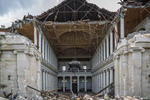
One digital photograph showing the Cathedral of the Blessed Sacrament partially demolished. The interior is visible and lined with intact columns. Taken by photographer Helen McLeod in October 2020.
Between the cracks: The intersection of individuals, social processes and …
Research papers, Lincoln University
This research investigates creativity in a post-disaster setting. The data explore creativity at the intersection of the affected community of Christchurch, New Zealand and the social processes that followed the earthquakes of 2010 - 2012. Personal and contextual influences on creative ideas implemented for community or commercial benefit are also examined. Viewed as creative, unique approaches to post-disaster problem solving were celebrated locally, nationally and internationally (Bergman, 2014; Wesener, 2015; Cloke & Conradson, 2018). Much has been written about creativity, particularly creativity in organisations and in business. However, little is known with regards to who creates after a disaster, why individuals choose to do so and what impact the post-disaster context has on their creative activity. This exploratory study draws on the literature from the fields of creativity, disasters, psychology, sociology and entrepreneurship to interpret first-hand accounts of people who acted on creative ideas in a physically and socially altered environment. A mixed method - albeit predominantly qualitative - approach to data gathering was adopted that included interviews (n=45) with participants who had been the primary drivers of creative ideas implemented in Christchurch after September 2010 – the first major (7.1 magnitude) earthquake in a prolonged sequence of thousands of aftershocks. Key findings include that a specific type of creativity results from the ‘collision’ between individuals and social processes activated by a disaster situation. This type of creativity could be best categorised as ‘little c’ or socially adaptive and emerges through a prosocial filter. There is wide consensus amongst creativity researchers - principally social psychologists - that for output to be considered creative it must be both novel and useful (Runco & Jaegar, 2012). There is greater tolerance for the novelty component after a disaster as novelty itself has greater utility, either as a distraction or because alternatives are few. Existing creativity models show context as input – an additional component of the creative process – but after a disaster the event itself becomes the catalyst for social processes that result in the creativity seen. Most participants demonstrated characteristics commonly associated with creativity and could be categorised as either a ‘free thinker’ and/or an ‘opportunist’. Some appear preadapted to create and thrive in unstable circumstances. Findings from participants’ completion of a Ten Item Personality Inventory (TIPI) showed an apparent reduced need for extraversion in relation to implementing creative ventures in society. This factor, along with higher levels of agreeableness may indicate a potentially detrimental effect on the success of creative ideas established after a disaster, despite earnest intentions. Three new models are presented to illustrate the key findings of this study. The models imply that disasters enhance both the perceived value of creativity and the desire to act creatively for prosocial ends. The models also indicate that these disaster influenced changes are likely to be temporary.
Resilient shorelines : earthquake effects on sea levels and their implicat…
Research papers, University of Canterbury Library
Coastal margins are exposed to rising sea levels that present challenging circumstances for natural resource management. This study investigates a rare example of tectonic displacement caused by earthquakes that generated rapid sea-level change in a tidal lagoon system typical of many worldwide. This thesis begins by evaluating the coastal squeeze effects caused by interactions between relative sea-level (RSL) rise and the built environment of Christchurch, New Zealand, and also examples of release from similar effects in areas of uplift where land reclamations were already present. Quantification of area gains and losses demonstrated the importance of natural lagoon expansion into areas of suitable elevation under conditions of RSL rise and showed that they may be necessary to offset coastal squeeze losses experienced elsewhere. Implications of these spatial effects include the need to provide accommodation space for natural ecosystems under RSL rise, yet other land-uses are likely to be present in the areas required. Consequently, the resilience of these environments depends on facilitating transitions between human land-uses either proactively or in response to disaster events. Principles illustrated by co-seismic sea-level change are generally applicable to climate change adaptation due to the similarity of inundation effects. Furthermore, they highlight the potential role of non-climatic factors in determining the overall trajectory of change. Chapter 2 quantifies impacts on riparian wetland ecosystems over an eight year period post- quake. Coastal wetlands were overwhelmed by RSL rise and recovery trajectories were surprisingly slow. Four risk factors were identified from the observed changes: 1) the encroachment of anthropogenic land-uses, 2) connectivity losses between areas of suitable elevation, 3) the disproportionate effect of larger wetland vulnerabilities, and 4) the need to protect new areas to address the future movement of ecosystems. Chapter 3 evaluates the unique context of shoreline management on a barrier sandspit under sea-level rise. A linked scenario approach was used to evaluate changes on the open coast and estuarine shorelines simultaneously and consider combined effects. The results show dune loss from a third of the study area using a sea-level rise scenario of 1 m over 100 years and with continuation of current land-uses. Increased exposure to natural hazards and accompanying demand for seawalls is a likely consequence unless natural alternatives can be progressed. In contrast, an example of managed retreat following earthquake-induced subsidence of the backshore presents a new opportunity to restart saltmarsh accretion processes seaward of coastal defences with the potential to reverse decades of degradation and build sea-level rise resilience. Considering both shorelines simultaneously highlights the existence of pinch-points from opposing forces that result in small land volumes above the tidal range. Societal adaptation is delicately poised between the paradigms of resisting or accommodating nature and challenged by the long perimeter and confined nature of the sandspit feature. The remaining chapters address the potential for salinity effects caused by tidal prism changes with a focus on the conservation of īnanga (Galaxias maculatus), a culturally important fish that supports New Zealand‘s whitebait fishery. Methodologies were developed to test the hypothesis that RSL changes would drive a shift in the distribution of spawning sites with implications for their management. Chapter 4 describes a new practical methodology for quantifying the total productivity and spatiotemporal variability of spawning sites at catchment scale. Chapter 5 describes the novel use of artificial habitats as a detection tools to help overcome field survey limitations in degraded environments where egg mortality can be high. The results showed that RSL changes resulted in major shifts in spawning locations and these were associated with new patterns of vulnerability due to the continuation of pre-disturbance land-uses. Unexpected findings includes an improved understanding of the spatial relationship between salinity and spawning habitat, and identification of an invasive plant species as important spawning habitat, both with practical management implications. To conclude, the design of legal protection mechanisms was evaluated in relation to the observed habitat shifts and with a focus on two new planning initiatives that identified relatively large protected areas (PAs) in the lower river corridors. Although the larger PAs were better able to accommodate the observed habitat shifts inefficiencies were also apparent due to spatial disparities between PA boundaries and the values requiring protection. To reduce unnecessary trade-offs with other land-uses, PAs of sufficient size to cover the observable spatiotemporal variability and coupled with adaptive capacity to address future change may offer a high effectiveness from a network of smaller PAs. The latter may be informed by both monitoring and modelling of future shifts and these are expected to include upstream habitat migration driven by the identified salinity relationships and eustatic sea-level rise. The thesis concludes with a summary of the knowledge gained from this research that can assist the development of a new paradigm of environmental sustainability incorporating conservation and climate change adaptation. Several promising directions for future research identified within this project are also discussed.
Impacts of site specific information on post-earthquake cordons: A compara…
Research papers, University of Canterbury Library
Post-earthquake cordons have been used after seismic events around the world. However, there is limited understanding of cordons and how contextual information of place such as geography, socio-cultural characteristics, economy, institutional and governance structure etc. affect decisions, operational procedures as well as spatial and temporal attributes of cordon establishment. This research aims to fill that gap through a qualitative comparative case study of two cities: Christchurch, New Zealand (Mw 6.2 earthquake, February 2011) and L’Aquila, Italy (Mw 6.3 earthquake, 2009). Both cities suffered comprehensive damage to its city centre and had cordons established for extended period. Data collection was done through purposive and snowball sampling methods whereby 23 key informants were interviewed in total. The interviewee varied in their roles and responsibilities i.e. council members, emergency managers, politicians, business/insurance representatives etc. We found that cordons were established to ensure safety of people and to maintain security of place in both the sites. In both cities, the extended cordon was met with resistance and protests. The extent and duration of establishment of cordon was affected by recovery approach taken in the two cities i.e. in Christchurch demolition was widely done to support recovery allowing for faster removal of cordons where as in L’Aquila, due to its historical importance, the approach to recovery was based on saving all the buildings which extended the duration of cordon. Thus, cordons are affected by site specific needs. It should be removed as soon as practicable which could be made easier with preplanning of cordons.
Digital Photograph: Cathedral of the Blessed Sacrament interior during dem…
Images, Canterbury Museum
One digital photograph showing the Cathedral of the Blessed Sacrament interior during demolition. The nave columns are still intact but debris lines the floor. Taken by photographer Helen McLeod in November 2020.
Digital Photograph: Cathedral of the Blessed Sacrament exterior angels sal…
Images, Canterbury Museum
One digital photograph showing a crane and workers in a cage during the salvage of the exterior angels from atop the Cathedral of the Blessed Sacrament. Taken by the Catholic Diocese of Christchurch in August 2020.
Recreational activities on earthquake-affected beaches in Marlborough: Sum…
Research papers, University of Canterbury Library
This survey was established by the University of Canterbury (UC) to assist the Marlborough community in recording and understanding the level and types of recreational beach uses that are occurring at present on the earthquake-affected coast. The questions were designed to capture a comprehensive view of recreational activities and interests and allowed for any activity, view or perspective to be recorded. All responses were anonymous and no identifying information was collected. The survey used an online format open to all interested people 18+ years of age (for informed consent reasons) over a two month period (October – November 2020). The geographic focus of the survey was the coastline between Marfells Beach and the Waima / Ure River which is the area under currently under consideration by Marlborough District Council for development of a new bylaw. However, the design of the survey questions also allowed respondents to record information pertaining to any other area.
Digital Photograph: Cathedral of the Blessed Sacrament during demolition b…
Images, Canterbury Museum
One digital photograph showing the Cathedral of the Blessed Sacrament during demolition. A yellow digger arm and nibbler claw can be seen along with stone falling from an exterior wall. Taken by photographer Helen McLeod in December 2020.
Digital Photograph: Cathedral of the Blessed Sacrament exterior angels sal…
Images, Canterbury Museum
One digital photograph showing a crane arm and workers in a cage during the salvage of the exterior angels from atop the Cathedral of the Blessed Sacrament. The large intact columns at the entrance of the Cathedral can be seen in the photograph. Taken by the Catholic Diocese of Christchurch in September 2020.
Digital Photograph: Cathedral of the Blessed Sacrament exterior angels
Images, Canterbury Museum
One digital photograph showing the two angels atop the Cathedral of the Blessed Sacrament. The plinth that supports the cross stands empty between the angels. Taken by the Catholic Diocese of Christchurch in August 2020 before the angels were salvaged from the building.
Digital Photograph: Cathedral of the Blessed Sacrament exterior angels sal…
Images, Canterbury Museum
One digital photograph showing the salvage of the exterior angels from the Cathedral of the Blessed Sacrament. Two crane arms and strapping around one of the angels can be seen in the photograph. Taken by the Catholic Diocese of Christchurch in September 2020.
Digital Photograph: Cathedral of the Blessed Sacrament demolition
Images, Canterbury Museum
One digital photograph showing the demolition of the Cathedral of the Blessed Sacrament. A digger arm and nibbler claw can be seen in the photograph removing stone from the exterior, intact columns and ionic column capitals can be seen inside. Taken by the Catholic Diocese of Christchurch in September 2020.
Developing guidelines for the seismic assessment of glazing systems
Research papers, University of Canterbury Library
There is an increasing recognition that the seismic performance of buildings will be affected by the behaviour of both structural and non-structural elements. In light of this, work has been progressing at the University of Canterbury to develop guidelines for the seismic assessment of commercial glazing systems. This paper reviews the seismic assessment guidelines prescribed in Section C10 of the MBIE building assessment guidelines. Subsequently, the C10 approach is used to assess the drift capacity of a number of glazing units recently tested at the University of Canterbury. Comparing the predicted and observed drift capacities, it would appear that the C10 guidelines may lead to nonconservative estimates of drift capacity. Furthermore, the experimental results indicate that watertightness may be lost at very low drift demands, suggesting that guidance for the assessment of serviceability performance would also be beneficial. As such, it is proposed that improved guidance be provided to assist engineers in considering the possible impact that glazing could have on the structural response of a building in a large earthquake.
Redcliffs School reopens after years of perseverance since Canterbury quak…
Audio, Radio New Zealand
It's been dubbed Canterbury's little seaside community who never gave up. Nine years in the making, it was Redcliffs School''s grand re-opening today after earthquake damage rendered the old site unsafe. The occasion was marked with tears, hugging, singing and some very special guests. Katie Todd filed this report.
ILEE ROBUST project: Development of a multiple rocking steel structural sy…
Research papers, University of Canterbury Library
In recent years, rocking isolation has become an effective approach to improve seismic performance of steel and reinforced concrete structures. These systems can mitigate structural damage through rigid body displacement and thus relatively low requirements for structural ductility, which can significantly improve seismic resilience of structures and reduce repairing costs after strong earthquakes. A number of base rocking structural systems with only a single rocking interface have been proposed. However, these systems can have significant high mode effect for high rise structures due to the single rocking interface. This RObust BUilding SysTem (ROBUST) project is a collaborative China-New Zealand project sponsored by the International Joint Research Laboratory of Earthquake Engineering (ILEE), Tongji University, and a number of agencies and universities within New Zealand including the BRANZ, Comflor, Earthquake Commission, HERA, QuakeCoRE, QuakeCentre, University of Auckland, and the University of Canterbury. A number of structural configurations will be tested [1, 2], and non-structural elements including ceilings, infilling walls, glazed curtain walls, precast concrete panels, piping system will also be tested in this project [3]. Within this study, a multiple rocking column steel structural system was proposed and investigated mainly by Tongji team with assistance of NZ members. The concept of rocking column system initiates from the structure of Chinese ancient wooden pagoda. In some of Chinese wooden pagodas, there are continuous core columns hanged only at the top of each pagoda, which is not connected to each stories. This core column can effectively avoid collapse of the whole structure under large storey drifts. Likewise, there are also central continuous columns in the newly proposed steel rocking column system, which can avoid weak story failure mechanism and make story drifts more uniform. In the proposed rocking column system, the structure can switch between an elastic rigidly connected moment resisting frame and a controlled rocking column system when subjected to strong ground motion excitations. The main seismic energy can be dissipated by asymmetric friction beam–column connections, thereby effectively reducing residual displacement of the structure under seismic loading without causing excessive damage to structural members. Re–centering of the structure is provided not only by gravity load carried by rocking columns, but also by mould coil springs. To investigate dynamic properties of the proposed system under different levels of ground excitations, a full-scale threestory steel rocking column structural system with central continuous columns is to be tested using the International joint research Laboratory of Earthquake Engineering (ILEE) facilities, Shanghai, China and an analytical model is established. A finite element model is also developed using ABAQUS to simulate the structural dynamic responses. The rocking column system proposed in this paper is shown to produce resilient design with quick repair or replacement.
Informing tsunami evacuation modelling by evacuation dynamics from Christc…
Research papers, University of Canterbury Library
Recent tsunami events have highlighted the importance of effective tsunami risk management strategies (including land-use planning, structural and natural mitigation, warning systems, education and evacuation planning). However, the rarity of tsunami means that empirical data concerning reactions to tsunami warnings and evacuation behaviour is rare when compared to findings for evacuations from other hazards. More knowledge is required to document the full evacuation process, including responses to warnings, pre-evacuation actions, evacuation dynamics, and the return home. Tsunami evacuation modelling has the potential to inform evidence-based tsunami risk planning and response. However, to date, tsunami evacuation models have largely focused on the timings of evacuations, rather than behaviours of those evacuating. In this research, survey data was gathered from coastal communities in Banks Peninsula and Christchurch, New Zealand, relating to behaviours and actions during the November 14th 2016 Kaikōura earthquake tsunami. Survey questions asked about immediate actions following the earthquake shaking, reactions to tsunami warnings, pre-evacuation actions, evacuation dynamics and details on congestion. This data was analysed to characterise trends and identify factors that influenced evacuation actions and behaviour, and was further used to develop a realistic evacuation model prototype to evaluate the capacity of the roading network in Banks Peninsula during a tsunami evacuation. The evacuation model incorporated tsunami risk management strategies that have been implemented by local authorities, and exposure and vulnerability data, alongside the empirical data collected from the survey. This research enhances knowledge of tsunami evacuation behaviour and reactions to tsunami warnings, and can be used to refine evacuation planning to ensure that people can evacuate efficiently, thereby reducing their tsunami exposure and personal risk.
Development of seismic loss prediction model for residential buildings - C…
Research papers, University of Canterbury Library
The Canterbury Earthquake Sequence (CES), induced extensive damage in residential buildings and led to over NZ$40 billion in total economic losses. Due to the unique insurance setting in New Zealand, up to 80% of the financial losses were insured. Over the CES, the Earthquake Commission (EQC) received more than 412,000 insurance claims for residential buildings. The 4 September 2010 earthquake is the event for which most of the claims have been lodged with more than 138,000 residential claims for this event only. This research project uses EQC claim database to develop a seismic loss prediction model for residential buildings in Christchurch. It uses machine learning to create a procedure capable of highlighting critical features that affected the most buildings loss. A future study of those features enables the generation of insights that can be used by various stakeholders, for example, to better understand the influence of a structural system on the building loss or to select appropriate risk mitigation measures. Previous to the training of the machine learning model, the claim dataset was supplemented with additional data sourced from private and open access databases giving complementary information related to the building characteristics, seismic demand, liquefaction occurrence and soil conditions. This poster presents results of a machine learning model trained on a merged dataset using residential claims from the 4 September 2010.
Govt plans legislation to change EQC operations
Audio, Radio New Zealand
The government plans to introduce legislation to change the Earthquake Commission's operations, after a report found major failings. It found EQC was woefully unprepared as it dealt with the Canterbury quakes, and made dozens of recommendations about clarifying EQC's role and improving the way it deals with claimants. RNZ political reporter Yvette McCullough has more.
Govt pledges new carparks for Christchurch Hospital
Audio, Radio New Zealand
The government has announced hundreds of new carparks it hopes will solve the ongoing issues at Christchurch Hospital. Parking was significantly reduced after the earthquakes - forcing patients, visitors and staff to park far away and walk, or catch a shuttle to the hospital. The government's pledging a new building and extension of staff car-parking. Sally Murphy reports.
The Outsider, Help is On The Way
Audio, Radio New Zealand
Film and TV reviewer Tamar Munch takes a look at the new US drama The Outsider, based on the Stephen King novel of the same name, and Help Is On The Way, a Kiwi documentary based on the 6.3 Christchurch earthquake and what happened to the 36 guest trapped on the top floors of the Hotel Grand Chancellor.
A neutal network for ground motion quality classification from New Zealand…
Research papers, University of Canterbury Library
High-quality ground motion records are required for engineering applications including response history analysis, seismic hazard development, and validation of physics-based ground motion simulations. However, the determination of whether a ground motion record is high-quality is poorly handled by automation with mathematical functions and can become prohibitive if done manually. Machine learning applications are well-suited to this problem, and a previous feed-forward neural network was developed (Bellagamba et al. 2019) to determine high-quality records from small crustal events in the Canterbury and Wellington regions for simulation validation. This prior work was however limited by the omission of moderate-to-large magnitude events and those from other tectonic environments, as well as a lack of explicit determination of the minimum usable frequency of the ground motion. To address these shortcomings, an updated neural network was developed to predict the quality of ground motion records for all magnitudes and all tectonic sources—active shallow crustal, subduction intraslab, and subduction interface—in New Zealand. The predictive performance of the previous feed-forward neural network was matched by the neural network in the domain of small crustal records, and this level of predictive performance is now extended to all source magnitudes and types in New Zealand making the neural network applicable to global ground motion databases. Furthermore, the neural network provides quality and minimum usable frequency predictions for each of the three orthogonal components of a record which may then be mapped into a binary quality decision or otherwise applied as desired. This framework provides flexibility for the end user to predict high-quality records with various acceptability thresholds allowing for this neural network to be used in a range of applications.
Disaster recovery of small and medium enterprises (SMEs) – a case of recov…
Research papers, University of Canterbury Library
The initial goal of this research was to explore how SME business models change in response to a crisis. Keeping this in mind, the business model canvas (Osterwalder & Pigneur, 2010) was used as a tool to analyse SME business models in the Canterbury region of New Zealand. The purpose was to evaluate the changes SMEs instituted in their business models after being hit by a series of earthquakes in 2010 and 2011. The idea was to conduct interviews with business owners and analyse them using grounded theory methods. As this method is iterative and requires simultaneous data collection and analysis, a tentative model was proposed after first phase of the data collection and analysis. However, as a result of this process, it became apparent that owner-specific characteristics, action orientation and networks were more prominent in the data than business model elements. Although the SMEs in this study experienced several operational changes in their business models, such as a change of location, modifications to their payment terms or expanded/restricted target markets, the suggested framework highlights how owner-specific attributes ensured the recovery of their businesses. After the initial framework was suggested, subsequent interviews were conducted to test, verify, and modify the tentative model. Three aspects of business recovery emerged: (a) cognitive coping – the business owner’s mind-set and motive; (b) adaptive coping – the ability of business owner to take corrective actions; and (c) social capital – the social network of a business owner, including formal and informal connections and their significance. Three distinct groups were identified; self-sufficient SMEs, socially-based SMEs and surviving SMEs. This thesis proposes a grounded theory of business recovery for SMEs following a disaster. Cognitive coping and social capital enabled the owners to take actions, which eventually led to the desired outcomes for the businesses.
Covid-19 lockdown: Christchurch readies for more tough times
Audio, Radio New Zealand
As the nation prepares for lockdown, Christchurch's leaders says their city is prepared. Over the past ten years Christchurch has dealt with it's fair share of crisis, from earthquakes, Port Hills fires, the March 15 terror attacks, flooding, and a gas explosion. While Covid-19 has a global impact, some Cantabrians say their past experience will help them get through. Eleisha Foon reports.
EQC level 2 rules causing more delays, stress - Christchurch couple
Audio, Radio New Zealand
An elderly Christchurch couple are crying foul over EQC's site visit policy under alert level two. EQC says the measures, outlined in emails to clients, are crucial for staff and customer safety. But John and Frances van Petegem, who have been waiting years to have botched earthquake repairs put right, say EQC's rules are causing further delays and stress. Nick Truebridge has the story.