
Search
found 263 results
Images for earthquake-affected; more images...
Glenys Coughlan
Audio, Radio New Zealand
The new Wellington Venues Limited CEO discusses her ideas for the events scene in the capital, plus the addition of a new Christchurch Artists exhibition in the St James Theatre, which will raise money for artists affected by the earthquake
The Southland Times Image: Robyn Edie 2010:09:16 11:46:09
Images, UC QuakeStudies
Photograph captioned by Fairfax, "Two of seven civil defence volunteers who have just returned from four days helping in earthquake-affected Christchurch, in the welfare sector. Rodney Trainor and Paula Burke".
The Nelson Leader Image: Anna Pearson 2010:12:09 08:03:59
Images, UC QuakeStudies
Photograph captioned by Fairfax, "Nayland students Dali McDonald (left), Alex Hargreaves and Daniel Manning (branch manager of Hirepool) with cans of food donated to people affected by the Canterbury earthquake".
Question Time for 16 November 2016
Audio, Radio New Zealand
NUK KORAKO to the Minister of Finance: How does New Zealand’s growing economy and the Government’s commitment to responsible fiscal management mean New Zealand is well-placed to respond to the Kaikōura earthquake? ANDREW LITTLE to the Prime Minister: Has he spoken to relevant Ministers about the lessons learned from the Canterbury earthquakes to ensure people affected by the recent earthquakes have an easier and faster recovery? STUART SMITH to the Minister of Civil Defence: What update can he provide about the Government’s response to the Kaikōura earthquake? RON MARK to the Prime Minister: Can he update the House on the situation in quake-affected areas in the South Island? JAMES SHAW to the Prime Minister: Is he committed to all his Government’s policies? Hon ANNETTE KING to the Minister of Health: Does he stand by his statement that following the Valentine’s Day earthquake this year in Canterbury, “it was timely to review whether any additional mental health and wellbeing support was needed”; if so, will he consider reviewing whether any additional support is needed for Canterbury and Nelson-Marlborough district health boards as a result of the recent earthquakes? JACQUI DEAN to the Minister of Transport: What updates has he received on damage to transport infrastructure following the Kaikōura earthquake? JAN LOGIE to the Minister for Workplace Relations and Safety: What is his response to yesterday’s call from members of the Joint Working Group on Pay Equity Principles for the Government to “immediately right this historic wrong and implement the JWG principles”? JACINDA ARDERN to the Minister for Economic Development: When is he likely to announce a recovery or support package for small businesses in earthquake-affected areas? KANWALJIT SINGH BAKSHI to the Minister of Police: What are New Zealand Police doing to support the Kaikōura community? CHRIS HIPKINS to the Minister of Education: When did she first discuss the potential impact of Monday’s 7.5 earthquake on NCEA and Scholarship exams with the New Zealand Qualifications Authority? IAN McKELVIE to the Minister for Primary Industries: What recent reports has he received on the impact of the recent earthquakes on the primary sector?
Winter, Mark, 1958-:[Christchurch earthquake and the Black Caps] 26 Februa…
Images, Alexander Turnbull Library
Text reads 'Ricky Ponting said his team would show respect for those affected by the Christchurch earthquake and treat the Black Caps like brothers'. A kiwi Black Cap is startled as a cricket ball bounces off his head. Context - Captain Ricky Ponting said he and his team were saddened by the news of the devastation that hit New Zealand on Tuesday (Christchurch earthquake 22 February 2011) He said the Australian cricket team will show respect for those affected by the Christchurch earthquake when they take the field against New Zealand in Nagpur today. In fact the Black Caps got a hammering from Australia and were 206 ALL OUT. Australia 207/3 - AUSTRALIA WIN. Captain Vettori however denied that the earthquake may have been responsible for the loss and said the Black Caps were professionals. (26 February 2011) Quantity: 1 digital cartoon(s).
Manawatu Standard Image: Stacy Squires 2010:12:13 10:10:00
Images, UC QuakeStudies
Photograph captioned by Fairfax, "Christchurch CBD was 'yarn-bombed' during the weekend using yarn and fabric pieces to brighten public areas and earthquake-affected spaces. Hope sign at Hereford and Manchester Streets".
The Southland Times Image: Stacy Squires 2010:12:13 10:03:28
Images, UC QuakeStudies
Photograph captioned by Fairfax, "Christchurch CBD was 'yarn-bombed' during the weekend using yarn and fabric pieces to brighten public areas and earthquake-affected spaces. Hope sign at Hereford and Manchester Streets".
The Southland Times Image: Stacy Squires 2010:12:13 10:04:02
Images, UC QuakeStudies
Photograph captioned by Fairfax, "Christchurch CBD was 'yarn-bombed' during the weekend using yarn and fabric pieces to brighten public areas and earthquake-affected spaces. Hope sign at Hereford and Manchester Streets".
20170704_9090_7D2-24 Only two left (185/365)
Images, eqnz.chch.2010
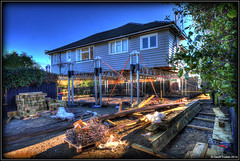
Only two of 20 houses left in the Rawhiti Earthquake Village. This from the sign on perimeter fence: "Since 2011, Rawhiti Domain has been used to provide temporary accommodation for those affected by the Canterbury earthquakes. Over 200 households have used the 20 houses while their own homes have been repaired or rebuilt. The demand for acco...
Northern Outlook Image: Jinny Reynolds 2010:09:17 01:30:05
Images, UC QuakeStudies
Photograph captioned by Fairfax, "Helping out: Daiken, ITM and Linfox step up and donate time, goods and information to the people of North Canterbury who have been affected by the 4 September earthquake".
Christchurch Press Image: John Kirk-Anderson 2010:12:14 15:05:00
Images, UC QuakeStudies
Photograph captioned by Fairfax, "Tatiana Siatag (3) with a quilt given to her by members of the Christchurch Quilters. The quilts, made by North Island quilters, were for families affected by the Canterbury Earthquake".
Christchurch Press Image: John Kirk-Anderson 2010:12:14 15:04:17
Images, UC QuakeStudies
Photograph captioned by Fairfax, "Tatiana Siatag (3) with a quilt given to her by members of the Christchurch Quilters. The quilts, made by North Island quilters, were for families affected by the Canterbury Earthquake".
Christchurch Press Image: Kirk Hargreaves 2010:12:01 19:23:45
Images, UC QuakeStudies
Photograph captioned by Fairfax, "Natalie and Matthew Cutler-Welsh and their children Ruby aged 4 and Jonah 2 outside their earthquake affected Richmond home. They received a free flight to Queenstown courtesy of Air NZ".
Christchurch Press Image: Kirk Hargreaves 2010:12:01 19:23:36
Images, UC QuakeStudies
Photograph captioned by Fairfax, "Natalie and Matthew Cutler-Welsh and their children Ruby aged 4 and Jonah 2 outside their earthquake affected Richmond home. They received a free flight to Queenstown courtesy of Air NZ".
The effects of the Christchurch earthquakes of 2010 and 2011 on the qualit…
Research papers, University of Canterbury Library
This study explored the effects of the Canterbury earthquakes of 2010 and 2011 on different areas of quality of life (QOL) for children and adolescents with disabilities. Using a survey developed from the Quality of Life Instrument for People with Developmental Disabilities – Short Version (QOL-PDD-SV) (Brown, Raphael & Renwick, 1997) and The World Health Organisation Quality of Life - (WHOQOL)-BREF, parents or caregivers were asked to identify what level of importance and satisfaction their child or adolescent placed on areas of QOL including physical health, psychological health - stress levels and coping ability, attachment to their neighbourhood, friends, family, leisure activities, community access and schooling. They were also asked to determine what level of impact the earthquakes had had on each area of their child or adolescent’s life and overall quality of life in the aftermath of the earthquakes. A total of 31 parents of 22 males and 9 females between the ages of 2.5 years to 19 years of age (mean age: 12.6 years) responded. The results were collated and analysis was run to measure for the effect of age, gender and geographical location. The results found that the earthquakes affected nearly every area of QOL for the children and adolescents. The biggest impact on the children’s psychological health and their ability to cope It was observed that younger children (<13) were more likely to record improved or lessened effects from the earthquakes in psychological health areas. However, the areas of social belonging and friendships were the least affected by the earthquakes. Female children were more likely to indicate higher scores for social belonging after the earthquakes. Many parents observed that their children developed improved coping skills over the earthquake period. The findings in this study offer a better understanding of how earthquakes can affect the quality of life children and adolescents with disabilities.
Christchurch Press Image: Joseph Johnson 2010:09:08 07:35:13
Images, UC QuakeStudies
Photograph captioned by Fairfax, "Prime Minister John Key on his visit to Kaiapoi and Hororata to meet people badly affected and see the damage from the earthquake. Standing outside Blackwell's Department Store in Kaiapoi town centre".
Christchurch Press Image: Joseph Johnson 2010:09:08 07:36:14
Images, UC QuakeStudies
Photograph captioned by Fairfax, "Prime Minister John Key on his visit to Kaiapoi and Hororata to meet people badly affected and see the damage from the earthquake. Standing outside Blackwell's Department Store in Kaiapoi town centre".
Southern Story for 21 April 2011 - Sydenham Shops
Audio, Radio New Zealand
The Christchurch suburb of Sydenham was badly affected by the first earthquake in September and February's quake has struck another blow to the local retail sector. But as Katy Gosset has found, shop owners say they're confident they can rebuild.
Fairfax Video, September 2010 (34)
Videos, UC QuakeStudies
A video about Hallensteins offering free clothing to Christchurch residents after the 4 September 2010 earthquake. The video includes footage of over 1000 people queuing outside the Hallensteins store on the corner of High Cashel Streets in the hopes of getting free clothes. It also includes an interview with Tina Taylor, a member of the public affected by the earthquake, and Graeme Popplewell, Hallensteins Managing Director.
Christchurch Press Image: Joseph Johnson 2010:09:08 10:01:12
Images, UC QuakeStudies
Photograph captioned by Fairfax, "John Key on his visit to Kaiapoi and Hororata, to meet badly-affected people and see the damage from the earthquake. Prime Minister John Key visits the Deans' property in Homebush near Hororata".
Christchurch Press Image: Joseph Johnson 2010:09:08 07:34:06
Images, UC QuakeStudies
Photograph captioned by Fairfax, "Prime Minister John Key on his visit to Kaiapoi and Hororata to meet people badly affected and see the damage from the earthquake. The badly-damaged Blackwell's Department Store in Kaiapoi town centre".
Christchurch Press Image: Joseph Johnson 2010:09:08 10:01:28
Images, UC QuakeStudies
Photograph captioned by Fairfax, "John Key on his visit to Kaiapoi and Hororata, to meet badly-affected people and see the damage from the earthquake. Prime Minister John Key visits the Deans' property in Homebush near Hororata".
Christchurch Press Image: Joseph Johnson 2010:09:08 10:02:03
Images, UC QuakeStudies
Photograph captioned by Fairfax, "John Key on his visit to Kaiapoi and Hororata, to meet badly-affected people and see the damage from the earthquake. Prime Minister John Key visits the Deans' property in Homebush near Hororata".
Christchurch Press Image: Joseph Johnson 2010:09:08 09:36:54
Images, UC QuakeStudies
Photograph captioned by Fairfax, "Prime Minister John Key on his visit to Kaiapoi and Hororata to meet people badly affected and see the damage from the earthquake. Talking to Michael Oakley, a potato farmer in Greendale, near Hororata".
Christchurch Press Image: Joseph Johnson 2010:09:08 09:37:34
Images, UC QuakeStudies
Photograph captioned by Fairfax, "Prime Minister John Key on his visit to Kaiapoi and Hororata to meet people badly affected and see the damage from the earthquake. Talking to Michael Oakley, a potato farmer in Greendale, near Hororata".
Christchurch Press Image: Carys Monteath 2010:09:13 08:26:19
Images, UC QuakeStudies
Photograph captioned by Fairfax, "New Zealand's Governor-General Anand Satyanand and his wife Susan Satyanand visited sites around earthquake stricken Canterbury today. Lady Susan Satyanand looks through a window of a classroom at badly affected Halswell Primary School".
Question Time for 15 November 2016
Audio, Radio New Zealand
ANDREW LITTLE to the Prime Minister: What are the priorities for the Government in assisting communities affected by yesterday’s earthquake? MATT DOOCEY to the Minister of Finance: What advice has he received about the economic impact of the Kaikōura earthquake? EUGENIE SAGE to the Minister of Transport: What updates can he give on the transport sector’s response to earthquake damage to State Highway 1 and the rail line between Seddon and Cheviot? GRANT ROBERTSON to the Minister of Finance: What is his initial assessment of the fiscal impact of yesterday morning’s earthquake and what, if any, new or changed Budget allocations is he considering in response to the earthquake? PAUL FOSTER-BELL to the Minister of Civil Defence: How is the Government supporting people affected by the Kaikōura earthquake? RON MARK to the Minister of Civil Defence: Can the Government assure New Zealanders on our level of preparedness for all natural disasters? SUE MORONEY to the Minister of Transport: What roads and public transport services are currently not operational following damage from the earthquake yesterday and when is it expected access and services will be restored? BRETT HUDSON to the Minister of Transport: What action is the Government taking to repair damaged transport infrastructure following the Kaikōura earthquake? GARETH HUGHES to the Minister of Broadcasting: Will she join with me to acknowledge the work of all media in New Zealand, which is so important in times of natural disaster and crisis; if so, will she consider increasing our public broadcaster Radio New Zealand’s funding in Budget 2017? CLAYTON MITCHELL to the Minister of Civil Defence: What progress has been made, if any, on new civil defence legislation which focuses on large and significant events such as the Christchurch and Kaikōura earthquakes? ALASTAIR SCOTT to the Minister of Health: What updates has he received on the Government’s health response to the Kaikōura earthquake? CLARE CURRAN to the Minister of Civil Defence: What actions have been taken by Civil Defence to ensure those people in the areas worst hit by the earthquake have enough food, clothing, water, and shelter?
Descriptions of coping with commonly occurring events by highly self-regul…
Research papers, University of Canterbury Library
Children are often overlooked in the aftermath of a natural disaster, and children’s use of coping strategies plays an important part in their post-disaster adaptation (Vernberg, La Greca, Silverman, & Prinstein, 1996). The aim of this qualitative study was to explore the coping strategies of children with adequate self-regulation skills and minimal behaviour problems, living in Christchurch following the major 2010 and 2011 earthquakes. This aim was achieved through the use of semi-structured interviews with five seven-year-old children, their parents, and their teachers. These interviews were analysed using Directed Content Analysis and results showed that children most often reported using active and adaptive coping strategies, followed by avoidant strategies. Results in the current literature regarding children’s coping suggest that children exposed to natural disasters are able to utilise strategies that involve some personal control over their environment and emotions, through the use of active and adaptive coping strategies. Findings from this study contribute to the current understanding of children’s use of coping strategies when faced with commonly occurring childhood upsets. Further research is required regarding the outcomes associated with the use of effective coping strategies following traumatic events.
Recreational activities on earthquake-affected beaches in Marlborough: Sum…
Research papers, University of Canterbury Library
This survey was established by the University of Canterbury (UC) to assist the Marlborough community in recording and understanding the level and types of recreational beach uses that are occurring at present on the earthquake-affected coast. The questions were designed to capture a comprehensive view of recreational activities and interests and allowed for any activity, view or perspective to be recorded. All responses were anonymous and no identifying information was collected. The survey used an online format open to all interested people 18+ years of age (for informed consent reasons) over a two month period (October – November 2020). The geographic focus of the survey was the coastline between Marfells Beach and the Waima / Ure River which is the area under currently under consideration by Marlborough District Council for development of a new bylaw. However, the design of the survey questions also allowed respondents to record information pertaining to any other area.
EQC repairs were not 'botched' - Gerry Brownlee
Audio, Radio New Zealand
The bill to fix botched EQC repairs from the Canterbury earthquakes has hit $270 million - four times what the previous Government predicted just two years ago. The Minister responsible for the Earthquake Commission, Megan Woods, has asked Treasury to urgently crunch some figures to give the Government an idea of its future liability, with many experts warning thousands more homes may be affected. The former Canterbury Rebuild Minister Gerry Brownlee, who was in the job for six years until a year ago, speaks to Guyon Espiner.