

Search
found 65 results
Images for Christchurch Hospital; more images...
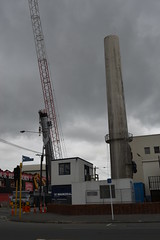
QuakeStory Photo 401
Images, UC QuakeStudies
A photograph submitted by Sarndra to the QuakeStories website. The description reads, "Cracks clearly seen in the old nurses home [since demolished], next to Christchurch Women’s hospital. Photograph taken 24 February 2011 on way to birthing unit for the imminent arrival of my first grandchild Joseph, born 25th February.".
BeckerFraserPhotos October 2011 photograph 557
Images, UC QuakeStudies
Photograph captioned by BeckerFraserPhotos, "Looking south across Bealey Avenue and between Colombo and Durham Streets towards the CBD".
All Right? Communications: Media Release - 28 June 2014
Articles, UC QuakeStudies
A PDF copy of a media release by All Right? titled "Was it a Bird? Was it a Plane? No it was...". The media release discusses the All Right? 'Superhero Surprise' project, and includes quotes from local superhero 'Flatman' and All Right? Campaign Manager Sue Turner. The media release is dated 28 June 2014.
Transfers from primary to tertiary units – frequency, timing, reasons, out…
Research papers, The University of Auckland Library
The Evaluating Maternity Units (EMU) study is a mixed method project involving a prospective cohort study, surveys (two postnatal questionnaires) and focus groups. It is an Australasian project funded by the Australian Health and Medical Research Council. Its primary aim was to compare the birth outcomes of two groups of well women – one group who planned to give birth at a primary maternity unit, and a second group who planned to give birth at a tertiary hospital. The secondary aim was to learn about women’s views and experiences regarding their birthplace decision-making, transfer, maternity care and experiences, and any other issues they raised. The New Zealand arm of the study was carried out in Christchurch, and was seriously affected by the earthquakes, halting recruitment at 702 participants. Comprehensive details were collected from both midwives and women regarding antenatal and early labour changes of birthplace plans and perinatal transfers from the primary units to the tertiary hospital. Women were asked about how they felt about plan changes and transfers in the first survey, and they were discussed in some focus groups. The transfer findings are still being analysed and will be presented. This study is set within the local maternity context, is recent, relevant and robust. It provides midwives with contemporary information about transfers from New Zealand primary maternity units and women’s views and experiences. It may help inform the conversations midwives have with each other, and with women and their families/whānau, regarding the choices of birthplace for well childbearing women.
People in Disasters Conference - Local System Perspective
Videos, UC QuakeStudies
A video of a presentation by David Meates, Chief Executive of the Christchurch District Health Board and the West Coast District Health Board, during the first plenary of the 2016 People in Disasters Conference. The presentation is titled, "Local System Perspective".The abstract for this presentation reads as follows: The devastating Canterbury earthquakes of 2010 and 2011 have resulted in challenges for the people of Canterbury and have altered the population's health needs. In the wake of New Zealand's largest natural disaster, the health system needed to respond rapidly to changing needs and damaged infrastructure in the short-term in the context of developing sustainable long-term solutions. Canterbury was undergoing system transformation prior to the quakes, however the horizon of transformation was brought forward post-quake: 'Vision 2020' became the vision for now. Innovation was enabled as people working across the system addressed new constraints such as the loss of 106 acute hospital beds, 635 aged residential care beds, the loss of general practices and pharmacies as well as damaged non-government organisation sector. A number of new integration initiatives (e.g. a shared electronic health record system, community rehabilitation for older people, community falls prevention) and expansion of existing programs (e.g. acute demand management) were focused on supporting people to stay well in their homes and communities. The system working together in an integrated way has resulted in significant reductions in acute health service utilisation in Canterbury. Acute admission rates have not increased and remain significantly below national rates and the number of acute and rehabilitation bed days have fallen since the quakes, with these trends most evident among older people. However, health needs frequently reported in post-disaster literature have created greater pressures on the system. In particular, an escalating number of people facing mental health problems and coping with acute needs of the migrant rebuild population provide new challenges for a workforce also affected by the quakes. The recovery journey for Canterbury is not over.