

Search
found 818 results
Images for Canterbury earthquakes; more images...


Vegetation mapping for the protection of old-growth spinifex and pīngao du…
Research papers, University of Canterbury Library
This report contributes to a collaborative project between the Marlborough District Council (MDC) and University of Canterbury (UC) which aims to help protect and promote the recovery of native dune systems on the Marlborough coast. It is centred around the mapping of dune vegetation and identification of dune protection zones for old-growth seed sources of the native sand-binders spinifex (Spinifex sericeus) and pīngao (Ficinia spiralis). Both are key habitat-formers associated with nationally threatened dune ecosystems, and pīngao is an important weaving resource and Ngāi Tahu taonga species. The primary goal is to protect existing seed sources that are vital for natural regeneration following major disturbances such as the earthquake event. Several additional protection zones are also identified for areas where new dunes are successfully regenerating, including areas being actively restored in the Beach Aid project that is assisting new native dunes to become established where there is available space.
Vulnerability and Resilience Assessment of the New Zealand Telecommunicati…
Research papers, University of Canterbury Library
Nowadays the telecommunication systems’ performance has a substantial impact on our lifestyle. Their operationality becomes even more substantial in a post-disaster scenario when these services are used in civil protection and emergency plans, as well as for the restoration of all the other critical infrastructure. Despite the relevance of loss of functionality of telecommunication networks on seismic resilience, studies on their performance assessment are few in the literature. The telecommunication system is a distributed network made up of several components (i.e. ducts, utility holes, cabinets, major and local exchanges). Given that these networks cover a large geographical area, they can be easily subjected to the effects of a seismic event, either the ground shaking itself, or co-seismic events such as liquefaction and landslides. In this paper, an analysis of the data collected after the 2010-2011 Canterbury Earthquake Sequence (CES) and the 2016 Kaikoura Earthquake in New Zealand is conducted. Analysing these data, information gaps are critically identified regarding physical and functional failures of the telecommunication components, the timeline of repair/reconstruction activities and service recovery, geotechnical tests and land planning maps. Indeed, if these missing data were presented, they could aid the assessment of the seismic resilience. Thus, practical improvements in the post-disaster collection from both a network and organisational viewpoints are proposed through consultation of national and international researchers and highly experienced asset managers from Chorus. Finally, an outline of future studies which could guide towards a more resilient seismic performance of the telecommunication network is presented.
The Effectiveness of Retrofit Technologies in Wooden-Framed Houses in Well…
Research papers, University of Canterbury Library
New Zealand has a long tradition of using light timber frame for construction of its domestic dwellings. After the most recent earthquakes (e.g. Canterbury earthquakes sequence), wooden residential houses showed satisfactory life safety performance. However, poor performance was reported in terms of their seismic resilience. Although numerous innovative methods to mitigate damage have been introduced to the New Zealand community in order to improve wooden house performance, these retrofit options have not been readily taken up. The low number of retrofitted wooden-framed houses leads to questions about whether homeowners are aware of the necessity of seismic retrofitting their houses to achieve a satisfactory seismic performance. This study aims to explore different retrofit technologies that can be applied to wooden-framed houses in Wellington, taking into account the need of homeowners to understand the risk, likelihood and extent of damage expected after an event. A survey will be conducted in Wellington about perceptions of homeowners towards the expected performance of their wooden-framed houses. The survey questions were designed to gain an understanding of homeowners' levels of safety and awareness of possible damage after a seismic event. Afterwards, a structural review of a sample of the houses will be undertaken to identify common features and detail potential seismic concerns. The findings will break down barriers to making improvements in the performance of wooden-framed houses and lead to enhancements in the confidence of homeowners in the event of future seismic activity. This will result in increased understanding and contribute towards an accessible knowledge base, which will possibly increase significantly the use of these technologies and avoid unnecessary economic and social costs after a seismic event.
The Ruins of Eloquence
Research papers, Victoria University of Wellington
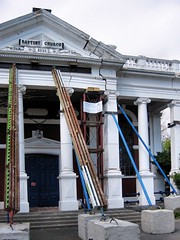
On the 22nd of February, 2011 the city of Christchurch, New Zealand was crippled by a colossal earthquake. 185 people were killed, thousands injured and what remained was a city left in destruction and ruin. Thousands of Christchurch properties and buildings were left damaged beyond repair and the rich historical architecture of the Canterbury region had suffered irreparably. This research will conduct an investigation into whether the use of mixed reality can aid in liberating Christchurch’s rich architectural heritage when applied to the context of destructed buildings within Christchurch. The aim of this thesis is to formulate a narrative around the embodiment of mixed reality when subjected to the fragmentary historical architecture of Christchurch. Mixed reality will aspire to act as the defining ligature that holds the past, present and future of Christchurch’s architectural heritage intact as if it is all part of the same continuum. This thesis will focus on the design of a memorial museum within a heavily damaged historical trust registered building due to the Christchurch earthquake. It is important and relevant to conceive the idea of such a design as history is what makes everything we know. The memories of the past, the being of the now and the projection of the future is the basis and fundamental imperative in honouring the city and people of Christchurch. Using the technologies of Mixed Reality and the realm of its counter parts the memorial museum will be a definitive proposition of desire in providing a psychological and physical understanding towards a better Christchurch, for the people of Christchurch. This thesis serves to explore the renovation possibilities of the Canterbury provincial council building in its destructed state to produce a memorial museum for the Christchurch earthquake. The design seeks to mummify the building in its raw state that sets and develops the narrative through the spaces. The design intervention is kept at a required minimum and in doing so manifests a concentrated eloquence to the derelict space. The interior architecture unlocks the expression of history and time encompassed within a destructive and industrialised architectural dialogue. History is the inhabitant of the building, and using the physical and virtual worlds it can be set free. This thesis informs a design for a museum in central Christchurch that celebrates and informs the public on past, present and future heritage aspects of Christchurch city. Using mixed reality technologies the spatial layout inside will be a direct effect of the mixed reality used and the exploration of the physical and digital heritage aspects of Christchurch. The use of technology in today’s world is so prevalent that incorporating it into a memorial museum for Christchurch would not only be interesting and exploratory but also offer a sense of pushing forward and striving beyond for a newer, fresher Christchurch. The memorial museum will showcase a range of different exhibitions that formulate around the devastating Christchurch earthquake. Using mixed reality technologies these exhibitions will dictate the spaces inside dependant on their various applications of mixed reality as a technology for architecture. Research will include; what the people of Canterbury are most dear to in regards to Christchurch’s historical environment; the use of mixed reality to visualise digital heritage, and the combination of the physical and digital to serve as an architectural mediation between what was, what is and what there could be.
Empowered Christchurch Letter to Queen Elizabeth II
Articles, UC QuakeStudies
A copy of a document from Empowered Christchurch which was sent to Queen Elizabeth. The document consists of a letter from Empowered Christchurch to Douglas Martin, Crown Manager from the Christchurch City Council, and Official Information Act requests sent to Building and Construction Minister Maurice Williamson and Canterbury Earthquake Recovery Minister Gerry Brownlee. It also includes an appeal to the Queen on behalf of Christchurch residents with badly-damaged houses. Please note that a letter from the Ministry of Business, Innovation and Employment, which was originally included in the document, has been removed due to copyright issues.
Rockfall in the Port Hills of Christchurch: Seismic and non-seismic fatali…
Research papers, Lincoln University
Numerous rockfalls released during the 2010–2011 Canterbury earthquake sequence affected vital road sections for local commuters. We quantified rockfall fatality risk on two main routes by adapting a risk approach for roads originally developed for snow avalanche risk. We present results of the collective and individual fatality risks for traffic flow and waiting traffic. Waiting traffic scenarios particularly address the critical spatial-temporal dynamics of risk, which should be acknowledged in operational risk management. Comparing our results with other risks commonly experienced in New Zealand indicates that local rockfall risk is close to tolerability thresholds and likely exceeds acceptable risk.
Housing a Different Christchurch Rebuild
Research papers, The University of Auckland Library
This thesis revisits the topic of earthquake recovery in Christchurch City more than a decade after the Canterbury earthquakes. Despite promising visions of a community reconnected and a sustainable and liveable city, significant portions of the city’s core – the Red Zone – remain dilapidated and “eerily empty”. At the same time, new developments in other areas have proven to be alienated or underutilised. Currently, the Canterbury Earthquake Recovery Authority’s plans for the rebuilding highlight the delivery of more residential housing to re-populate the city centre. However, prevalent approaches to housing development in Christchurch are ineffective for building an inclusive and active community. Hence, the central inquiry of the thesis is how the development of housing complexes can revitalise the Red Zone within the Christchurch city centre. The inquiry has been carried out through a research-through-design methodology, recognising the importance of an in-depth investigation that is contextualised and combined with the intuition and embodied knowledge of the designer. The investigation focuses on a neglected site in the Red Zone in the heart of Christchurch city, with significant Victorian and Edwardian Baroque heritage buildings, including Odeon Theatre, Lawrie & Wilson Auctioneers, and Sol Square, owned by The Regional Council Environment Canterbury. The design inquiry argues, develops, and is carried through a place-assemblage lens to housing development for city recovery, which recognizes the significance of socially responsive architecture that explores urban renewal by forging connections within the social network. Therefore, place-assemblage criteria and methods for developing socially active and meaningful housing developments are identified. Firstly, this thesis argues that co-living housing models are more focused on people relations and collective identity than the dominant developer-driven housing rebuilds, as they prioritise conduits for interaction and shared social meaning and practices. Secondly, the adaptive reuse of derelict heritage structures is proposed to reinvigorate the urban fabric, as heritage is seen to be conceived as and from a social assemblage of people. The design is realised by the principles outlined in the ICOMOS charter, which involves incorporating the material histories of existing structures and preserving the intangible heritage of the site by ensuring the continuity of cultural practices. Lastly, design processes and methods are also vital for place-sensitive results, which pay attention to the site’s unique characteristics to engage with local stakeholders and communities. The research explores place-assemblage methods of photographic extraction, the drawing of story maps, precedent studies, assemblage maps, bricolages, and paper models, which show an assembly of layers that piece together the existing heritage, social conduits, urban commons and housing to conceptualise the social network within its place.
What caused the spatial variability of strong ground motions near the epic…
Research papers, University of Canterbury Library
During the 2011 M7.8 Kaikōura earthquake, ground motions recorded near the epicentre showed a significant spatial variation. The Te Mara farm (WTMC) station, the nearest to the epicentre, recorded 1g and 2.7g of horizontal and vertical peak ground accelerations (PGA), respectively. The nearby Waiu Gorge (WIGC) station recorded a horizontal PGA of 0.8g. Interestingly, however, the Culverden Airlie Farm (CULC) station that was very closely located to WIGC recorded a horizontal PGA of only 0.25g. This poster demonstrates how the local geological condition could have contributed to the spatially variable ground motions observed in the North Canterbury, based on the results of recently conducted geophysical investigations. The surficial geology of this area is dominated by alluvial gravel deposits with traces of silt. A borehole log showed that the thickness of the sediments at WTMC is over 76 metres. Interestingly, the shear wave velocity (Vs) profiles obtained from the three strong motion sites suggest unusually high shear wave velocity of the gravelly sediments. The velocity of sediments and the lack of clear peaks in the horizontal-to-vertical (H/V) spectral ratio at WTMC suggest that the large ground motion observed at this station was likely caused by the proximity of the station to the causative fault itself; the site effect was likely insignificant. Comparisons of H/V spectral ratios and Vs profiles suggest that the sediment thickness is much smaller at WIGC compared with CULC; the high PGA at WIGC was likely influenced by the high-frequency amplification caused by the response of shallow sediments.
Leading in a Post-disaster Setting: Guidance for Human Resource Practition…
Research papers, University of Canterbury Library
Based on a qualitative study of four organisations involving 47 respondents following the extensive 2010 – 2011 earthquakes in Christchurch, New Zealand, this paper presents some guidance for human resource practitioners dealing with post-disaster recovery. A key issue is the need for the human resource function to reframe its practices in a post-disaster context, developing a specific focus on understanding and addressing changing employee needs, and monitoring the leadership behaviour of supervisors. This article highlights the importance of flexible organisational responses based around a set of key principles concerning communication and employee perceptions of company support.
Who Pays for a Managed Retreat? Lessons from the Christchurch Residential …
Research papers, University of Canterbury Library
After the Christchurch earthquakes, the government declared about 8000 houses as Red Zoned, prohibiting further developments in these properties, and offering the owners to buy them out. The government provided two options for owners: the first was full payment for both land and dwelling at the 2007 property evaluation, the second was payment for land, and the rest to be paid by the owner’s insurance. Most people chose the second option. Using data from LINZ combined with data from StatNZ, this project empirically investigates what led people to choose this second option, and what were the implications of these choices for the owners’ wealth and income.
3D Ground Motion Simulations for the Christchurch Area Including the Surfa…
Research papers, University of Canterbury Library
We present initial results from a set of three-dimensional (3D) deterministic earthquake ground motion simulations for the northern Canterbury plains, Christchurch and the Banks Peninsula region, which explicitly incorporate the effects of the surface topography. The simu-lations are done using Hercules, an octree-based finite-element parallel software for solving 3D seismic wave propagation problems in heterogeneous media under kinematic faulting. We describe the efforts undertaken to couple Hercules with the South Island Velocity Model (SIVM), which included changes to the SIVM code in order to allow for single repetitive que-ries and thus achieve a seamless finite-element meshing process within the end-to-end ap-proach adopted in Hercules. We present our selection of the region of interest, which corre-sponds to an area of about 120 km × 120 km, with the 3D model reaching a depth of 60 km. Initial simulation parameters are set for relatively high minimum shear wave velocity and a low maximum frequency, which we are progressively scaling up as computing resources permit. While the effects of topography are typically more important at higher frequencies and low seismic velocities, even at this initial stage of our efforts (with a maximum of 2 Hz and a mini-mum of 500 m/s), it is possible to observe the importance of the topography in the response of some key locations within our model. To highlight these effects we compare the results of the 3D topographic model with respect to those of a flat (squashed) 3D model. We draw rele-vant conclusions from the study of topographic effects during earthquakes for this region and describe our plans for future work.
Conceptualising Adaptive Resilience using Grounded Theory
Research papers, University of Canterbury Library
We present the initial findings from a study of adaptive resilience of lifelines organisations providing essential infrastructure services, in Christchurch, New Zealand following the earthquakes of 2010-2011. Qualitative empirical data was collected from 200 individuals in 11 organisations. Analysis using a grounded theory method identified four major factors that aid organisational response, recovery and renewal following major disruptive events. Our data suggest that quality of top and middle-level leadership, quality of external linkages, level of internal collaboration, ability to learn from experience, and staff well-being and engagement influence adaptive resilience. Our data also suggest that adaptive resilience is a process or capacity, not an outcome and that it is contextual. Post-disaster capacity/resources and post-disaster environment influence the nature of adaptive resilience.
Post-disaster Management of Human Resources: Learning From an Extended Cri…
Research papers, University of Canterbury Library
Disasters are rare events with major consequences; yet comparatively little is known about managing employee needs in disaster situations. Based on case studies of four organisations following the devastating earthquakes of 2010 - 2011 in Christchurch, New Zealand, this paper presents a framework using redefined notions of employee needs and expectations, and charting the ways in which these influence organisational recovery and performance. Analysis of in-depth interview data from 47 respondents in four organisations highlighted the evolving nature of employee needs and the crucial role of middle management leadership in mitigating the effects of disasters. The findings have counterintuitive implications for human resource functions in a disaster, suggesting that organisational justice forms a central framework for managing organisational responses to support and engage employees for promoting business recovery.
People in Disasters Conference - Local System Perspective
Videos, UC QuakeStudies
A video of a presentation by David Meates, Chief Executive of the Christchurch District Health Board and the West Coast District Health Board, during the first plenary of the 2016 People in Disasters Conference. The presentation is titled, "Local System Perspective".The abstract for this presentation reads as follows: The devastating Canterbury earthquakes of 2010 and 2011 have resulted in challenges for the people of Canterbury and have altered the population's health needs. In the wake of New Zealand's largest natural disaster, the health system needed to respond rapidly to changing needs and damaged infrastructure in the short-term in the context of developing sustainable long-term solutions. Canterbury was undergoing system transformation prior to the quakes, however the horizon of transformation was brought forward post-quake: 'Vision 2020' became the vision for now. Innovation was enabled as people working across the system addressed new constraints such as the loss of 106 acute hospital beds, 635 aged residential care beds, the loss of general practices and pharmacies as well as damaged non-government organisation sector. A number of new integration initiatives (e.g. a shared electronic health record system, community rehabilitation for older people, community falls prevention) and expansion of existing programs (e.g. acute demand management) were focused on supporting people to stay well in their homes and communities. The system working together in an integrated way has resulted in significant reductions in acute health service utilisation in Canterbury. Acute admission rates have not increased and remain significantly below national rates and the number of acute and rehabilitation bed days have fallen since the quakes, with these trends most evident among older people. However, health needs frequently reported in post-disaster literature have created greater pressures on the system. In particular, an escalating number of people facing mental health problems and coping with acute needs of the migrant rebuild population provide new challenges for a workforce also affected by the quakes. The recovery journey for Canterbury is not over.
Disaster Memorial Events for Increasing Awareness and Preparedness
Research papers, University of Canterbury Library
On 15 August 1868, a great earthquake struck off the coast of the Chile-Peru border generating a tsunami that travelled across the Pacific. Wharekauri-Rekohu-Chatham Islands, located 800 km east of Christchurch, Aotearoa-New Zealand (A-NZ) was one of the worst affected locations in A-NZ. Tsunami waves, including three over 6 metres high, injured and killed people, destroyed buildings and infrastructure, and impacted the environment, economy and communities. While experience of disasters, and advancements in disaster risk reduction systems and technology have all significantly advanced A-NZ’s capacity to be ready for and respond to future earthquakes and tsunami, social memory of this event and other tsunamis during our history has diminished. In 2018, a team of scientists, emergency managers and communication specialists collaborated to organise a memorial event on the Chatham Islands and co-ordinate a multi-agency media campaign to commemorate the 150th anniversary of the 1868 Arica tsunami. The purpose was to raise awareness of the disaster and to encourage preparedness for future tsunami. Press releases and science stories were distributed widely by different media outlets and many attended the memorial event indicating public interest for commemorating historical disasters. We highlight the importance of commemorating disaster anniversaries through memorial events, to raise awareness of historical disasters and increase community preparedness for future events – “lest we forget and let us learn.”
Liquefaction Evaluation in Stratified Soils
Research papers, University of Canterbury Library
The Canterbury Earthquake Sequence 2010-2011 (CES) induced widespread liquefaction in many parts of Christchurch city. Liquefaction was more commonly observed in the eastern suburbs and along the Avon River where the soils were characterised by thick sandy deposits with a shallow water table. On the other hand, suburbs to the north, west and south of the CBD (e.g. Riccarton, Papanui) exhibited less severe to no liquefaction. These soils were more commonly characterised by inter-layered liquefiable and non-liquefiable deposits. As part of a related large-scale study of the performance of Christchurch soils during the CES, detailed borehole data including CPT, Vs and Vp have been collected for 55 sites in Christchurch. For this subset of Christchurch sites, predictions of liquefaction triggering using the simplified method (Boulanger & Idriss, 2014) indicated that liquefaction was over-predicted for 94% of sites that did not manifest liquefaction during the CES, and under-predicted for 50% of sites that did manifest liquefaction. The focus of this study was to investigate these discrepancies between prediction and observation. To assess if these discrepancies were due to soil-layer interaction and to determine the effect that soil stratification has on the develop-ment of liquefaction and the system response of soil deposits.
Greening the rubble in Christchurch: Civic ecological reclamation efforts …
Research papers, Lincoln University
Within four weeks of the September 4 2010 Canterbury Earthquake a new, loosely-knit community group appeared in Christchurch under the banner of “Greening the Rubble.” The general aim of those who attended the first few meetings was to do something to help plug the holes that had already appeared or were likely to appear over the coming weeks in the city fabric with some temporary landscaping and planting projects. This article charts the first eighteen months of Greening the Rubble and places the initiative in a broader context to argue that although seismic events in Christchurch acted as a “call to palms,” so to speak, the city was already in need of some remedial greening. It concludes with a reflection on lessons learned to date by GTR and commentary on the likely issues ahead for this new mini-social-environmental movement in the context of a quake-affected and still quake-prone major New Zealand city. One of the key lessons for GTR and all of those involved in Christchurch recovery activities to date is that the city is still very much in the middle of the event and is to some extent a laboratory for seismic and agency management studies alike.
People in Disasters Conference - A Community Wellbeing Centric Approach to…
Videos, UC QuakeStudies
A video of a presentation by Dr Scott Miles during the Community Resilience Stream of the 2016 People in Disasters Conference. The presentation is titled, "A Community Wellbeing Centric Approach to Disaster Resilience".The abstract for this presentation reads as follows: A higher bar for advancing community disaster resilience can be set by conducting research and developing capacity-building initiatives that are based on understanding and monitoring community wellbeing. This presentation jumps off from this view, arguing that wellbeing is the most important concept for improving the disaster resilience of communities. The presentation uses examples from the 2010 and 2011 Canterbury earthquakes to illustrate the need and effectiveness of a wellbeing-centric approach. While wellbeing has been integrated in the Canterbury recovery process, community wellbeing and resilience need to guide research and planning. The presentation unpacks wellbeing in order to synthesize it with other concepts that are relevant to community disaster resilience. Conceptualizing wellbeing as either the opportunity for or achievement of affiliation, autonomy, health, material needs, satisfaction, and security is common and relatively accepted across non-disaster fields. These six variables can be systematically linked to fundamental elements of resilience. The wellbeing variables are subject to potential loss, recovery, and adaptation based on the empirically established ties to community identity, such as sense of place. Variables of community identity are what translate the disruption, damage, restoration, reconstruction, and reconfiguration of a community's different critical services and capital resources to different states of wellbeing across a community that has been impacted by a hazard event. With reference to empirical research and the Canterbury case study, the presentation integrates these insights into a robust framework to facilitate meeting the challenge of raising the standard of community disaster resilience research and capacity building through development of wellbeing-centric approaches.
Capturing impacts, experiences, and behaviour during disaster: An online p…
Research papers, University of Canterbury Library
Developing a holistic understanding of social, cultural, and economic impacts of disasters can help in building disaster risk knowledge for policy making and planning. Many methods can help in developing an understanding of the impacts of a disaster, including interviews and surveys with people who have experienced disaster, which may be invasive at times and create stress for the participants to relive their experiences. In the past decade, social media, blog posts, video blogs (i.e. “vlogs”), and crowdsourcing mechanisms such as Humanitarian OpenStreetMap and Ushahidi, have become prominent platforms for people to share their experiences and impacts of an event from the ground. These platforms allow for the discovery of a range of impact information, from physical impacts, to social, cultural, and psychological impacts. It can also reveal interesting behavioural information such as their decision to heed a warning or not, as people tend to share their experiences and their reactions online. This information can help researchers and authorities understand both the impacts as well as behavioural responses to hazards, which can then shape how early warning systems are designed and delivered. It can also help to identify gaps in desired behavioural responses. This poster presents a selection of cases identified from the literature and grey literature, such as the Haiti earthquake, the Christchurch earthquake, Hurricane Sandy, and Hurricane Harvey, where online platforms were widely used during and after a disaster to document impacts, experiences, and behavioural responses. A summary of key learnings and areas for future research is provided.
The Christchurch Urban Design Panel: Its role and influence on residential…
Research papers, Lincoln University
During the 21st century, New Zealand has experienced increasing public concern over the quality of the design and appearance of new developments, and their effects on the urban environment. In response to this, a number of local authorities developed a range of tools to address this issue, including urban design panels to review proposals and provide independent advice. Following the 2010 and 2011 Canterbury earthquake sequence, the commitment to achieve high quality urban design within Christchurch was given further importance, with the city facing the unprecedented challenge of rebuilding a ‘vibrant and successful city’. The rebuild and regeneration reinforced the need for independent design review, putting more focus and emphasis on the role and use of the urban design panel; first through collaboratively assisting applicants in achieving a better design outcome for their development by providing an independent set of eyes on their design; and secondly in assisting Council officers in forming their recommendations on resource consent decisions. However, there is a perception that urban design and the role of the urban design panel is not fully understood, with some stakeholders arguing that Council’s urban design requirements are adding cost and complexity to their developments. The purpose of this research was to develop a better understanding on the role of the Christchurch urban design panel post-earthquake in the central city; its direct and indirect influence on the built environment; and the deficiencies in the broader planning framework and institutional settings that it might be addressing. Ultimately, the perceived role of the Panel is understood, and there is agreement that urban design is having a positive influence on the built environment, albeit viewed differently amongst the varying groups involved. What has become clear throughout this research is that the perceived tension between the development community and urban design well and truly exists, with the urban design panel contributing towards this. This tension is exacerbated further through the cost of urban design to developers, and the drive for financial return from their investments. The panel, albeit promoting a positive experience, is simply a ‘tick box’ exercise for some, and as the research suggests, groups or professional are determining themselves what constitutes good urban design, based on their attitude, the context in which they sit and the financial constraints to incorporate good design elements. It is perhaps a bleak time for urban design, and more about building homes.
Assessing the seismic resilience of an underground lifeline: Case study of…
Research papers, University of Canterbury Library
essential systems upon which the well-being and functioning of societies depend. They deliver a service or a good to the population using a network, a combination of spatially-distributed links and nodes. As they are interconnected, network elements’ functionality is also interdependent. In case of a failure of one component, many others could be momentarily brought out-of-service. Further problems arise for buried infrastructure when it comes to buried infrastructure in earthquake and liquefaction-prone areas for the following reasons: • Technically more demanding inspections than those required for surface horizontal infrastructure • Infrastructure subject to both permanent ground displacement and transient ground deformation • Increase in network maintenance costs (i.e. deterioration due to ageing material and seismic hazard) These challenges suggest careful studies on network resilience will yield significant benefits. For these reasons, the potable water network of Christchurch city (Figure 1) has been selected for its well-characterized topology and its extensive repair dataset.
Regulating Seismic Risk for Existing Multi-Storey Buildings in New Zealand
Research papers, University of Canterbury Library
This paper presents the preliminary conclusions of the first stage of Wellington Case Study project (Regulating For Resilience in an Earthquake Vulnerable City) being undertaken by the Disaster Law Research Group at the University of Canterbury Law School. This research aims to map the current regulatory environment around improving the seismic resilience of the urban built environment. This work provides the basis for the second stage of the project which will map the regulatory tools onto the reality of the current building stock in Wellington. Using a socio-legal methodology, the current research examines the regulatory framework around seismic resilience for existing buildings in New Zealand, with a particularly focus on multi-storey in the Wellington CBD. The work focusses both on the operation and impact of the formal seismic regulatory tools open to public regulators (under the amended Building Act) as other non-seismic regulatory tools. As well as examining the formal regulatory frame, the work also provides an assessment of the interactions between other non-building acts (such as Health and Safety at Work Act 2015) on the requirements of seismic resilience. Other soft-law developments (particularly around informal building standards) are also examined. The final output of this work will presents this regulatory map in a clear and easily accessible manner and provide an assessment of the suitability of this at times confusing and patchy legal environment as Wellington moves towards becoming a resilient city. The final conclusion of this work will be used to specifically examine the ability of Wellington to make this transition under the current regulatory environment as phase two of the Wellington Case Study project.
The limits of resilience: A discussion of resilience from the perspectives…
Research papers, The University of Auckland Library
Mechanistic and scientific approaches to resilience assume that there is a “tipping point” at which a system can no longer absorb adversity; after this point, it is liable to collapse. Some of these perspectives, particularly those stemming from ecology and psychology, recognise that individuals and communities cannot be perpetually resilient without limits. While the resilience paradigm has been imported into the social sciences, the limits to resilience have often been disregarded. This leads to an overestimation of “human resourcefulness” within the resilience paradigm. In policy discourse, practice, and research, resilience seems to be treated as a “limitless” and human quality in which individuals and communities can effectively cope with any hazard at any time, for as long as they want and with any people. We critique these assumptions with reference to the recovery case in Ōtautahi Christchurch, Aotearoa New Zealand following the 2010-11 Canterbury earthquake sequence. We discuss the limits to resilience and reconceptualise resilience thinking for disaster risk reduction and sustainable recovery and development.
Dynamics of territorial production in situated and community projects
Research papers, The University of Auckland Library
This section considers forms of collaboration in situated and community projects embedded in important spatial transformation processes in New Zealand cities. It aims to shed light on specific combinations of material and semantic aspects characterising the relation between people and their environment. Contributions focus on participative urban transformations. The essays that follow concentrate on the dynamics of territorial production of associations between multiple actors belonging both to civil society and constituted authority. Their authors were directly engaged in the processes that are reported and conceptualised, thereby offering evidence gained through direct hands-on experience. Some of the investigations use case studies that are conspicuous examples of the recent post-traumatic urban development stemming from the Canterbury earthquakes of 2010-2011. More precisely, these cases belong to the early phases of the programmes of the Christchurch recovery or the Wellington seismic prevention. The relevance of these experiences for the scope of this study lies in the unprecedented height of public engagement at local, national and international levels, a commitment reached also due to the high impact, both emotional and concrete, that affected the entire society.
Seismic Response of Complex Structure Systems using Code-Compatible as-Rec…
Research papers, University of Canterbury Library
This research investigates the validation of simulated ground motions on complex structural systems. In this study, the seismic responses of two buildings are compared when they are subjected to as-recorded ground motions and simulated ones. The buildings have been designed based on New Zealand codes and physically constructed in Christchurch, New Zealand. The recorded ground motions are selected from 40 stations database of the historical 22 Feb. 2011 Christchurch earthquake. The Graves and Pitarka (2015) methodology is used to generate the simulated ground motions. The geometric mean of maximum inter-story drift and peak floor acceleration are selected as the main seismic responses. Also, the variation of these parameters due to record to record variability are investigated. Moreover, statistical hypothesis testing is used to investigate the similarity of results between observed and simulated ground motions. The results indicate a general agreement between the peak floor acceleration calculated by simulated and recorded ground motions for two buildings. While according to the hypothesis tests result, the difference in drift can be significant for the building with a shorter period. The results will help engineers and researchers to use or revise the procedure by using simulated ground motions for obtaining seismic responses.
Simulation and Validation of Topographic Effectds on Mt Pleasant, Christch…
Research papers, University of Canterbury Library
Damage distribution maps from strong earthquakes and recorded data from field experiments have repeatedly shown that the ground surface topography and subsurface stratigraphy play a decisive role in shaping the ground motion characteristics at a site. Published theoretical studies qualitatively agree with observations from past seismic events and experiments; quantitatively, however, they systematically underestimate the absolute level of topographic amplification up to an order of magnitude or more in some cases. We have hypothesized in previous work that this discrepancy stems from idealizations of the geometry, material properties, and incident motion characteristics that most theoretical studies make. In this study, we perform numerical simulations of seismic wave propagation in heterogeneous media with arbitrary ground surface geometry, and compare results with high quality field recordings from a site with strong surface topography. Our goal is to explore whether high-fidelity simulations and realistic numerical models can – contrary to theoretical models – capture quantitatively the frequency and amplitude characteristics of topographic effects. For validation, we use field data from a linear array of nine portable seismometers that we deployed on Mount Pleasant and Heathcote Valley, Christchurch, New Zealand, and we compute empirical standard spectral ratios (SSR) and single-station horizontal-to-vertical spectral ratios (HVSR). The instruments recorded ambient vibrations and remote earthquakes for a period of two months (March-April 2017). We next perform two-dimensional wave propagation simulations using the explicit finite difference code FLAC. We construct our numerical model using a high-resolution (8m) Digital Elevation Map (DEM) available for the site, an estimated subsurface stratigraphy consistent with the geomorphology of the site, and soil properties estimated from in-situ and non-destructive tests. We subject the model to in-plane and out-of-plane incident motions that span a broadband frequency range (0.1-20Hz). Numerical and empirical spectral ratios from our blind prediction are found in very good quantitative agreement for stations on the slope of Mount Pleasant and on the surface of Heathcote Valley, across a wide range of frequencies that reveal the role of topography, soil amplification and basin edge focusing on the distribution of ground surface motion.
Resilience of Business Models of Small and Medium Enterprises (SMEs)
Research papers, University of Canterbury Library
This research aims to explore how business models of SMEs revolve in the face of a crisis to be resilient. The business model canvas was used as a tool to analyse business models of SMEs in Greater Christchurch. The purpose was to evaluate the changes SMEs brought in their business models after hit by a series of earthquake in 2010 and 2011. The idea was to conduct interviews of business owners and analyse using grounded theory methods. Because this method is iterative, a tentative theoretical framework was proposed, half way through the data collection. It was realised that owner specific characteristics were more prominent in the data than the elements business model. Although, SMEs in this study experienced several operational changes in their business models such as change of location and modification of payment terms. However, the suggested framework highlights how owner specific attributes influence the survival of a small business. Small businesses and their owners are extremely interrelated that the business models personify the owner specific characteristics. In other words, the adaptation of the business model reflects the extent to which the owner possess these attributes. These attributes are (a) Mindsets – the attitude and optimism of business owner; (b) Adaptive coping – the ability of business owner to take corrective actions; and (c) Social capital – the network of a business owner, including family, friends, neighbours and business partners.
Coastal modelling of sea level rise for the Christchurch coastal environme…
Research papers, The University of Auckland Library
Predictive modelling provides an efficient means to analyse the coastal environment and generate knowledge for long term urban planning. In this study, the numerical models SWAN and XBeach were incorporated into the ESRI ArcGIS interface by means of the BeachMMtool. This was applied to the Greater Christchurch coastal environment to simulate geomorphological evolution through hydrodynamic forcing. Simulations were performed using the recent sea level rise predictions by the Intergovernmental Panel on Climate Change (2013) to determine whether the statutory requirements outlined in the New Zealand Coastal Policy Statement 2010 are consistent with central, regional and district designations. Our results indicate that current land use zoning in Greater Christchurch is not consistent with these predictions. This is because coastal hazard risk has not been thoroughly quantified during the process of installing the Canterbury Earthquake Recovery Authority residential red zone. However, the Christchurch City Council’s flood management area does provide an extent to which managed coastal retreat is a real option. The results of this research suggest that progradation will continue to occur along the Christchurch foreshore due to the net sediment flux retaining an onshore direction and the current hydrodynamic activity not being strong enough to move sediment offshore. However, inundation during periods of storm surge poses a risk to human habitation on low lying areas around the Avon-Heathcote Estuary and the Brooklands lagoon.
A taxonomically detailed and large-scale view of the factors affecting the…
Research papers, Lincoln University
A city’s planted trees, the great majority of which are in private gardens, play a fundamental role in shaping a city’s wild ecology, ecosystem functioning, and ecosystem services. However, studying tree diversity across a city’s many thousands of separate private gardens is logistically challenging. After the disastrous 2010–2011 earthquakes in Christchurch, New Zealand, over 7,000 homes were abandoned and a botanical survey of these gardens was contracted by the Government’s Canterbury Earthquake Recovery Authority (CERA) prior to buildings being demolished. This unprecedented access to private gardens across the 443.9 hectares ‘Residential Red Zone’ area of eastern Christchurch is a unique opportunity to explore the composition of trees in private gardens across a large area of a New Zealand city. We analysed these survey data to describe the effects of housing age, socio-economics, human population density, and general soil quality, on tree abundance, species richness, and the proportion of indigenous and exotic species. We found that while most of the tree species were exotic, about half of the individual trees were local native species. There is an increasing realisation of the native tree species values among Christchurch citizens and gardens in more recent areas of housing had a higher proportion of smaller/younger native trees. However, the same sites had proportionately more exotic trees, by species and individuals, amongst their larger planted trees than older areas of housing. The majority of the species, and individuals, of the larger (≥10 cm DBH) trees planted in gardens still tend to be exotic species. In newer suburbs, gardens in wealthy areas had more native trees than gardens from poorer areas, while in older suburbs, poorer areas had more native big trees than wealthy areas. In combination, these describe, in detail unparalleled for at least in New Zealand, how the tree infrastructure of the city varies in space and time. This lays the groundwork for better understanding of how wildlife distribution and abundance, wild plant regeneration, and ecosystem services, are affected by the city’s trees.
People in Disasters Conference - Leading in Disaster Recovery: A companion…
Videos, UC QuakeStudies
A video of a presentation by Elizabeth McNaughton during the fourth plenary of the 2016 People in Disasters Conference. McNaughton is the Director of the Canterbury Earthquake Recovery Learning and Legacy programme at the Department of the Prime Minister and Cabinet. The presentation is titled, "Leading in Disaster Recovery: A companion through the chaos".The abstract for this presentation reads as follows: Leading in disaster recovery is a deeply human event - it requires us to reach deep inside of ourselves and bring to others the best of who we can be. It's painful, tiring, rewarding and meaningful. The responsibility can be heavy and at times leaders feel alone. The experienced realities of recovery leadership promoted research involving over 100 people around the globe who have worked in disaster recovery. The result is distilled wisdom from those who have walked in similar shoes to serve as a companion and guide for recovery leaders. The leadership themes in Leading in Disaster Recovery: A companion through the chaos include hard-won, honest, personal, brave insights and practical strategies to serve and support other recovery leaders. This guidance is one attempt amongst many others to change the historic tendency to lurch from disaster to disaster without embedding learning and knowledge - something we cannot afford to do if we are to honour those whose lives have been lost or irreversibly changed by disaster. If we are to honour the courageous efforts of those who have previously served disaster-impacted communities we would be better abled to serve those impacted by future disasters.