

Search
found 71 results
Images for Raw; more images...
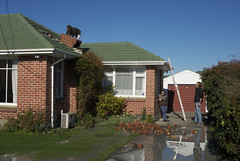


sand volcano versus driveway
Images, eqnz.chch.2010
None
sand volcano versus lawn
Images, eqnz.chch.2010
None
sand volcano craters
Images, eqnz.chch.2010
None
sand volcano versus shed
Images, eqnz.chch.2010
None
sand volcano versus shed
Images, eqnz.chch.2010
None
sand volcano gushing
Images, eqnz.chch.2010
None
sand volcano versus path
Images, eqnz.chch.2010
None
sand volcano versus vegetables
Images, eqnz.chch.2010
None
Are there signs before earthquakes?
Other, National Library of New Zealand
Website of scientist Dr N.E. Whitehead. Includes tabulated raw data from an online survey, a report based on the data, a link to the scientific paper written by Dr Whitehead and Professor Motoji Ikeya.
Council allays public fears of sewerage damage to CHCH waters
Audio, Radio New Zealand
Experts trying to restore Christchurch's busted sewerage system have faced up to concerned residents about what happened when raw sewage was allowed to flow directly into the sea in the months after the February earthquake.
sand volcano in our front lawn
Images, eqnz.chch.2010
None
sand volcano
Images, eqnz.chch.2010
This one was really flowing out of the ground.
sand volcano in a Wyn Street lawn
Images, eqnz.chch.2010
None
Rydal Park sand volcano
Images, eqnz.chch.2010
These were scattered across the park.
sand volcano
Images, eqnz.chch.2010
Robbie watches a sand volcano smother his driveway.
A new crack in the footpath in Rydal Park.
Images, eqnz.chch.2010
Cracks in the roads and foot paths were surprisingly hard to find given the strength of the earthquake.
Footpath cracks next to Rydal Park.
Images, eqnz.chch.2010
Sand volcanoes put the silt all over the road.
sand volcano in our front lawn
Images, eqnz.chch.2010
The earthquake knocked over the bird bath.
sand volcano
Images, eqnz.chch.2010
Debra points at the beginnings of a sand volcano not long after the big earthquake.
sand volcano crater
Images, eqnz.chch.2010
An usual thing to see coming from the ground in Hoon Hay, Christchurch.
sand volcano
Images, eqnz.chch.2010
Laura, Nicola, and Debra watch a sand volcano build in the Wyn Street gutter.
sand volcano
Images, eqnz.chch.2010
(I righted the bird bath after the initial earthquake. None of the after-shocks were sufficient to knock it over again.)
Robbie and his new lawn feature
Images, eqnz.chch.2010
One of the many sand volcanos erupting from the ground after the Christchurch earthquake.
the day after
Images, eqnz.chch.2010
Cleaning up the silt and sand from Hoon Hay properties. Here Laura, Robbie, and Ronny are part of the clean-up crew on Wyn Street.
sand volcano
Images, eqnz.chch.2010
And, yes, the newspaper always gets through! The Press newspapers were delivered in our area of Hoon Hay in the hours after the earthquake.
Christchurch's tale of two rivers
Audio, Radio New Zealand
The Ōtakaro-Avon and Ōpāwaho-Heathcote in Christchurch are some of the most polluted in the region. While the Avon has received a lot of attention since the Canterbury Earthquakes with $100 million going into a new promenade and cleaning up its water quality, it's a different story for the Heathcote River where raw sewage and industrial chemicals are still regularly found. Niva Chittock reports.
earthquake kink
Images, eqnz.chch.2010
Telegraph Road was a straight road before the recent 7.1 magnitude earthquake. The fault ran right through here and now the road has a dramatic kink in it.
Our Changing World - Heathcote River Recovery
Audio, Radio New Zealand
For six weeks after the February 2011 Christchurch earthquake millions of litres of raw sewage - along with lots of liquefaction - poured into the Avon and Heathcote Rivers. A team of biologists quickly got to work to measure the impact of this catastrophe on life in the Heathcote River and as they tell Alison Ballance, they were surprised by what they recorded over the next few months.
Sand volcanos cover Rydal Street
Images, eqnz.chch.2010
This has made a huge mess for the residents to clean up. I heard on the news that homes have been damaged by subsidence in areas of earthquake-caused liquefaction like this.
neighbours survey the sand volcanos
Images, eqnz.chch.2010
Lots of people were out and about in the streets checking on everyone after the earthquake. When it was clear that everyone was OK, the sand volcanos became the feature of interest.