

Search
found 111 results
Images for Christchurch Museum; more images...

Elizabeth Ackermann Photograph 315
Images, UC QuakeStudies
A photograph of a sign in the Canterbury Quakes exhibition at the Canterbury Museum. The sign displays the first Christchurch earthquake tweet on twitter, "Quake!!!!!!".
Book: Living with Earthquakes and the Aftermath: A New Zealand Story
Images, Canterbury Museum
One softcover book titled 'Living with Earthquakes and the Aftermath: A New Zealand Story' by Rosie Belton. 185 pages. Signed by the author with a dedication to Canterbury Museum.
Alternative Radio : exhibiting radio and music heritage after the Christch…
Research papers, University of Canterbury Library
This article examines the representation of Christchurch, New Zealand, student radio station RDU in the exhibition Alternative Radio at the Canterbury Museum in 2016. With the intention of ‘making visible what is invisible’ about radio broadcasting, the exhibition articulated RDU as a point of interconnection between the technical elements of broadcasting, the social and musical culture of station staff and volunteers, and the broader local and national music scenes. This paper is grounded in observations of the exhibitions and associated public programmes, and interviews with the key participants in the exhibition including the museum's exhibition designer and staff from RDU, who acted as independent practitioners in collaboration with the museum. Alternative Radio also addressed the aftermath of the major earthquake of 22 February 2011, when RDU moved into a customised horse truck after losing its broadcast studio. The exhibition came about because of the cultural resonance of the post-quake story, but also emphasised the long history of the station before that event, and located this small student radio station in the broader heritage discourse of the Canterbury museum, activating the historical, cultural, and personal memories of the station's participants and audiences.
20131231_8484_EOS M-22 Quake City exhibit
Images, eqnz.chch.2010
20131231_8484_EOS M-22 Quake City exhibit Another city walk around, this time with my brother-in-law from Auckland. Also went to the Quake City exhibition in the city organised by the Canterbury Museum. First fine day for a while. #4502
20131231_8503_EOS M-22 From Cashel Street
Images, eqnz.chch.2010
20131231_8503_EOS M-22 From Cashel Street Another city walk around, this time with my brother-in-law from Auckland. Also went to the Quake City exhibition in the city organised by the Canterbury Museum. First fine day for a while. #4504
Elizabeth Ackermann Photograph 298
Images, UC QuakeStudies
A photograph of an exhibition sign about a skateboard video filmed on Christchurch's damaged streets. The video was part of the Canterbury Quakes exhibition at the Canterbury Museum.
Award: Canned Appreciation
Images, Canterbury Museum
One trophy made from a can attached to a wooden base issued to SCIRT as a thank you for participating in Canstruction Christchurch. Features a custom printed label which celebrates teamwork in place of the usual nutritional information.
20131231_8511_EOS M-22 Forsyth Barr building for sale, under the archway
Images, eqnz.chch.2010
20131231_8511_EOS M-22 Forsyth Barr building for sale, under the archway Another city walk around, this time with my brother-in-law from Auckland. Also went to the Quake City exhibition in the city organised by the Canterbury Museum. First fine day for a while. #4507
Stretcher: St John 'scoop' stretcher
Images, Canterbury Museum
One silver metal 'scoop' stretcher used by St John staff on 22 February 2011 in emergency first aid response to the Christchurch earthquakes.
Elizabeth Ackermann Photograph 308
Images, UC QuakeStudies
A photograph of an exhibition sign next to the 'Quilt for Christchurch', in the Canterbury Quakes exhibition at the Canterbury Museum. The quilt was created by members of the public who sent squares to The Breeze radio station in Auckland.
Elizabeth Ackermann Photograph 307
Images, UC QuakeStudies
A photograph of a quilt on display in the Canterbury Quakes exhibition at the Canterbury Museum. The quilt was created by members of the public who sent squares to The Breeze radio station in Auckland to be part of the 'Quilt for Christchurch'.
Hard Hat: SCIRT
Images, Canterbury Museum
One white hard hat with a SCIRT logo at the front.
High Viz Vest: SCIRT
Images, Canterbury Museum
One orange High Viz vest with a SCIRT logo on the front.
Model: Wastewater Systems in an Earthquake
Images, Canterbury Museum
One interactive model which demonstrates how different types of pipes perform in an earthquake.
Display Board: Underground Infrastructure
Images, Canterbury Museum
One large display board featuring an illustration of the various pipes under the roads.
20131231_8509_EOS M-22 Forsyth Barr building with remains of PWC just behi…
Images, eqnz.chch.2010
20131231_8509_EOS M-22 Forsyth Barr building with remains of PWC just behind the green fence (across river) Another city walk around, this time with my brother-in-law from Auckland. Also went to the Quake City exhibition in the city organised by the Canterbury Museum. First fine day for a while. #4506
After the earthquakes, Lyttelton Redux
Audio, Radio New Zealand
Lyttelton was hit harder than most by the Christchurch earthquakes - particularly the Lyttelton Museum. But now it's back - triumphantly, we may say! - with a little help from its friends, past and present. Key historical figures in Lyttelton's history are brought back to life in a new exhibition by Julia Holden - Lyttelton Redux - which has just opened at Canterbury Museum.
Book: SCIRT Rebuilding Infrastructure 2011-2017
Images, Canterbury Museum
One commemorative coffee table book highlighting some of the people who worked at SCIRT and the projects they worked on.
Framed Poster: SCIRT Takes Off - 22 September 2011
Images, Canterbury Museum
One framed poster signed by all the staff who were working for SCIRT on its first day, 22 September 2011.
Certificate: The Press Champion Canterbury Supreme Award
Images, Canterbury Museum
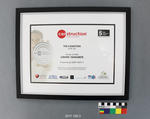
One framed certificate issued to SCIRT in 2013 to mark winning The Press Champion Canterbury Supreme Award in the Medium-Large Enterprise category.
Road Sign: Rebuild Zone
Images, Canterbury Museum
One white metal road sign with a picture of an orange road cone with a heart on it. The sign reads 'Rebuild Zone Open for Business'.
Protecting Your Assets: an Evaluation of Museum Emergency Planning Practic…
Research papers, Victoria University of Wellington
Museums around the world are often affected by major catastrophes, and yet planning for these disasters is an often neglected aspect of museum practice. New Zealand is not immune from these events, as can be seen in the recent series of serious earthquakes in Christchurch in 2010 and 2011. This dissertation considers how prepared the New Zealand museum sector is to handle unexpected events that negatively affect its buildings, staff, operations and treasured collections. The central research question was: What is the overall state of emergency planning in the New Zealand museum sector? There was a significant gap in the literature, especially in the local context, as there has been only one other comparable study conducted in Britain, and nothing locally. This dissertation makes a valuable contribution to the field of museum studies by drawing on theory from relevant areas such as crises management literature and by conducting original empirical research on a topic which has received little attention hitherto. The research employed a number of methods, including a review of background secondary sources, a survey and interviews. After contextualising the study with a number of local examples, Ian online survey was then developed an which enabled precise understanding of the nature of current museum practices and policies around emergency planning. Following this I conducted several interviews with museum professionals from a variety of institutional backgrounds which explored their thoughts and feelings behind the existing practices within the industry. The findings of the research were significant and somewhat alarming: almost 40% of the museum and galleries in New Zealand do not have any emergency plan at all, and only 11% have what they considered ‘complete’ plans. The research revealed a clear picture of the current width and depth of planning, as well as practices around updating the plans and training related to them. Within the industry there is awareness that planning for emergencies is important, but museum staff typically lack the knowledge and guidance needed to conduct effective emergency planning. As a result of the analysis, several practical suggestions are presented aimed at improving emergency planning practices in New Zealand museums. However this study has implications for museum studies and for current museum practice everywhere, as many of the recommendations for resolving the current obstacles and problems are applicable anywhere in the world, suggesting that New Zealand museums could become leaders in this important area.
Medal: The Brunel Medal
Images, Canterbury Museum
One silver medal awarded to SCIRT in October 2013 from the Institution of Civil Engineers in the United Kingdom in recognition of the excellent in civil engineering. Includes storage case and explanation sheet.
Soft Sculpture Kakapo: Little Ra
Images, Canterbury Museum
One green and yellow soft sculpture kakapo with wire feet, stuffed body and black plastic eyes. Has an attached card naming the bird Little Ra and explaining it is part of the 'Journey - The Kakapo of Christchurch' project by artist Sayraphim Lothian.
Artwork: Chair: 185 Empty Chairs
Images, Canterbury Museum
One metal chair with fabric components that has been painted white. This chair was part of the 185 Empty Chairs art installation which consisted of 185 different white chairs that represented those who died as a result of the Christchurch earthquake on 22nd February 2011.
20131231_8504_EOS M-22 Looking up Cashel Street
Images, eqnz.chch.2010
20131231_8504_EOS M-22 Looking up Cashel Street Another city walk around, this time with my brother-in-law from Auckland. Also went to the Quake City exhibition in the city organised by the Canterbury Museum. First fine day for a while. For 36 years I worked in a now gone building where that red car is parked (on the left). and would have wa...
20131231_8513_EOS M-22 The chocolate double decker
Images, eqnz.chch.2010
20131231_8513_EOS M-22 The chocolate double decker Another city walk around, this time with my brother-in-law from Auckland. Also went to the Quake City exhibition in the city organised by the Canterbury Museum. First fine day for a while. This bus is used as a chocolate restaurant, and is parked next to the Pallet Pavilion on the site of th...
Award: The Press Champion Canterbury Supreme Award
Images, Canterbury Museum
One green koru shaped trophy issued to SCIRT in 2013 to mark winning The Press Champion Canterbury Supreme Award in the Medium-Large Enterprise category. Includes storage box, envelope and leaflet.
Poster with tube: United We Stand
Images, Canterbury Museum
One limited edition poster with tube and information sheet. The poster has initial letters of the cities of New Zealand arranged to form an outline of the country. All are printed in black, except the 'C' of Christchurch which stands out in red. "United We Stand, 22 Feb 2011, 12.51pm" is printed in black. Poster commemorates the 2011 Christchurc...
Sculpture: Sheep
Images, Canterbury Museum
One yellow plastic sheep of cuboid shape with reflective stripes around body.