
Search
found 300 results
Images for [empty query]; more images...


What is the place of nature in the urban regeneration of central Christchu…
Research papers, Lincoln University
Please contact supervisor Lin Roberts at Lincoln University to request a copy of this dissertation to read.Cities around the world are becoming greener, with many striving to make their cities as green as possible. Christchurch was devastated by an Earthquake in 2011, which resulted in many fatalities. Though this impacted the city negatively, this sad event was used as an opportunity for the broken city to become a better one. The Christchurch City Council (CCC) ran an exercise called ‘Share an Idea’, which asked the public what they wanted the new city to look like. The main theme extrapolated by researchers was that people wanted the city to be greener. A draft plan was created by the CCC but was deemed not good enough and replaced by a new plan called the Blueprint Plan created by the government. Through the process of public consultation to the finalized plan and the implementation of the finalized plan, there were many changes made to the inclusion of nature into Central Christchurch’s urban regeneration. The aim of this research is to assess the role of nature in the urban regeneration of Christchurch, by evaluating the recovery process, and comparing the level of greenness the public wanted by looking at what they said in Share an Idea, and then seeing how that translated into the proposed plans, and then finally looking at what is being implemented.
Between Grey and Green: Ecological Resilience in Urban Landscapes
Research papers, The University of Auckland Library
This paper analyses the city of Christchurch, New Zealand, which has been through dramatic changes since it was struck by a series of earthquakes of different intensities between 2010 and 2011. The objective is to develop a deeper understanding of resilience by looking at changes in green and grey infrastructures. The study can be helpful to reveal a way of doing comparative analysis using resilience as a theoretical framework. In this way, it might be possible to assess the blueprint of future master plans by considering how important the interplay between green and grey infrastructure is for the resilience capacity of cities.
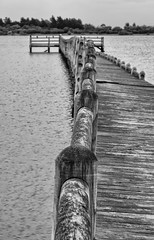
20170321_4180_7D2-70 Still bent and broken (12/52)
Images, eqnz.chch.2010
73 months after the earthquake that damaged it, the jetty at South New Brighton Domain is still not repaired. Seven years ago it was straight and level. Dull, flat and orrible (horrible) light meant this image was destined to become monochrome!
Remembrance (129/365)
Images, eqnz.chch.2010
20170509_6305_7D2-62 Remembrance (129/365) Today was the first time I have been to the earthquake memorial since it was completed and opened on 22nd February 2017, six years after the devastating quake that killed the 185 that are named on this wall. I knew two of the people on the list.
20170704_9090_7D2-24 Only two left (185/365)
Images, eqnz.chch.2010
Only two of 20 houses left in the Rawhiti Earthquake Village. This from the sign on perimeter fence: "Since 2011, Rawhiti Domain has been used to provide temporary accommodation for those affected by the Canterbury earthquakes. Over 200 households have used the 20 houses while their own homes have been repaired or rebuilt. The demand for acco...
20170918_6084_7D2-41 Demolition still happening (260/365)
Images, eqnz.chch.2010
20170918_6084_7D2-41 Demolition still happening (260/365) Six ½ years after the earthquakes there are still a few demolitions taking place. This one is a block of council owned flats. Whether the whole complex is being demolished or not I don't know., but here the centre block of three is being demolished. The green grass is what was sections...
20171103_5588_1D3-70 Cabbage Tree in the Red Zone
Images, eqnz.chch.2010
An impressive Cabbage Tree (Cordyline australis) that was in someone's back yard prior to the demolition of houses post the 2011 earthquake.
Trees in the Red Zone (307/365)
Images, eqnz.chch.2010
20171103_5582_1D3-38 Trees in the Red Zone (307/365) In what used to be sections with houses and yards. Between late 2011 and 2014 the houses (well 95% of them) were removed due to land dropping in the 2011 earthquakes and the proximity of the Avon River, tidal in this area. #8859
20171103_5586_1D3-66 Phoenix Palm in the Red Zone
Images, eqnz.chch.2010
A Phoenis Palm (Phoenix canariensis) that was in someone's back yard prior to the demolition of houses post the 2011 earthquake.
Empirical vulnerability assessment of reinforced concrete frame with mason…
Research papers, The University of Auckland Library
During the 2010/2011 Canterbury earthquakes, Reinforced Concrete Frame with Masonry Infill (RCFMI) buildings were subjected to significant lateral loads. A survey conducted by Christchurch City Council (CCC) and the Canterbury Earthquake Recovery Authority (CERA) documented 10,777 damaged buildings, which included building characteristics (building address, the number of storeys, the year of construction, and building use) and post-earthquake damage observations (building safety information, observed damage, level of damage, and current state of the buildings). This data was merged into the Canterbury Earthquake Building Assessment (CEBA) database and was utilised to generate empirical fragility curves using the lognormal distribution method. The proposed fragility curves were expected to provide a reliable estimation of the mean vulnerability for commercial RCFMI buildings in the region. http://www.13thcms.com/wp-content/uploads/2017/05/Symposium-Info-and-Presentation-Schedule.pdf VoR - Version of Record
Government Building Worcester Street – Building for the Future
Articles, Lost Christchurch
The construction of government buildings have long attracted opinion and criticism and the Italian Renaissance style Government Buildings on the corner of Worcester street and Cathedral Square were…
The Great Outdoors - Peter Langlands
Audio, Radio New Zealand
Conservationist, forager, angler and former fisheries observer Peter Langlands talks about the many threats to our lakes and waterways. Lynn Freeman asked the Cantabrian how the earthquakes affected Christchurch birds, as there was talk that they left the city.
Recycling: Tim McGurk
Audio, Radio New Zealand
Over the summer on The Weekend we've been talking to recyclers and upcyclers, people who like the Wombles, are making good use of the things that they find, things that the everyday folks leave behind. This is true of Christchurch builder, artist and furniture maker, Tim McGurk. He says he works with whatever junk and materials he can find. Tim crafted several items from the materials salvaged from an earthquake damaged Christchurch house, as part of the Whole House Reuse project. He also made the news when he made a Star Wars inspired X-wing sculpture/lamp out of salvaged rimu.
Sign of the Kiwi re-opens in Christchurch - locals delight
Audio, Radio New Zealand
Built in June 1917, the popular 'Sign of the Kiwi' heritage building in Christchurch's Port Hills has re-opened today after being closed for six years due to earthquake damage.
Phoenix Rising
Audio, Radio New Zealand
The Christchurch earthquakes caused devastating damage to many of the city’s creative spaces. But rising from the rubble has been the Isaac Theatre Royal under the watchful eye of Neil Cox. He’s directed the resurrection of one of the premiere performance spaces in the country.
Earthquake survivor says Wgtn must cordon around unsafe sites
Audio, Radio New Zealand
A woman crushed to within milimetres of her life in the Christchurch earthquake says it is murderously cavalier for Wellington's council not to cordon off weak or prone buildings.
Chch's new super school opens in Aranui with a bumper roll
Audio, Radio New Zealand
Haeata is the first public school in Christchurch to cater for all ages, replacing three eastern suburbs schools that were closed after the earthquakes. RNZ joined more than 900 students for the first day.
Life soon to return to Christchurch's Cathedral square
Audio, Radio New Zealand
Cathederal Square has remained largely untouched by developers since the 2011 earthquake. That is about to change, with work beginning on a series of hotels.
Quake claims affect Suncorp NZ result
Audio, Radio New Zealand
The insurance arms of Suncorp New Zealand have reported lower profits off the back of the Kaikoura earthquake and a rise in Canterbury earthquake claims. .
The Week In Review for week ending Fri Feb 3 2017
Audio, Radio New Zealand
A review of the week's news including... a major health alert in Pukekohe after two and a half thousand children were exposed to contaminated water, the Prime Minister kicks off election year with a pledge to spend more than half a billion dollar on crime-fighting, is New Zealand citizenship for sale? several former employees of the Canterbury Earthquake Recovery Authority are being investigated, international Indian students to be deported, more alleged mistreatment of animals revealed at another New Zealand rodeo event, a women's sexual abuse group says the judge got it wrong when he ruled in favour of a man who posted photos of his half naked wife on Facebook, people increasingly find ways to get around petrol prices that they think are too high, should an unofficial white chair memorial to the victims of the 2011 Christchurch quake be moved? the scientific test results which reveal exactly how Havelock North's drinking water supply was contaminated, the Maori Party backs calls from a group of local councils campaigning to keep their regions free from genetic modification, a film producer is caught out by a recent law change banning anyone travelling from America from entering New Zealand with medicinal cannabis and an update on a seriously unwell albatross chick.
Repairs underway for quake-damaged statue of Antarctica's Scott
Audio, Radio New Zealand
The statue of the Antarctic explorer, Robert Falcon Scott, that toppled from its plinth and snapped at its ankles in the Christchurch earthquake is being repaired. all going well it will be reinstated later this year, just in time for the Antarctic summer.
30,000 to watch Springsteen on eve of quake anniversary
Audio, Radio New Zealand
People have been queuing for days for the Bruce Springsteen concert in Christchurch tonight, ahead of the sixth anniversary of the 2011 earthquake. Glenn McCartney is at the front of the queue.
Christchurch cycleways disastrous for St Albans business
Audio, Radio New Zealand
The Christchurch City Council is investing $156 million in 13 cycleways across the city, in a post-earthquake overhaul of the city's transport network.
Memorial for quake victims to be revealed on 6th anniversary
Audio, Radio New Zealand
A memorial for the 185 people who died in the 2011 Christchurch earthquake will be blessed tonight, ahead of the unveiling tomorrow, on the sixth anniversary.
Bruce Springsteen fans queue for days ahead of SI show
Audio, Radio New Zealand
Some Bruce Springsteen fans have queued for days ahead of the Boss' show in Christchurch tomorrow night - on the eve of the sixth anniversary of the 2011 earthquake.
Christchurch remembers the deadly quake six years ago today
Audio, Radio New Zealand
Christchurch remembers six years on from the deadly earthquake.
Fans of The Boss ready themselves for Chch concert tonight
Audio, Radio New Zealand
The sounds of Bruce Springsteen will ring out around Christchurch tonight, ahead of the sixth anniversary of the deadly February 2011 earthquake in the region. Long time fans join us to discuss what they're expecting from tonight's gig.
Christchurch Memorial
Audio, Radio New Zealand
The public will have its first chance to see an $11 million earthquake memorial today, after family members of the injured and dead held an emotional private service at the site yesterday evening.
The Panel with Ali Jones and James Nokise (Part 2)
Audio, Radio New Zealand
Christchurch remembers six years on from the deadly earthquake. What panelists Ali Jones and James Nokise have been up to. John Gray from the Home Owners and Buyers Association believes the mayor is getting advice from self interest groups looking to shift the focus from their own shortcomings. Police in Hawkes Bay discovered 300 stolen garden gnomes with a growing trend to sell them on to fund meth purchases. Pie eating goalie in the UK has resigned for taking part in the bet that he would eat a pie during his team's match.
Families attend Chch earthquake memorial unveiling
Audio, Radio New Zealand
The Canterbury Earthquake National Memorial was unveiled to the public at a memorial attended by more than 3000 people.