
Search
found 202 results
Images for [empty query]; more images...
EQC won’t extend deadline for claims for botched repairs
Audio, Radio New Zealand
Time is nearly up for owners of on-sold quake damaged properties in Canterbury to apply to claim money for botched repairs. The Government announced last year it would give an ex-gratia payment to home-owners with properties that went over the Earthquake Commission's then cap of $100,000. Today is the last day for applications after the original August deadline was extended due to Covid-19. But there are calls to extend that deadline again, as applications have flooded in over the past month.
Christchurch Cathedral restoration cost jumps $51m
Audio, Radio New Zealand
The company running the restoration of Christchurch's Anglican Cathedral is confident it will be able to raise the extra $51 million still needed to finish the job, and says potential large donors are already being approached here and overseas. The building has sat derelict since the 2011 earthquake and now the cost to fix it has soared from an original estimate of $104 million to $154 million. Some Cantabrians are finding the price hard to justify. The director of the restoration project Keith Paterson speaks to Corin Dann.
School leader says Ministry of Education wasted taxpayer money
Audio, Radio New Zealand
A school leader says the Ministry of Education of wasted millions of taxpayer dollars over years of earthquake repairs, and was obstructive and misleading. The building budget at Christchurch Girls High School has blown out by 50 percent to $40 million and it's not finished, even after five years of work. Mike Lay, who was chair of the board of trustees for most of those years, until 2018, says the ministry botched the job then targeted him when he tried to hold it accountable. He told Phil Pennington about the school's struggle to get the school re-built properly.
House Talk | Episode 6: Lessons from the Rubble
Audio, Radio New Zealand
What are the lessons from the Christchurch earthquakes? The Government was slow in their quake response, but does that mean we should give more property market power to the private sector?
Kaikōura quake: Canterbury farmers adapting, four years on
Audio, Radio New Zealand
Tomorrow will mark four years since a huge 7.8 magnitude earthquake rocked North Canterbury. As well as severely damaging homes and roads, it left some hill country farms in the area with up to 40 percent of their land unusable. Four years on, sheep and beef farmers are finding new ways to work. Rural reporter, Maja Burry and cameraman Nate McKinnon have the story.
Supreme court has ruled in favour of earthquake hit home owners
Audio, Radio New Zealand
The Supreme Court has ruled that a class action by Canterbury insurance holders against Southern Response can go ahead. Ali Jones, insurance claimants advocate explains to The Panel what this means for home owners who've been fighting for years to get their fair entitlements.
A tour of Christchurch Architecture - old and new
Audio, Radio New Zealand
Christchurch’s architecture, both new and old, has been brought to life in an illustrated walking book that pays homage to the city’s historical buildings and showcases its new direction in the post-earthquake era.
CH Earthquake:CTV victims' families continue push for justice
Audio, Radio New Zealand
The families of those who died in the CTV building's collapse during the Christchurch Earthquake in February of 2011 are vowing to continue their Fight For Justice after The Independent Police Conduct Authority rejected their complaint about the Police Investigation . The Police decided 3 years ago not to lay charges against the building's designer. Yesterday the families announced that the IPCA, the body that advised the Police, had told them that it had no jurisdiction over Crown Law. Families spokesperson, Maan Alkaisi, told reporter Conan Young that they will continue to push for somebody to be held to account. He wants a retired judge to take another look at the decision not to prosecute.
Government sets up package for Southern Response claimants
Audio, Radio New Zealand
A lawyer acting for Christchurch home-owners short changed in earthquake settlements says a new plan announced by the government is likely to run into trouble. Last year in a landmark case, the High Court found the government's claim settlement agency, Southern Response, misled and deceived Karl and Alison Dodds. It ordered the government to pay the couple nearly $180,000. The government has now set up a package for other Southern Response claimants who settled before October 2014. Its estimated about 3000 people will be eligible to benefit. But most of them are already taking part in a class action led by Brendan and Colleen Ross. Their lawyer Grant Cameron speaks to Corin Dann.
Christ Church Cathedral's day of restoration
Audio, Radio New Zealand
A momentous day in Christchurch as a huge steel frame was installed as part of the stabilisation work for Christ Church Cathedral. Karyn speaks with project director Keith Paterson about the plans to return the famed rose window extensively damage in the 2011 earthquake.
Christ Church Cathedral restoration: Massive steel frame being installed t…
Audio, Radio New Zealand
Moves towards returning the famed rose window to Christ Church Cathedral begin today. An eighteen-tonne steel frame is being installed onto the cathedral's west facade as part of restoration work. It will eventually housing the rose window. The cathedral was critically damaged in the Christchurch earthquake of 2011. Project director Keith Paterson is in Cathedral Square. He speaks to Susie Ferguson.
Vegetation change and native forest restoration in urban environments: Man…
Research papers, Lincoln University
Global biodiversity is threatened by human actions, including in urban areas. Urbanisation has removed and fragmented indigenous habitats. As one of the 25 biodiversity ’hot spots’, New Zealand is facing the problems of habitat loss and indigenous species extinction. In New Zealand cities, as a result of the land clearance and imported urban planning precepts, many urban areas have little or no original native forest remaining. Urbanisation has also been associated with the introduction of multitudes of species from around the world. Two large earthquakes shook Christchurch in 2010 and 2011 and caused a lot of damage. Parts of the city suffered from soil liquefaction after the earthquakes. In the most damaged parts of Christchurch, particularly in the east, whole neighbourhoods were abandoned and later demolished except for larger trees. Christchurch offers an excellent opportunity to study the biodiversity responses to an urban area with less intensive management, and to learn more about the conditions in urban environments that are most conducive to indigenous plant biodiversity. This study focuses on natural woody plant regeneration of forested sites in Christchurch city, many of which were also surveyed prior to the earthquakes. By repeating the pre-earthquake surveys, I am able to describe the natural regeneration occurring in Christchurch forested areas. By combining this with the regeneration that has occurred in the Residential Red Zone, successional trajectories can be described under a range of management scenarios. Using a comprehensive tree map of the Residential Red Zone, I was also able to document minimum dispersal distances of a range of indigenous trees in Christchurch. This is important for planning reserve connectivity. Moreover, I expand and improve on a previous analysis of the habitat connectivity of Christchurch (made before the earthquakes) to incorporate the Residential Red Zone, to assess the importance for habitat connectivity of restoring the indigenous forest in this area. In combination, these data sets are used to provide patch scenarios and some management options for biodiversity restoration in the Ōtākaro-Avon Red Zone post-earthquake.
A changing tourism system in post-disaster recovery: Developing anime tour…
Research papers, Lincoln University
Oarai is a coastal town in Ibaraki Prefecture, Japan, affected by the Great East Japan Earthquake in 2011. The disaster severely damaged local industries, and the local tourism sector faced a sharp decline followed the event. To overcome the conundrum, the local tourism businesses have taken the opportunity to collaborate with an anime called Girls und Panzer, which has been developed by an external animation production studio. This collaboration has resulted in huge success, and the drop in the local tourism industry had been largely reversed, but has resulted in a significant change to the tourism system. This thesis explores the activities and outcomes of this tourism industry reimagining. A mixed-method approach was used to investigate the perception of local tourism businesses to the current Oarai tourism system, and examine the transformative effect of the disaster and its aftermath. Perceptions of disaster impact and anime tourism development were analysed through surveys (n=73) and interviews (n=2) which focused on tourism business operators, while participant observation was conducted to create the image of anime tourism operation in Oarai. Results show that the development of anime tourism in Oarai successfully helped the local tourism businesses to recover from the disaster. As new agencies and organisations joined the anime tourism network, anime tourism increased communication between stakeholders, and improved the resilience of the community. The new tourism development has transformed the local tourism industry, to some extent, however. the future trajectory of anime tourism in Oarai is difficult to forecast, and there is scope for longitudinal research of this tourism system.
Growing resilient cities: Urban community gardens and disaster recovery af…
Research papers, Lincoln University
This study explores the role and value of urban community gardens following a major crisis: the 2010/11 earthquakes in Christchurch, New Zealand.
Transcending chaos: spirituality and coping in post-earthquake Canterbury,…
Research papers, Lincoln University
When an “I thought I was going to die quake” occurs amidst four additional major earthquakes and 15,000 aftershocks during a sixteen-month period, it challenges people’s ability to cope and recover. Residents of Canterbury, New Zealand endured this extended, chaotic state in 2010/11; and continue to deal with lingering effects on their devastated central city, Christchurch. Stress and coping theory suggests that finding meaning in such situations can help people recover, and that religion and spirituality often play a role in post-disaster resilience. Despite this, there is very little research literature examining this phenomenon and even less that considers spirituality separate from religion. This research focuses on this underrepresented area by considering the personal spiritual or meaningful experiences of people in post-earthquake Canterbury. Data from sixteen in-depth, minimally directed interviews were thematically analyzed to understand each individual’s meaning construction and coping/recovery process and identify connective themes and patterns amongst their experiences. Four core elements of acceptance, clarity and choice, connection, and transcendence emerged from the thematic analysis to conceptualize a model of transcendent coping. Transcendent coping represents an additional type of coping in the transactional model of stress and coping, which serves to support the previous denoted problem-, emotion-, and meaning-focused coping approaches. Transcendent coping offers openness, empowerment, comfort and expansion not necessarily reliant upon theistic or religious beliefs and practices. Rather, this secular spiritual coping is inherent in everyday, mundane practices such as being in the moment, aligning to and acting from personal values, connecting to that and those who bring comfort, and experiencing transcendence in moments of awe and expansion. This research contributes to the growing interest in spirituality as an important facet of human nature that can support wellbeing in the face of stress.
The Role of Central Government following the Lombok Earthquake 2018: the p…
Research papers, Lincoln University
Recovery from disasters is a significant issue faced by all countries in the world at various times. Governments, including central and local governments, are the key actors regarding post-disaster recovery because they have the authority and responsibility to rescue affected people and recover affected areas (Yang, 2010). Planning is a critical step in the recovery process and provides the basis for defining a shared vision for recovery, clear objectives and intended results. Subsequently, the concept of collaborative planning and ‘build back better’ are highly desirable in recovery planning. However, in practice, these concepts are difficult to achieve. A brief description of the recovery planning in Christchurch City following the Canterbury earthquakes 2011 is provided as an example and comparison. This research aims to analyse the planning process to develop a post-disaster recovery plan in Indonesia using Mataram City’s recovery plan following the Lombok Earthquakes 2018 as the case study. It will emphasise on the roles of the central and local governments and whether they collaborate or not, and the implications of decentralisation for recovery planning. The methodology comprised a combination of legislation analysis and semi-structure interviews with the representatives of the central and local governments who were involved in the planning process. The results indicate that there was no collaboration between the central and local governments when developing the recovery plan, with the former tend to dominate and control the planning process. It is because there are regulatory and institutional problems concerning disaster management in Indonesia. In order to improve the implementation of disaster management and develop a better recovery plan, some recommendations are proposed. These include amendments the disaster management law and regulations to provide a clear guideline regarding the roles and responsibilities of both the central and local governments. It is also imperative to improve the capacity and capability of the local governments in managing disaster.
Are memorials just for remembering? A study of natural disaster memorials …
Research papers, Lincoln University
When a tragedy occurs of local or national scale throughout the world a memorial is often built to remember the victims, and to keep the tragedy fresh in the minds of generations with the conviction that this must not be repeated. Memorials to commemorate natural disasters very to the objective of a human induced tragedy in that future catastrophic events that affect the lives and livelihood of many citizens are sure to reoccur in countries that are geographically pre-disposed to the ravages of nature. This thesis examines memorial sites as case studies in New Zealand and Japan to explore the differences in how these two countries memorialise earthquakes, and tsunamis in the case of Japan, and whether there are lessons that each could learn from each other. In so doing, it draws largely on scholarly literature written about memorials commemorating war as little is written on memorials that respond to natural disasters. Visited case sites in both countries are analysed through multiple qualitative research methods with a broad view of what constitutes a memorial when the landscape is changed by the devastation of a natural disaster. How communities prepare for future events through changes in planning legislation, large scale infrastructure, tourism and preparedness for personal safety are issues addressed from the perspective of landscape architecture through spatial commemorative places. The intentions and meanings of memorials may differ but in the case of a memorial of natural disaster there is a clear message that is common to all. To reduce the severity of the number of deaths and level of destruction, education and preparedness for future events is a key aim of memorials and museums.
Analysis of damage data collected for wine storage tanks following the 201…
Research papers, Lincoln University
The 2013 Seddon earthquake (Mw 6.5), the 2013 Lake Grassmere earthquake (Mw 6.6), and the 2016 Kaikōura earthquake (Mw 7.8) provided an opportunity to assemble the most extensive damage database to wine storage tanks ever compiled worldwide. An overview of this damage database is presented herein based on the in-field post-earthquake damage data collected for 2058 wine storage tanks (1512 legged tanks and 546 flat-based tanks) following the 2013 earthquakes and 1401 wine storage tanks (599 legged tanks and 802 flat-based tanks) following the 2016 earthquake. Critique of the earthquake damage database revealed that in 2013, 39% and 47% of the flat-based wine tanks sustained damage to their base shells and anchors respectively, while due to resilience measures implemented following the 2013 earthquakes, in the 2016 earthquake the damage to tank base shells and tank anchors of flat-based wine tanks was reduced to 32% and 23% respectively and instead damage to tank barrels (54%) and tank cones (43%) was identified as the two most frequently occurring damage modes for this type of tank. Analysis of damage data for legged wine tanks revealed that the frame-legs of legged wine tanks sustained the greatest damage percentage among different parts of legged tanks in both the 2013 earthquakes (40%) and in the 2016 earthquake (44%). Analysis of damage data and socio-economic findings highlight the need for industry-wide standards, which may have socio-economic implications for wineries.
The Christchurch Urban Design Panel: Its role and influence on residential…
Research papers, Lincoln University
During the 21st century, New Zealand has experienced increasing public concern over the quality of the design and appearance of new developments, and their effects on the urban environment. In response to this, a number of local authorities developed a range of tools to address this issue, including urban design panels to review proposals and provide independent advice. Following the 2010 and 2011 Canterbury earthquake sequence, the commitment to achieve high quality urban design within Christchurch was given further importance, with the city facing the unprecedented challenge of rebuilding a ‘vibrant and successful city’. The rebuild and regeneration reinforced the need for independent design review, putting more focus and emphasis on the role and use of the urban design panel; first through collaboratively assisting applicants in achieving a better design outcome for their development by providing an independent set of eyes on their design; and secondly in assisting Council officers in forming their recommendations on resource consent decisions. However, there is a perception that urban design and the role of the urban design panel is not fully understood, with some stakeholders arguing that Council’s urban design requirements are adding cost and complexity to their developments. The purpose of this research was to develop a better understanding on the role of the Christchurch urban design panel post-earthquake in the central city; its direct and indirect influence on the built environment; and the deficiencies in the broader planning framework and institutional settings that it might be addressing. Ultimately, the perceived role of the Panel is understood, and there is agreement that urban design is having a positive influence on the built environment, albeit viewed differently amongst the varying groups involved. What has become clear throughout this research is that the perceived tension between the development community and urban design well and truly exists, with the urban design panel contributing towards this. This tension is exacerbated further through the cost of urban design to developers, and the drive for financial return from their investments. The panel, albeit promoting a positive experience, is simply a ‘tick box’ exercise for some, and as the research suggests, groups or professional are determining themselves what constitutes good urban design, based on their attitude, the context in which they sit and the financial constraints to incorporate good design elements. It is perhaps a bleak time for urban design, and more about building homes.
Between the cracks: The intersection of individuals, social processes and …
Research papers, Lincoln University
This research investigates creativity in a post-disaster setting. The data explore creativity at the intersection of the affected community of Christchurch, New Zealand and the social processes that followed the earthquakes of 2010 - 2012. Personal and contextual influences on creative ideas implemented for community or commercial benefit are also examined. Viewed as creative, unique approaches to post-disaster problem solving were celebrated locally, nationally and internationally (Bergman, 2014; Wesener, 2015; Cloke & Conradson, 2018). Much has been written about creativity, particularly creativity in organisations and in business. However, little is known with regards to who creates after a disaster, why individuals choose to do so and what impact the post-disaster context has on their creative activity. This exploratory study draws on the literature from the fields of creativity, disasters, psychology, sociology and entrepreneurship to interpret first-hand accounts of people who acted on creative ideas in a physically and socially altered environment. A mixed method - albeit predominantly qualitative - approach to data gathering was adopted that included interviews (n=45) with participants who had been the primary drivers of creative ideas implemented in Christchurch after September 2010 – the first major (7.1 magnitude) earthquake in a prolonged sequence of thousands of aftershocks. Key findings include that a specific type of creativity results from the ‘collision’ between individuals and social processes activated by a disaster situation. This type of creativity could be best categorised as ‘little c’ or socially adaptive and emerges through a prosocial filter. There is wide consensus amongst creativity researchers - principally social psychologists - that for output to be considered creative it must be both novel and useful (Runco & Jaegar, 2012). There is greater tolerance for the novelty component after a disaster as novelty itself has greater utility, either as a distraction or because alternatives are few. Existing creativity models show context as input – an additional component of the creative process – but after a disaster the event itself becomes the catalyst for social processes that result in the creativity seen. Most participants demonstrated characteristics commonly associated with creativity and could be categorised as either a ‘free thinker’ and/or an ‘opportunist’. Some appear preadapted to create and thrive in unstable circumstances. Findings from participants’ completion of a Ten Item Personality Inventory (TIPI) showed an apparent reduced need for extraversion in relation to implementing creative ventures in society. This factor, along with higher levels of agreeableness may indicate a potentially detrimental effect on the success of creative ideas established after a disaster, despite earnest intentions. Three new models are presented to illustrate the key findings of this study. The models imply that disasters enhance both the perceived value of creativity and the desire to act creatively for prosocial ends. The models also indicate that these disaster influenced changes are likely to be temporary.
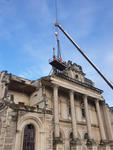
Digital Photograph: Cathedral of the Blessed Sacrament exterior angels sal…
Images, Canterbury Museum
One digital photograph showing a crane arm and workers in a cage during the salvage of the exterior angels from atop the Cathedral of the Blessed Sacrament. The large intact columns at the entrance of the Cathedral can be seen in the photograph. Taken by the Catholic Diocese of Christchurch in September 2020.
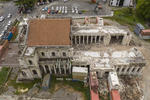
Digital Photograph: Cathedral of the Blessed Sacrament being demolished
Images, Canterbury Museum
One digital photograph taken by drone showing the Cathedral of the Blessed Sacrament partially demolished. Taken by the Catholic Diocese of Christchurch in 2020.
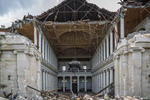
Digital Photograph: Cathedral of the Blessed Sacrament partially demolished
Images, Canterbury Museum
One digital photograph showing the Cathedral of the Blessed Sacrament partially demolished. The interior is visible and lined with intact columns. Taken by photographer Helen McLeod in October 2020.
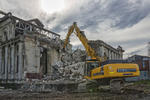
Digital Photograph: Cathedral of the Blessed Sacrament being demolished by…
Images, Canterbury Museum
One digital photograph showing the Cathedral of the Blessed Sacrament being demolished with a yellow digger. Taken by photographer Helen McLeod in September 2020.
Digital Photograph: Cathedral of the Blessed Sacrament interior during dem…
Images, Canterbury Museum
One digital photograph showing the Cathedral of the Blessed Sacrament interior during demolition. The nave columns are still intact but debris lines the floor. Taken by photographer Helen McLeod in November 2020.
Digital Photograph: Cathedral of the Blessed Sacrament during demolition b…
Images, Canterbury Museum
One digital photograph showing the Cathedral of the Blessed Sacrament during demolition. A yellow digger arm and nibbler claw can be seen along with stone falling from an exterior wall. Taken by photographer Helen McLeod in December 2020.
Digital Photograph: Cathedral of the Blessed Sacrament exterior angels
Images, Canterbury Museum
One digital photograph showing the two angels atop the Cathedral of the Blessed Sacrament. The plinth that supports the cross stands empty between the angels. Taken by the Catholic Diocese of Christchurch in August 2020 before the angels were salvaged from the building.
Digital Photograph: Cathedral of the Blessed Sacrament exterior angels sal…
Images, Canterbury Museum
One digital photograph showing a crane and workers in a cage during the salvage of the exterior angels from atop the Cathedral of the Blessed Sacrament. Taken by the Catholic Diocese of Christchurch in August 2020.
Digital Photograph: Cathedral of the Blessed Sacrament exterior angels sal…
Images, Canterbury Museum
One digital photograph showing the salvage of the exterior angels from the Cathedral of the Blessed Sacrament. Two crane arms and strapping around one of the angels can be seen in the photograph. Taken by the Catholic Diocese of Christchurch in September 2020.
Digital Photograph: Cathedral of the Blessed Sacrament demolition
Images, Canterbury Museum
One digital photograph showing the demolition of the Cathedral of the Blessed Sacrament. A digger arm and nibbler claw can be seen in the photograph removing stone from the exterior, intact columns and ionic column capitals can be seen inside. Taken by the Catholic Diocese of Christchurch in September 2020.