
For the first time in November 2011, Christchurch residents finally had the opportunity to see the earthquake-damaged city centre on the Red Zone bus tours organised by CERA. Damage to buildings can be seen out the window.

For the first time in November 2011, Christchurch residents finally had the opportunity to see the earthquake-damaged city centre on the Red Zone bus tours organised by CERA. Damage to buildings can be seen out the window.
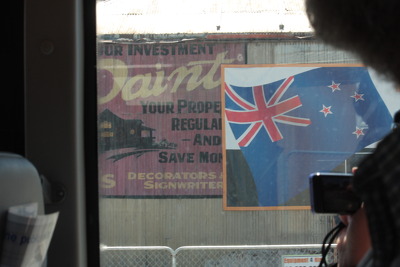
For the first time in November 2011, Christchurch residents finally had the opportunity to see the earthquake-damaged city centre on the Red Zone bus tours organised by CERA. Damage to buildings can be seen out the window.

For the first time in November 2011, Christchurch residents finally had the opportunity to see the earthquake-damaged city centre on the Red Zone bus tours organised by CERA. Damage to buildings can be seen out the window.

For the first time in November 2011, Christchurch residents finally had the opportunity to see the earthquake-damaged city centre on the Red Zone bus tours organised by CERA. Damage to buildings can be seen out the window.

For the first time in November 2011, Christchurch residents finally had the opportunity to see the earthquake-damaged city centre on the Red Zone bus tours organised by CERA. Damage to buildings can be seen out the window.
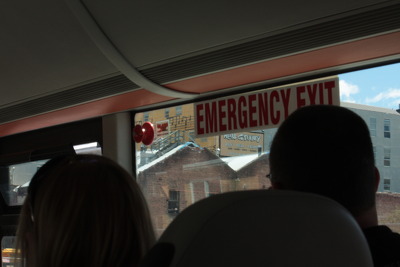
For the first time in November 2011, Christchurch residents finally had the opportunity to see the earthquake-damaged city centre on the Red Zone bus tours organised by CERA. Damage to buildings can be seen out the window.

For the first time in November 2011, Christchurch residents finally had the opportunity to see the earthquake-damaged city centre on the Red Zone bus tours organised by CERA. Damage to buildings can be seen out the window.

For the first time in November 2011, Christchurch residents finally had the opportunity to see the earthquake-damaged city centre on the Red Zone bus tours organised by CERA. Damage to buildings can be seen out the window.

For the first time in November 2011, Christchurch residents finally had the opportunity to see the earthquake-damaged city centre on the Red Zone bus tours organised by CERA. Damage to buildings can be seen out the window.
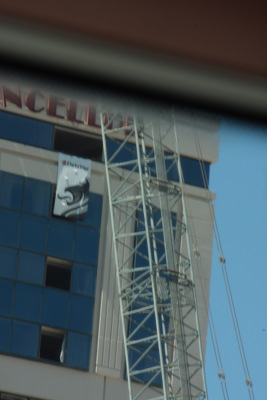
For the first time in November 2011, Christchurch residents finally had the opportunity to see the earthquake-damaged city centre on the Red Zone bus tours organised by CERA. A partial view of the Hotel Grand Chancellor.

Damage to the Repertory Theatre building. Part of the facade has collapsed onto the awning below, and bricks and masonry have spilled across the street. The building is cordoned off with road cones and police tape.

Two excavators and building rubble in front of the Terrace on the Park apartment complex. Two buildings in the complex required urgent demolition, and the other buildings in the complex will eventually be demolished.

Two excavators and building rubble in front of the Terrace on the Park apartment complex. Two buildings in the complex required urgent demolition, and the other buildings in the complex will eventually be demolished.

The glass facade to Christchurch Art Gallery and the sculpture "Reasons for Voyaging", a collaboration between Canterbury sculptor, Graham Bennett and architect, David Cole, outside the gallery. A building across the street is reflected on the glass.

Flowers blooming in a vacant site left by the demolition of a building at the corner of Worcester Street and Stanmore Road. On the wall at the back are the words 'Do Not Demo!!'.

Looking down Victoria Street, demolition site on the right and the Crowne Plaza Hotel at the end of the street. Flags in Canterbury colours, red and black can be seen on the street lights.

Looking down Worcester Street with Our City-O-Tautahi with bracing on its front facade on the left, behind it is Rydges, the Grant Thornton Building in the middle back, and the Claredon Towers on the right.

Looking over the cordon fence towards the intesection of Latimer Square and Hereford Street. The vacant site was left after the demolition of Avonmore House, and a digger is seen on a demolition site on the left.

A photograph of the date stone in the Cranmer Centre indicating the date the building was built (1880). Below, a stack of bricks can be seen in the garden.

A photograph of a building on Lichfield Street near Poplar Lane. The facade on the top storey of the building crumbled during the earthquake to reveal the walls underneath.

A photograph of the earthquake damage to a house on Bealey Avenue. The outer wall of the house has crumbled, and the bricks have fallen onto the footpath in front.

A photograph of the earthquake damage to a house on Bealey Avenue. The outer wall of the house has crumbled, and the bricks have fallen onto the footpath in front.

A photograph of the remains of the Excelsior Hotel building on the corner of High Street and Manchester Street. The remains of the facade are being held up by a stack of shipping containers.

A photograph of a kitchen in the Diabetes Centre. The panelling has been removed from the wall of the kitchen, exposing the wooden frame and several pipes and wires.
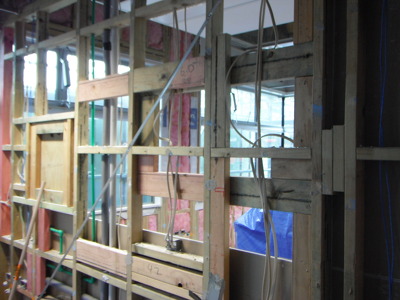
A photograph of the wooden frame of a wall in the Diabetes Centre. The panelling has been removed from the wall, exposing the frame and several pipes and wires underneath.

A photograph of the earthquake damage to a building on Armagh Street. The outer walls of the building have collapsed, the bricks spilling onto the footpath in front.

A photograph of Knox Church on Bealey Avenue. Much of the brick wall is missing, exposing the wooden framing of the gables and the inside of the church.

The entrance way to the Caffe Roma coffee house on Oxford Terrace. Bricks from the facade above have fallen into the street and tape has been placed around the building as a cordon.

Buildings seen through the cordon fence from Cathedral Square. From left to right are MFL House, the Forsyth Barr building, the PriceWaterhouseCoopers building, the Camelot Hotel and the Cathedral Square Police Station.
